
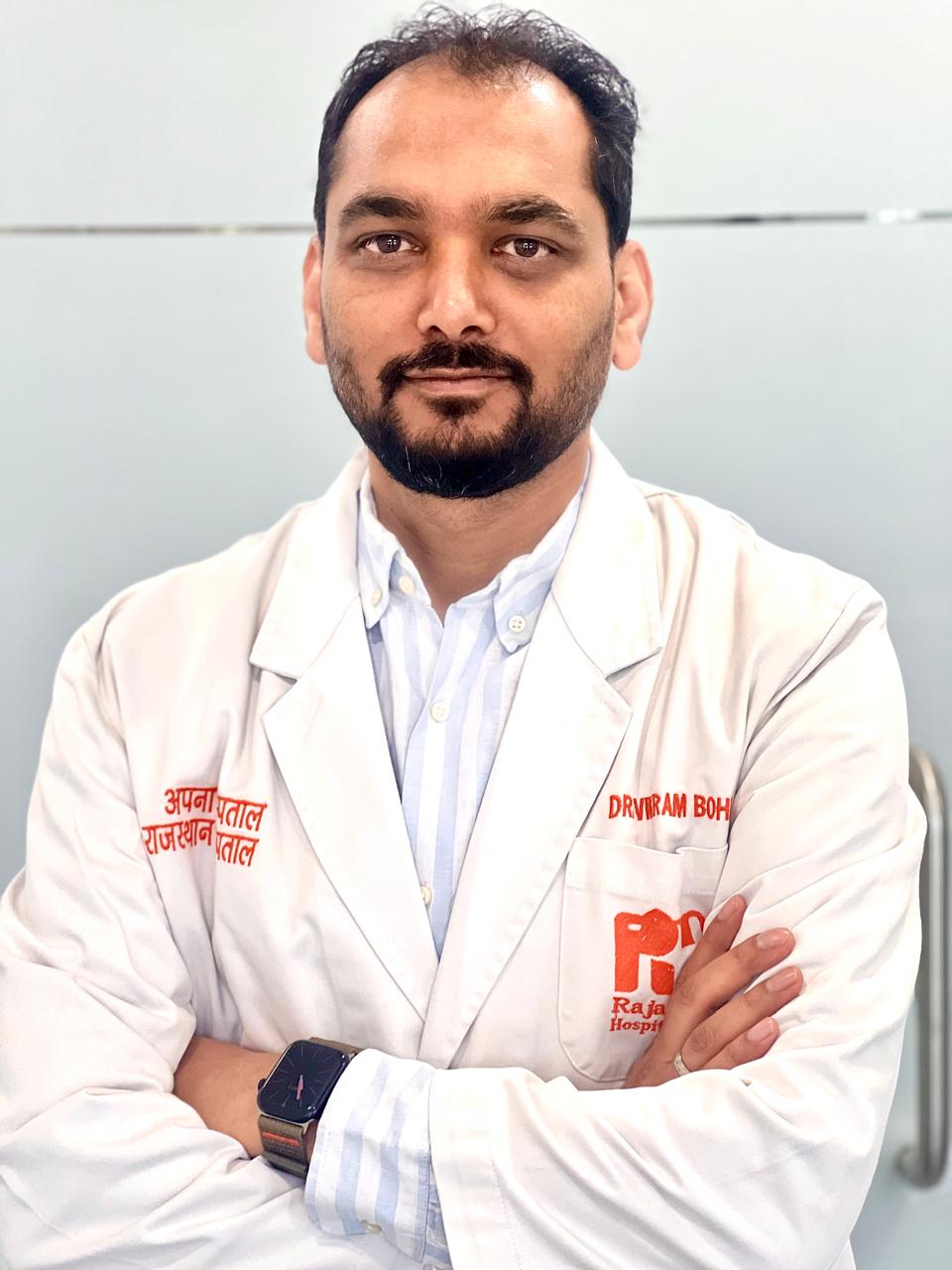
Exclusive Interview | Charu Bhatia, Senior News Editor, Business Remedies in conversation with Dr. Vikram Bohra, Chief Interventional Neurologist, Rajasthan Hospital, Jaipur
Neurological disorders such as stroke, epilepsy, Parkinson’s disease, migraine and Alzheimer’s disease affect millions worldwide, making brain health an increasingly important focus of modern medicine. While advances in minimally invasive procedures, artificial intelligence and new therapies have transformed neurological care, awareness and timely diagnosis remain major challenges. In this exclusive interview, Dr. Vikram Bohra, Chief Interventional Neurologist at Rajasthan Hospital, Jaipur, discusses his journey in medicine, the evolution of neurology, common myths, the role of AI, stroke awareness and the future of neurological care.
Q. You have had a distinguished career in neurology. Could you tell us about your journey into medicine and the experiences that led you to choose this specialty?
A: My inspiration to pursue medicine came from my maternal uncle, who was a doctor. I completed my schooling till Class 10 in Beawar before moving to a village in Bhilwara district for higher secondary education with biology. After that, I joined Grant Government Medical College in Mumbai for my MBBS. At that time, I consciously chose Mumbai because as GMC was among the top five medical colleges in India. During my medical education, which I completed in 2005, I came under the guidance of my Head of Department, Dr. Alka Deshpande, whose passion for neurology inspired me to explore the specialty further. I later pursued my MD in Medicine from Udaipur. Although I had also secured admission in Ahmedabad, I preferred Udaipur due to regional considerations. During my postgraduate studies, I had the opportunity to learn under Dr. D.C. Kumawat, whose mentorship played an important role in shaping my clinical approach. My interest in neurology deepened during my DM training because I realised that the specialty had evolved significantly. Earlier, many neurological diseases had limited treatment options, but newer therapies were making it possible to cure or effectively manage several conditions. That belief strengthened my decision to pursue DM in Neurology from GB Pant Institute in Delhi. Post DM, I worked for a short period at Metro Mas Hospital, Jaipur. One parent of stroke, who had stepwise worsening in condition due to major vessel blockade, made my future decision clear that I have to take up neuro intervention as a subspeciality. After completing my super-specialisation, I worked in Bengaluru before moving to Jaipur. I have been associated with EHCC Hospital and Birla Hospital before joining Rajasthan Hospital as Chief Interventional Neurologist. One of the biggest changes I have witnessed during my career has been in stroke management. Earlier, treatment options were limited and outcomes were often poor. However, since around 2013-14, interventional procedures such as mechanical thrombectomy have transformed stroke care by allowing doctors to remove clots from the brain in selected patients. These advancements have significantly improved patient recovery and survival.
Q. How has neurology evolved over the last two decades?
 A: Neurology has progressed tremendously over the past twenty years. Today, many neurological disorders that were once considered difficult to treat have effective diagnostic tools and therapies. For instance, treatments are now available for several paraneoplastic neurological disorders. Epilepsy management has improved considerably with newer anti-epileptic medications that provide better seizure control while causing fewer side effects, allowing patients to lead more normal lives. Parkinson’s disease management has also advanced with surgical procedures such as Deep Brain Stimulation for eligible patients. Migraine treatment has evolved with specialised preventive medicines and injectable therapies that offer relief to patients suffering from chronic headaches. Another major development has been the shift from traditional open surgeries to minimally invasive neuro-interventional procedures. These approaches reduce complications, shorten hospital stays and enable faster recovery.
Q. What are some of the most common myths surrounding neurological disorders that people should stop believing?
A: One of the biggest myths is that brain stroke has religious or supernatural causes. This is completely incorrect. Stroke is a medical emergency that occurs either because blood supply to the brain is blocked or because of bleeding within the brain. If patients reach a hospital within the golden treatment window, generally between 4.5 and 6 hours in eligible cases, they can receive treatments that significantly improve their chances of recovery. Another common misconception is related to epilepsy. Many people still believe that making a patient smell footwear during a seizure helps stop it. Scientifically, this has absolutely no benefit. Most epileptic seizures naturally stop within two to three minutes. Since people often try such remedies during that period, they wrongly assume that the shoe caused the recovery. Epilepsy is a neurological disease that requires proper medical treatment. Migraine is another condition that is often misunderstood. Young women experiencing frequent headaches are sometimes accused of making excuses to avoid household work. In reality, recurring headaches may indicate migraine, which is a genuine neurological disorder requiring diagnosis and treatment.
Q. Artificial Intelligence is rapidly transforming healthcare. How is it helping neurology?
A: Artificial Intelligence is becoming an important support system in neurological practice. Stroke diagnosis is one area where AI-assisted software has proved extremely useful. CT scans can now be analysed much more quickly, helping doctors detect blocked arteries, bleeding or damaged brain tissue within minutes. AI also assists in analysing medical images, improving diagnostic accuracy and helping neurologists make faster treatment decisions. One particularly promising area is perfusion imaging, which evaluates blood flow within brain tissue. It measures blood volume, blood flow and transit time, helping doctors identify brain tissue that can still be saved even when patients arrive beyond the conventional treatment window. Researchers are also studying ways to safely extend stroke treatment beyond the traditional golden period. Wearable devices such as smartwatches are another valuable innovation. Many can monitor heart rhythm and pulse continuously, helping identify abnormalities that may increase stroke risk. Technology is not replacing doctors, but it is making neurological diagnosis faster, more accurate and more efficient.
Q. What lifestyle habits are increasingly contributing to neurological problems?
A: Excessive smartphone usage has become one of the biggest lifestyle concerns. Long hours of screen exposure disturb normal sleep patterns, which directly affects brain health. Poor sleep contributes to anxiety, reduced concentration and various neurological complaints. Poor posture while using mobile phones is also leading to an increase in cervical spine disorders. While digital content can temporarily relieve stress, excessive dependence gradually reduces attention span and concentration. Over time, this may contribute to memory-related complaints and declining cognitive performance. Maintaining healthy sleep, reducing unnecessary screen time and adopting an active lifestyle are essential for protecting brain health.
Q. What are some of the ongoing breakthroughs in neurological research?
A: Neurology is currently witnessing exciting research across multiple areas. One of the biggest developments has been the introduction of newer drugs for Alzheimer’s disease, which offer hope in slowing disease progression in selected patients. Migraine treatment is another rapidly advancing field, with newer medicines and preventive therapies improving patients’ quality of life. Research continues to expand treatment possibilities for several neurological disorders that were once considered extremely difficult to manage.
Q. What warning signs should people never ignore when it comes to neurological health?
A: Certain symptoms require immediate medical attention. A sudden, severe headache, especially one that occurs immediately after waking up or is accompanied by blurred vision or vision loss, should never be ignored. Similarly, sudden weakness or paralysis affecting one side of the body may indicate a stroke and requires urgent medical evaluation. People should remember the BE FAST acronym for recognising stroke symptoms:
• B – Balance: Sudden loss of balance or coordination.
• E – Eyes: Sudden blurred vision, double vision or loss of vision.
• F – Face: One side of the face droops or feels numb.
• A – Arm: Weakness or numbness in one arm or leg.
• S – Speech: Slurred speech or difficulty speaking.
• T – Time: Seek immediate medical attention immediately.
The most important message is simple: Time lost is brain lost. Stroke is one of the most common neurological emergencies. Every second counts, and early treatment dramatically improves recovery and survival.
Q. What are the biggest challenges you face while treating neurological patients?
A: The biggest challenge is lack of awareness. Many patients fail to recognise neurological symptoms as emergencies and therefore arrive late for treatment. Another challenge is poor compliance with long-term treatment. Patients often stop medicines or fail to attend follow-up appointments once they begin feeling better. Many also neglect risk factors such as high blood pressure, diabetes and cholesterol, all of which increase the risk of stroke and other neurological diseases. Successful treatment requires patients to actively participate in managing their health and making necessary lifestyle changes.
Q. How do you view the doctor-patient relationship in today’s healthcare system?
A: Doctors today often have limited consultation time because of heavy patient loads. As a result, they may not always be able to provide detailed explanations about every aspect of the diagnosis and treatment. However, doctors are committed to helping their patients recover. Building trust, maintaining open communication and having realistic expectations are important for strengthening the doctor-patient relationship. Healthcare works best when doctors and patients function as partners.
Q. What are your views on government healthcare schemes and their role in improving healthcare delivery?
Answer: Government healthcare schemes have certainly improved access to treatment for economically weaker sections of society. However, operational challenges remain. Delays in reimbursement under schemes such as RGHS create financial pressure on hospitals and sometimes affect service delivery. There are also important neurological treatments that are not fully covered under existing packages. While improvements have been made over the years, expanding treatment coverage and ensuring timely payments would further strengthen the healthcare system.
Q. Finally, what advice would you give to young doctors who wish to pursue neurology?
A: Neurology is an intellectually stimulating and rewarding specialty, but it is also demanding and emotionally challenging. Before choosing the field, aspiring doctors should spend time observing neurologists at work and understand the realities of the profession. Shadowing experienced specialists can help them make an informed decision. It is important to remember that neurology requires lifelong learning, patience and resilience. Those who enter the specialty with genuine interest and realistic expectations will find it deeply fulfilling because they have the opportunity to make a meaningful difference in patients’ lives through advances in modern neuroscience.