
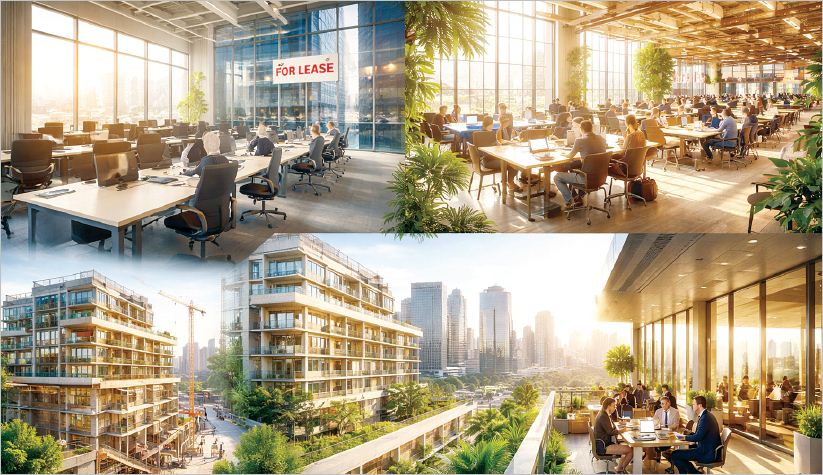
Jaipur | Charu Bhatia | The global shift to remote and hybrid work is triggering one of the biggest transformations the commercial real estate sector has seen in decades. What began as a pandemic-era necessity has evolved into a long-term workplace model, forcing landlords, developers and investors to rethink how office spaces are designed, priced and used.
Falling Demand For Traditional Office Space
Across major business hubs, companies are reassessing how much office space they actually need. Hybrid schedules mean fewer employees in the office at the same time, leading many organisations to reduce or renegotiate long-term leases. Vacancy rates in several global cities have risen as businesses shrink footprints or delay expansion plans.
Large corporations that once prioritised expansive headquarters are now focused on flexibility. Instead of committing to multi-year leases, many prefer shorter contracts or shared spaces that can scale up or down depending on workforce needs.
Rise Of Flexible And Coworking Spaces
As demand for traditional offices softens, flexible workspaces are experiencing a revival. Coworking providers and serviced offices are attracting companies seeking agility and cost efficiency. These spaces allow businesses to maintain a professional presence without long-term commitments, while also supporting hybrid teams that need occasional in-person collaboration.
This shift has encouraged landlords to convert conventional office buildings into flexible, plug-and-play workspaces with shared amenities, meeting rooms and collaborative zones.
Flight To Quality And Experience
While overall office demand has declined, premium buildings are gaining attention. Companies that retain offices are prioritising high-quality spaces with strong ventilation, natural light, wellness features and advanced technology. The office is increasingly viewed as a destination for collaboration, culture and client engagement rather than everyday desk work.
As a result, top-tier properties in prime locations are outperforming older buildings, creating a growing divide within the real estate market.
Repurposing Office Spaces
In many cities, underutilised office buildings are being repurposed into residential apartments, hotels, mixed-use developments or data centres. This trend reflects a broader urban shift as city planners and developers adapt to changing patterns of work and mobility.
Retail and hospitality businesses in traditional office districts are also adjusting, as reduced footfall alters local economies and demand patterns.
Long-Term Impact On Real Estate Strategy
Remote work has introduced lasting uncertainty but also new opportunities. Investors are diversifying portfolios to include logistics, warehousing and residential projects, sectors boosted by e-commerce and flexible living trends.
Commercial real estate is unlikely to return to its pre-pandemic model. Instead, the future points towards hybrid workplaces, flexible leasing and multi-purpose buildings designed for evolving work patterns.