
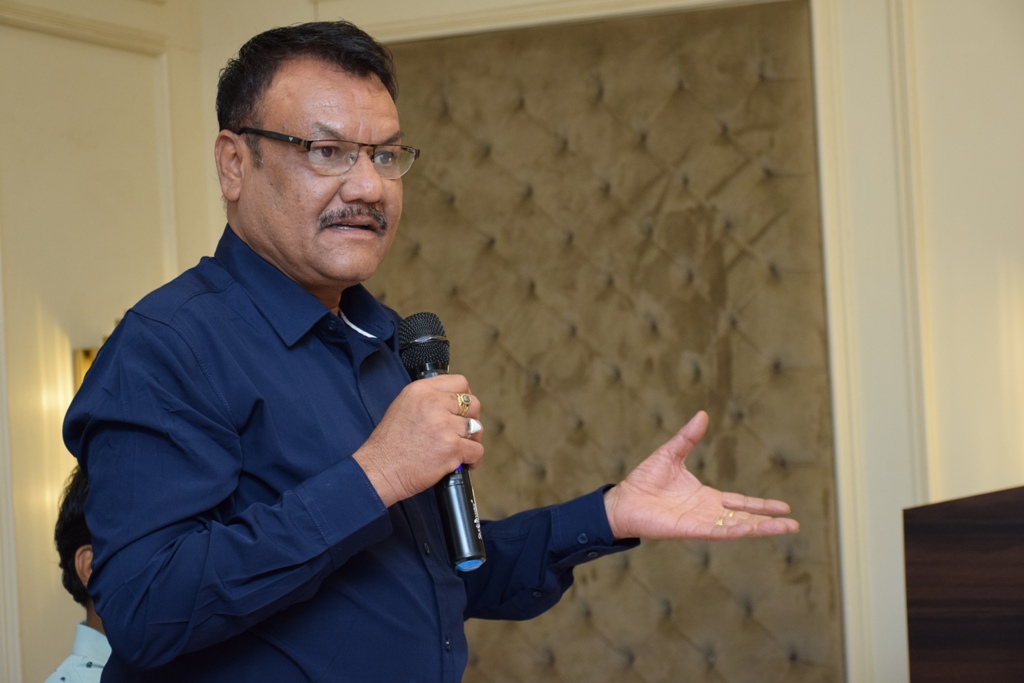
Business Remedies | Shruti Kothari | Sr. News Editor | May 07,2025 | He’s a name that resonates across Kota’s business corridors, social institutions, and political circles. Rajesh Gupta, a seasoned entrepreneur and President of the Divisional Chamber of Commerce and Industry, has seen the city—and the country—transform. From heading Bharat Motor Stores, one of Kota’s oldest automobile spare parts firms, to representing trade interests at regional and national levels, Gupta has worn many hats. In this exclusive conversation, he reflects on India’s evolving economic journey, the emerging global order, and how entrepreneurs must prepare for what’s next.
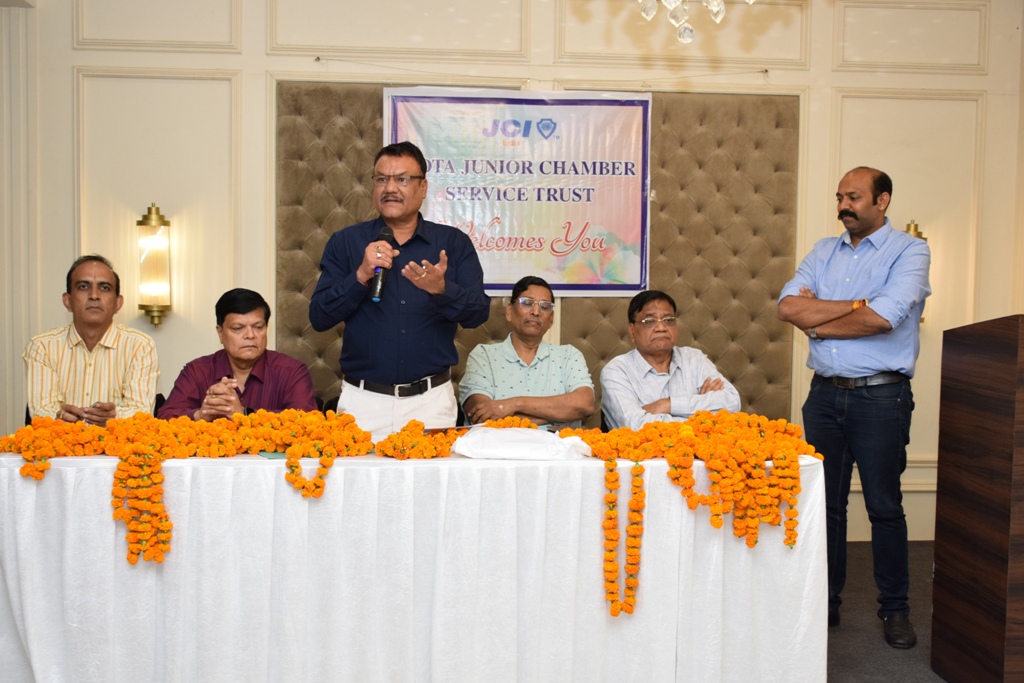
In conversation with Mr. Rajesh Gupta, Owner- Bharat Motor Stores
1.Mr. Gupta, let’s begin with your background—how did your journey in the business world begin?
A. Absolutely. The journey started over 70 years ago when my father, Shri Radheshyam Gupta, established Bharat Motor Stores. It was the first automobile spare parts firm in Kota, and today it continues to be a respected name in the industry. I stepped into the business after completing my LLB, choosing to carry forward my family’s legacy instead of practicing law.
2. Besides business, you’ve held several leadership roles. How did your involvement in commerce associations evolve?
A. Commerce has always been in my blood, not just as a businessman but as a contributor to the broader economic ecosystem. My father served as the President of the Divisional Chamber of Commerce and Industry in the 1970s, and I followed in his footsteps. I’ve served as General Secretary for a decade and now hold the position of President of the Divisional Chamber of Commerce, Kota. I also lead the Automobile Spare Parts Dealers Association for five consecutive terms and serve as the District President of Bharatiya Udyog Vyapar Mandal.
3.You’ve also been deeply active in politics. Where did that inspiration come from?
A. Politics has been a part of our household since my childhood. My father was closely associated with the Jana Sangh and played a key role in the early formation of the BJP. Leaders like Atal Bihari Vajpayee, Lal Krishna Advani, and Bhairon Singh Shekhawat were frequent visitors to our home. That environment naturally shaped my interest. Over the years, I’ve served in the city BJP executive, as State Vice President, and for seven years, I worked as Media In-Charge and District Coordinator for the BJP Media Cell in Kota.
4. Your social commitments are equally impressive. Tell us more.
A. Indeed. I’ve been an active part of JCI (Junior Chamber International) India for the past 34 years. In Kota alone, we have over 1,000 member families, and I’ve consistently worked as a frontline leader within the organization.
I also serve as the founder, creator, and current president of JCI Service Trust, Kota, which brings together some of the city’s most prominent citizens. The Trust manages a dedicated fund of over ₹30 lakh and carries out impactful social initiatives across all sectors of the city. I’m also proud to be associated with Lions Club, Rotary Club, and many other social groups.
5. We’ve heard you also have a passion for journalism. How did that come about?
A. Yes, journalism is very close to my heart. In the 1980s, I started writing articles for local newspapers like Rashtradoot. I’ve been a member of the Kota Press Club, Rajasthan Patrakar Sangh, and the Media Council of Journalists of Rajasthan. At one point, I even launched my own daily newspaper, Dainik Aapka Saakshi.
6.Looking back at this multifaceted journey, what keeps you motivated?
A. The drive to give back—to the city, the community, and the institutions that shaped me. Whether it’s through business, leadership, politics, or service, I believe in creating lasting impact. That’s what keeps me going every single day.
7. You’ve closely observed India’s economic transformation. How do you view our growth over the last decade?
A. To be honest, until just a few years ago, we were far from being considered an economic superpower. We weren’t even thinking in that direction. Before Prime Minister Modi took office, we ranked below the 12th position globally in terms of economic strength.
But with a decisive political shift, the country got a strong, visionary leader and a capable team. Since then, we’ve witnessed a revolution in the economic sector. In less than 12 years, India has leapt forward to become the fifth-largest economy in the world. It’s nothing short of extraordinary.
8. But the global economic scene seems turbulent now. What’s your take on the current scenario?
A. Today’s global financial climate is full of uncertainty. We’re facing rapid fluctuations, and the industrial sector is surrounded by ambiguity. For example, the U.S., under Trump, increased tariffs on multiple countries, including India—essentially igniting a tariff war.
This created fear among Indian exporters, particularly in the small and medium industries, as exporting became tougher. It felt like an economic crisis for us.
9. Yet you mention spotting an opportunity in this crisis. Can you elaborate?
A. Yes, that’s the beauty of economic vision—seeing light in dark corners. While Trump hit India with higher tariffs, he hit China even harder—over 100 times higher. As a result, China, the world’s largest exporter and manufacturer, found itself on its knees.That’s where I see a golden opportunity for Indian industries.
With China struggling, the global market is now looking for alternatives—and who better than India? We are the next largest economy, a cost-effective producer, a large exporter, and we have the manpower and land to support large-scale industrial activity. If we act wisely, this moment could catapult India into the role of a global manufacturing hub. This is our time—let’s embrace it, progress, and be proud contributors to India’s economic growth.
10. The recent changes in income tax slabs also seem significant. What’s your view?
A. Absolutely! One of the most impactful moves this year was the government’s decision to increase the income tax exemption limit from ₹7 lakh to ₹12 lakh. This is a major relief for small traders, MSMEs, retail businessmen, salaried professionals, and more. Think of it—₹5 lakh more in tax-free income for each taxpayer. This will strengthen banks, increase government revenue, and give businesses more room to reinvest and expand. I believe it’s a bold step that will drive stronger, more sustainable economic growth.
11.Even amidst geopolitical tensions, India’s markets have been performing well. What does that signal to you?
A. Despite the visible tensions between India and Pakistan, there’s a stark contrast in how both economies are reacting. Pakistan’s stock market has been bleeding red for days. Meanwhile, India’s stock market is hitting new highs daily. That’s a clear sign of our economic resilience, global trust, and investor confidence.
The world is watching, and they’re surprised—perhaps even a little awed—by our stability and strength.
 Interviewed & Edited By :
Shruti Kothari