
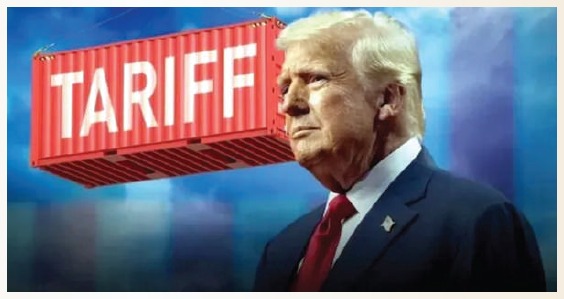
Business Remedies | Charu Bhatia | A surprise move by former U.S. President Donald Trump to slap a 25% tariff on Indian goods has sent ripples through India’s business and policymaking circles. While the measure is part of a broader global tariff rollout, Indian exporters, trade groups, and government officials are now scrambling to assess the impact and recalibrate their response amid rising geopolitical strain.
The trigger was a sharply worded post on Trump’s Truth Social account, where he called India’s trade practices “strenuous and obnoxious” and hinted at penalising the country for continued Russian arms and energy imports. Within 24 hours, another post followed, this time targeting New Delhi’s alignment with “dead economies” like Russia. Then came the tariff.
Trade Tensions Escalate Policy Options Narrow
As the 25% tariff took effect, Indian officials weighed retaliatory options, but the broader concern lies in being comparatively disadvantaged. Competing economies like Pakistan and Bangladesh were hit with lower duties, 19% and 20% respectively, making India’s exports less competitive overnight.
“There’s no question this hurts us,” said Sabyasachi Ray, executive director of the Gem and Jewellery Export Promotion Council. “We’re facing steeper duties than regional peers. It puts us on the back foot.”
The move also coincided with the U.S. striking a fresh trade pact with Pakistan, further fuelling India’s frustration and prompting debate over Washington’s shifting South Asia strategy. Businesses in India’s textile hubs and manufacturing corridors are already reporting concerns from U.S. buyers demanding price adjustments.
Impact on Exporters and Employment
For companies like Kanodia Global, which derives 40% of its revenue from the U.S., the tariff hit was immediate. “Our top two American clients have asked for discounts to offset the duty,” said director Ashish Kanodia. “If this continues for months, layoffs may be inevitable.”
With India’s two-way trade with the U.S. valued at $129.2 billion in 2024, the stakes are high. The sectors most exposed include textiles, gems, auto components, and home goods, industries with high employment potential.
A Calculated Political Move?
Analysts suggest Trump’s sudden escalation is part of a hardline negotiating strategy, aimed at pressuring unresolved trade discussions into fast resolutions.
“This feels less like structured trade policy and more like political theatre,” said Rohit Kumar of The Quantum Hub, a public policy research firm. “It may also be aimed at projecting strength ahead of the U.S. election.”
For New Delhi, the challenge is to contain economic fallout without derailing bilateral ties entirely. Government sources suggest India may consider increasing imports from the U.S., possibly energy or agricultural goods, to offset the tension.
Outlook: Short-Term
Pain, Long-Term Play?
Despite the disruption, some believe the standoff could be temporary. “This is a storm, not a rupture,” said Vivek Mishra of Observer Research Foundation. “India still holds strategic importance for the U.S., this is likely a recalibration, not a breakdown.”
For now, India’s trade and industry bodies are urging calm and lobbying for renewed dialogue. But the episode has revealed the fragility of expectations in a politically charged global trade environment, where one social media post can trigger economic upheaval.
 Written & Edited
Charu Bhatia