
Charu Bhatia | Jaipur | With the enhanced interest in sustainable and organic food, the farming sector has to employ advanced technology and business techniques to meet requirements for organic food. Organic farming is fast changing as new instruments and approaches emphasises on increasing productivity.
Let’s delve deeper into some of the most promising trends in organic farming technology ahead!
Artificial Intelligence in Farm Management
AI and machine learning enable organic farming with predictive analytics and precision agriculture. Through this, a farmer is able to collect data on weather conditions, and crop’s health and growth, in order to make informed decisions. AI can predict crop diseases, optimize planting schedules, or even predict market trends to give farmers an edge over the competition.
Sensor Technology for Real-Time Monitoring
In modern farming, sensors are becoming an important part, making it possible to obtain real-time measurements of soil moisture, temperature etc. The use of such sensors would enable organic farmers to monitor their crops and the health of their soil.
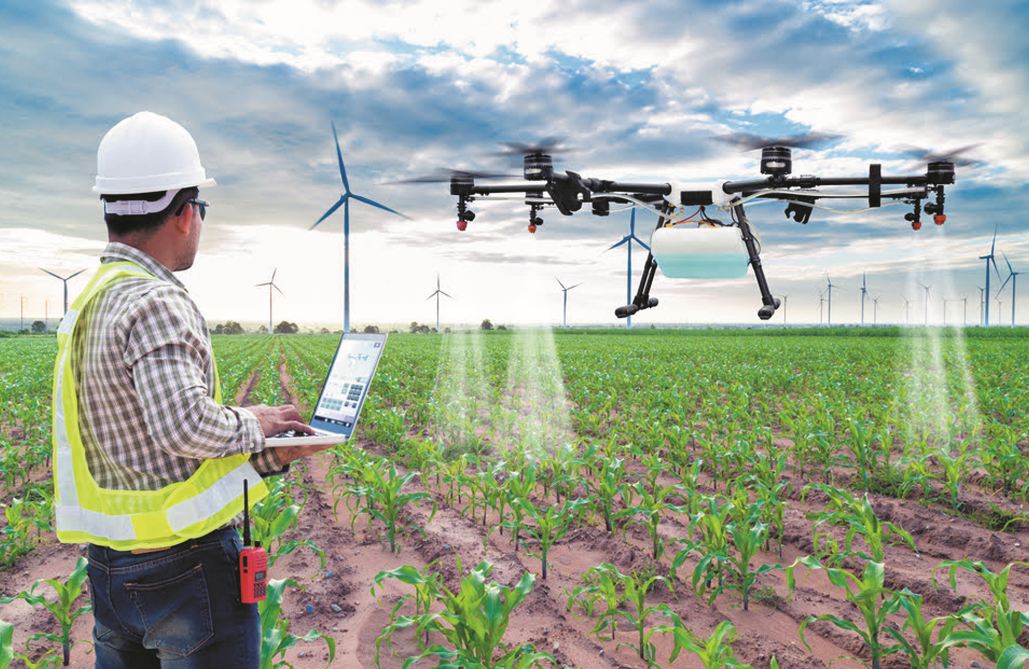
Drones for Crop Surveillance
Organic farming has embraced drones to provide an aerial view of larger fields, making crop surveillance more effective. It is equipped with high-resolution cameras and sensors for detecting pest or nutrient deficiency.
Robotics for Labor-Intensive Tasks
Agriculture is also facing labor shortages, and organic farms are not excluded. Robotics technology is proving to ease this problem by automating labor-intensive steps in farming.
Vertical Farming and Hydroponics
When people are growing, traditional farmland is scarce. Therefore, innovations such as vertical farming and hydroponics are being recognized to give organic farmers an option of growing crops in layers. These systems save up to 90% of water usage and thus are very environmental-friendly for sustainable agriculture.
Big Data for Informed Decision-Making
It has empowered farmers with crucial insights, from crop performance to the trend of markets. Organic farming will thus be able to make better decisions in choosing crops and resource management. Big data helps in identifying patterns towards reducing the loss of crops.
Organic farming’s bright future has roots in advancing technology. From AI to robotics, empowering farmers with data-driven insights into their changing agriculture concerns is proving to change the traditional method of organic farming.