

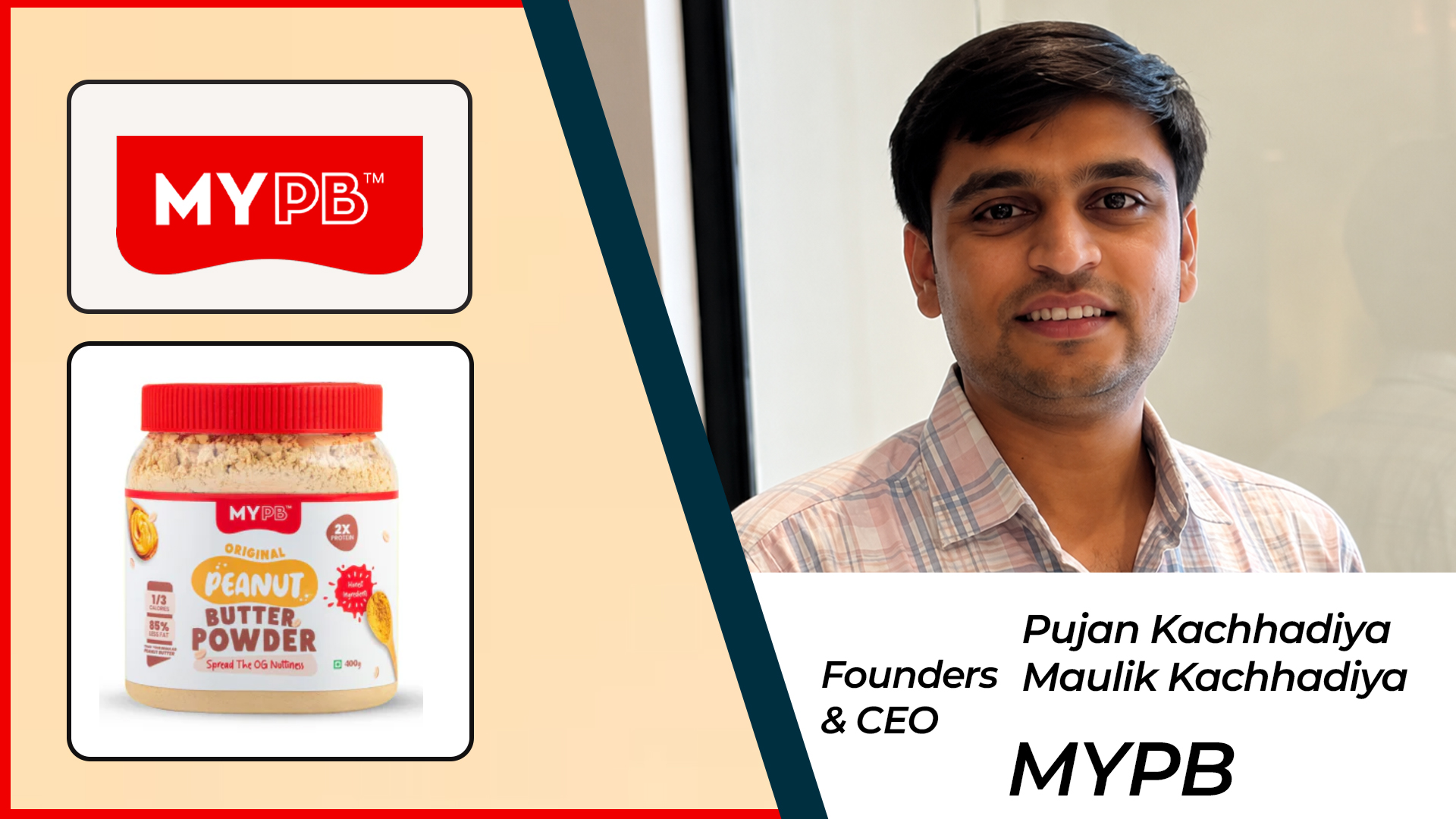
Jaipur | Rajshree Upadhyaya | When Pujan Kachhadiya stepped onto the Shark Tank India stage, he was not pitching another conventional peanut butter brand. Instead, he introduced Indian consumers to a relatively niche product category-peanut butter powder. Through MYPB, the entrepreneur from Amreli, Gujarat, aimed to offer a healthier and more versatile alternative for fitness enthusiasts and health-conscious consumers seeking high-protein nutrition with lower fat content. Founded in 2023, MYPB quickly carved out a place for itself in India’s growing health food market.
Pujan’s entrepreneurial journey was far from straightforward. After completing his BSc in Chemistry, he initially dreamed of starting a business but faced financial constraints. For several years, he prepared for state civil service examinations before eventually deciding to pursue entrepreneurship. During the COVID-19 period, he and his elder brother began exploring business opportunities connected to Gujarat’s strong groundnut-producing ecosystem. Their research exposed them to powdered peanut butter products that had already gained popularity in international markets. Recognizing the absence of a dedicated player in India, Pujan saw an opportunity to build a brand around the concept.
The company officially launched in August 2023 with a focus on peanut butter powder, a product created through a process that removes much of the fat while retaining protein and flavor. Unlike traditional peanut butter, the powder can be mixed into smoothies, shakes, baked goods, and other recipes, making it a convenient option for consumers looking to increase protein intake without significantly increasing calories. Over time, the company expanded its portfolio with products such as Original Peanut Butter Powder, Pure Peanut Butter Powder, and Dark Chocolate Peanut Butter Powder, targeting athletes, gym-goers, and nutrition-conscious consumers.
Building awareness for an entirely new category was one of the company’s biggest challenges. Many consumers were unfamiliar with peanut butter powder and its benefits, requiring the brand to invest heavily in education and digital marketing. Despite these hurdles, MYPB gradually gained traction through online sales channels. The company reported sales of approximately Rs. 5.5 lakh during its early phase and later achieved revenue of around Rs. 81 lakh in FY 2024-25. The startup also demonstrated positive profitability metrics, indicating that its business model was beginning to gain commercial strength.
The turning point came when MYPB appeared on Shark Tank India Season 5. Pujan entered the tank seeking Rs. 70 lakh for 10% equity, valuing the business at Rs. 7 crore. During the pitch, the sharks examined both the product category and the company’s growth prospects. While some investors questioned whether removing fat from peanuts reduced part of their nutritional value, others appreciated the brand’s unique positioning and potential within the expanding health and fitness market. After a series of discussions and negotiations, Namita Thapar, Vineeta Singh, and Varun Alagh jointly invested Rs. 70 lakh for 15% equity, valuing the company at approximately Rs. 4.67 crore.
The appearance significantly boosted MYPB’s visibility, introducing the brand to a nationwide audience and strengthening consumer awareness of peanut butter powder as a category. The investment also provided strategic backing from experienced consumer-brand investors who understood the challenges of scaling a niche food business. As of 2026, MYPB appears to be operational and continues to sell its range of peanut butter powder products in India. What began as an idea inspired by global nutrition trends has evolved into a growing health food startup. Pujan Kachhadiya’s journey demonstrates how identifying an untapped market opportunity and combining it with persistence and product innovation can create a distinctive brand, even in a highly competitive food industry.
 Written & Edited By:
Rajshree Upadhyaya