


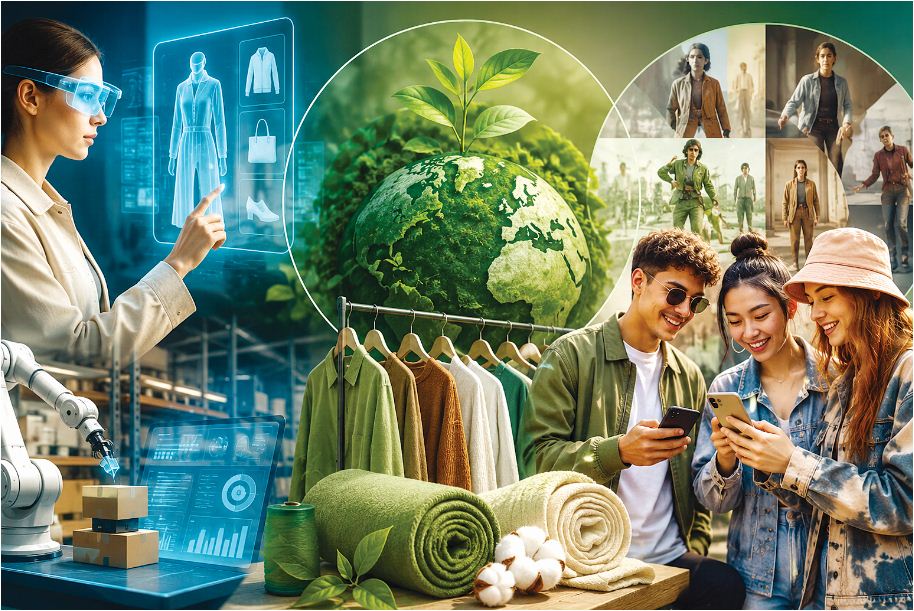
Jaipur | Charu Bhatia | The fashion retail industry is undergoing one of its biggest transformations in decades. While trends have traditionally been driven by designers and seasonal collections, the future of fashion is increasingly being shaped by three powerful forces: artificial intelligence (AI), sustainability, and Generation Z consumers. Together, they are changing how clothes are designed, marketed, sold, and consumed.
AI is rapidly becoming a competitive advantage for fashion brands. Retailers are using machine learning algorithms to predict demand, identify emerging trends, and optimize inventory management. Instead of relying solely on historical sales data, brands can now analyze social media conversations, search patterns, and consumer preferences in real time. This helps companies reduce overproduction, improve forecasting accuracy, and respond faster to changing tastes.
AI-powered personalization is also transforming the shopping experience. From virtual try-on tools to intelligent product recommendations, brands are leveraging technology to create customized journeys for consumers. This not only improves customer satisfaction but also increases conversion rates and loyalty in an increasingly crowded market.
At the same time, sustainability is moving from a niche concern to a business imperative. Consumers, regulators, and investors are demanding greater transparency across fashion supply chains. The industry, which has long faced criticism for waste generation and environmental impact, is responding with eco-friendly fabrics, recycling initiatives, and circular fashion models.
Many apparel companies are investing in sustainable materials such as organic cotton, recycled polyester, bamboo fibres, and plant-based textiles. Others are launching resale platforms, rental services, and garment take-back programmes to extend product lifecycles. Sustainability is no longer viewed as a marketing exercise but as a key factor influencing long-term profitability and brand reputation.
Driving much of this change is Gen Z, a consumer group expected to account for a significant share of global fashion spending over the next decade. Unlike previous generations, Gen Z shoppers prioritize authenticity, ethical sourcing, inclusivity, and environmental responsibility alongside style and affordability. This generation is also highly digital. They discover brands through social media, expect seamless online shopping experiences, and are more likely to support companies that align with their values. As a result, fashion retailers are investing heavily in digital engagement, influencer partnerships, and transparent communication strategies.
The convergence of AI, sustainability, and Gen Z preferences is creating a new blueprint for fashion retail. Brands that can combine technological innovation with responsible business practices and consumer-centric experiences are likely to emerge as industry leaders. As the fashion sector evolves, success will depend not only on predicting the next style trend but also on understanding the broader shifts shaping how consumers think, shop, and engage with brands.