

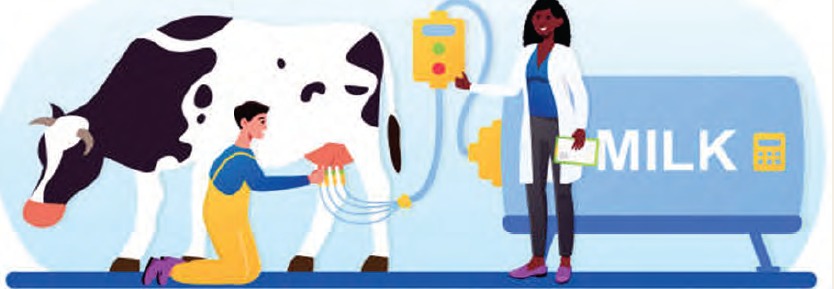
Business Remedies | Charu Bhatia | June 27, 2025 | India’s dairy industry, the largest in the world by milk production, is undergoing a major transformation. Traditionally driven by small-scale farmers and cooperative models, the sector is now embracing cutting-edge technologies and innovative business techniques to boost efficiency, traceability, quality, and profitability. From AI-powered milking systems to data-driven supply chains, the modern dairy landscape is as much about tech as it is about cows.
Here’s a closer look at how new-age strategies and tools are reshaping one of India’s most essential agribusiness sectors.
1. Digital Supply Chain Management
Gone are the days of manual tracking. Today, dairy cooperatives and private players are investing in end-to-end digital supply chain platforms that allow real-time monitoring of milk collection, transportation, and distribution. GPS-enabled tankers, mobile-based milk procurement systems, and cloud-based dashboards ensure transparency and reduce spoilage.
8 Example: Amul uses a centralized digital system to track procurement from over 3.6 million farmers, ensuring timely payments and quality consistency.
2. Data Analytics and Predictive Modelling
Big data is now the big differentiator. By collecting data from dairy farms, on yield, health, feed, and environmental conditions, companies are using predictive analytics to improve decision-making. AI models help forecast milk demand, optimize breeding cycles, and reduce wastage by predicting peak production phases.
8 Startups like Stellapps have developed IoT and data platforms specifically for dairy farmers to digitize operations from farm to fork.
3. Automation and Smart Milking
Automated milking systems, often called robotic milking parlours, are increasingly used by larger farms. These machines identify cows through RFID tags, record yield data, and even detect health issues early by analyzing milk quality and flow.
8 Technologies used: RFID tags, milk sensors, smart collars, and machine learning algorithms for behavior tracking.
This reduces labor dependency, increases yield per cow, and improves animal welfare through more consistent care.
4. Cold Chain and IoT-Enabled Storage
Milk is highly perishable, making cold chain logistics crucial. IoT sensors are now used to monitor temperature throughout the transportation and storage process. Alerts are triggered if thresholds are breached, helping companies reduce spoilage and maintain quality standards.
8 Companies like MilkMantra and Country Delight are investing in IoT-enabled chilling units and cold transport networks to improve last-mile delivery.
5. Blockchain for Traceability
In an age of conscious consumerism, traceability is key. Some dairy brands are experimenting with blockchain to provide transparent information about milk origin, feeding practices, and processing methods. This not only builds trust but also complies with export norms for global markets.
8 Benefit: Each batch of milk can be traced back to the farm and the individual cow, adding a layer of credibility and accountability.
6. Financial Inclusion and Direct-to-Farmer Models
Mobile banking and UPI-based payments have revolutionized the dairy payment ecosystem. Farmers now receive direct payments within 24-48 hours, ensuring financial stability and better engagement. Some platforms also offer credit scoring and microloans based on milk supply data.
8 Digital wallets and dairy-specific fintech tools are supporting rural inclusion like never before.
The Road Ahead
As climate change, food security, and consumer expectations evolve, the dairy industry is embracing digital transformation as a necessity rather than an option. With government support through schemes like Rashtriya Gokul Mission and e-Gopala, the sector is poised to become smarter, cleaner, and more sustainable.
 Written & Edited By:
Charu Bhatia