
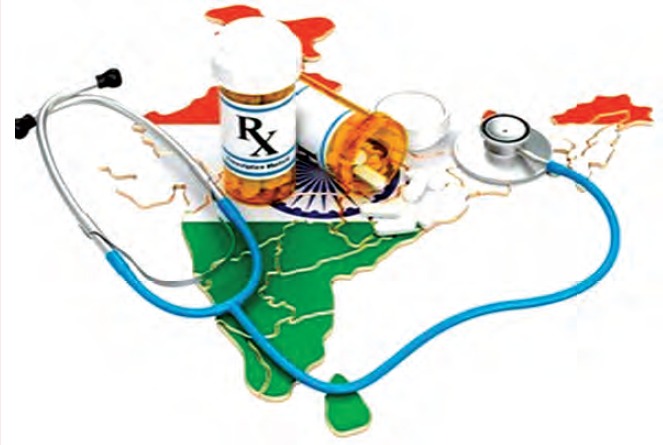
Business Remedies | Charu Bhatia | June 14,2025 | As India marks World Blood Donation Day, the spotlight isn’t just on voluntary donors, it’s also on the evolving infrastructure that supports them. From blood banks and diagnostic labs to telemedicine platforms and AI-enabled hospitals, India’s healthcare infrastructure is undergoing a significant business transformation. This shift isn’t only about public health, it’s also about new economic opportunities, rising investor interest, and the integration of lifesaving innovations.
Blood Donation Day: A Reminder of Systemic Gaps and Growing Solutions
Each year, World Blood Donation Day reminds us of the critical importance of a robust healthcare ecosystem. India faces an estimated blood shortage of over 1.9 million units annually, as per the WHO. Yet, in recent years, we’ve seen an emerging trend: private and public investments working in tandem to build stronger blood bank networks, digitised donor tracking, and mobile blood collection units, essential components of a scalable, modern healthcare system.
These advancements are part of a larger narrative, India’s healthcare infrastructure is no longer seen only through the lens of social responsibility, but also as a sector poised for high-impact growth and innovation.
Surge in Investments and Capital Commitments
Healthcare has emerged as a high-potential sector for private equity and institutional investment. The Indian government’s flagship Ayushman Bharat Health Infrastructure Mission (AB-HIM), launched with a Rs. 64,000 crore budget, has laid the foundation for a comprehensive, tiered health network, from primary health centres to critical care blocks in every district.
Meanwhile, private hospitals and diagnostic giants are scaling aggressively. For example:
8 Apollo Hospitals plans to invest Rs. 3,000 crore in expanding its footprint across Tier-2 cities.
8 Metropolis Healthcare and Dr. Lal PathLabs are investing in AI-enabled labs for faster diagnostics, including blood analysis.
8 Startup platforms like BloodCo-nnect and SimplyBlood are leveraging data-driven matching and blockchain tracking to ensure safe and traceable donations.
Foreign Direct Investment (FDI) into Indian healthcare rose to $10.2 billion between 2021 and 2024, marking one of the highest levels of global interest in Indian health-tech and infrastructure plays.
Innovations Powering Growth: From AI to Blood Banks
India’s healthcare innovation boom is also helping plug critical infrastructure gaps:
8 AI in Diagnostics: Predictive models are being used to forecast seasonal blood demand and plan inventory accordingly.
8 IoT and Remote Monitoring: Devices now monitor blood temperature and safety during transport in real time.
8 Digital Donor Platforms: National Health Stack and private apps allow seamless donor registration, reminders, and location-based drives.
Additionally, mobile blood donation vans equipped with digital registration and cold storage are reaching underserved rural and semi-urban populations, bringing modern healthcare infrastructure where it’s needed most.
Building for a Healthier, Investable Future
World Blood Donation Day serves as a timely reminder: behind every unit of blood donated is a system that must work seamlessly, from transport logistics to data management and diagnostics. For business leaders and investors, this is an opportunity to recognise healthcare infrastructure not just as a public service imperative, but also as a powerful driver of economic growth and innovation.
As India builds for a healthier tomorrow, the confluence of tech, capital, and compassion will define the next chapter of its healthcare revolution.
 Written & Edited By:
Charu Bhatia