


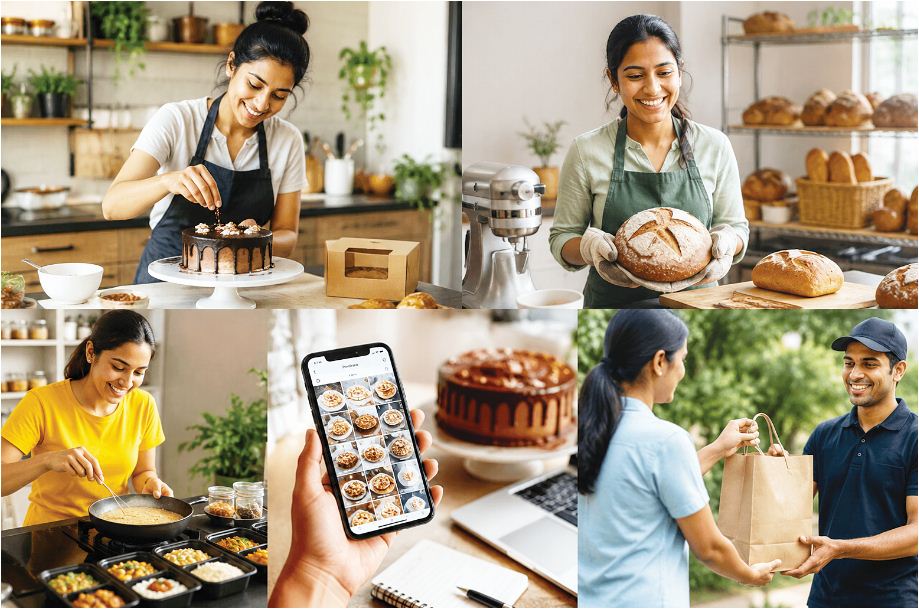
Jaipur | Charu Bhatia | The next disruption in India’s food industry may not come from a multinational company or a heavily funded startup. Instead, it is emerging from home kitchens, apartment balconies and neighbourhood bakeries, where a growing number of micro-bakeries and home chefs are building loyal customer bases and challenging established food brands.
What began as a side hustle during the pandemic has evolved into a significant business trend. Across cities such as Mumbai, Bengaluru, Delhi, Pune and Hyderabad, consumers are increasingly choosing handcrafted sourdough bread, artisanal desserts, regional delicacies and customised meals over mass-produced packaged foods. The shift reflects changing consumer preferences. Today’s customers are not only looking for taste but also authenticity, transparency and personalization. Many home chefs market their products as preservative-free, freshly prepared and tailored to dietary requirements such as gluten-free, vegan or high-protein diets.
Social media has become the primary growth engine for this trend. Instagram, WhatsApp and food delivery platforms have allowed small food entrepreneurs to reach thousands of customers without investing in expensive retail spaces. A well-photographed cake, specialty bread or regional recipe can quickly attract orders and generate repeat business.
Industry experts say trust is another key factor driving demand. Consumers often feel more connected to a baker or chef whose story they know compared to a large corporate brand. This direct relationship helps smaller food businesses build customer loyalty that traditional food manufacturers often struggle to replicate. The economics are also becoming increasingly attractive. Cloud kitchens, online ordering systems and digital payment infrastructure have reduced entry barriers. Entrepreneurs can start small, test products and scale gradually without the costs associated with opening a restaurant or retail outlet.
The trend is creating opportunities beyond metropolitan areas as well. Smaller cities are witnessing growing demand for premium baked goods, healthy snacks and specialty foods, encouraging local entrepreneurs to enter the market. Established food brands are taking notice. Many are introducing artisan product lines, limited-edition offerings and locally inspired recipes to compete with smaller players. Some large companies are even partnering with independent chefs and creators to maintain relevance among younger consumers.
However, challenges remain. Scaling production while maintaining quality, complying with food safety regulations and building sustainable supply chains can be difficult for small operators. Competition is also intensifying as more entrepreneurs enter the space.
Despite these hurdles, the rise of micro-bakeries and home chefs signals a broader transformation in India’s food economy. Consumers are increasingly willing to pay a premium for products that feel personal, fresh and unique. As digital platforms continue to connect creators directly with customers, India’s next successful food brands may not emerge from large factories but from home kitchens that understand changing consumer tastes better than anyone else.


