

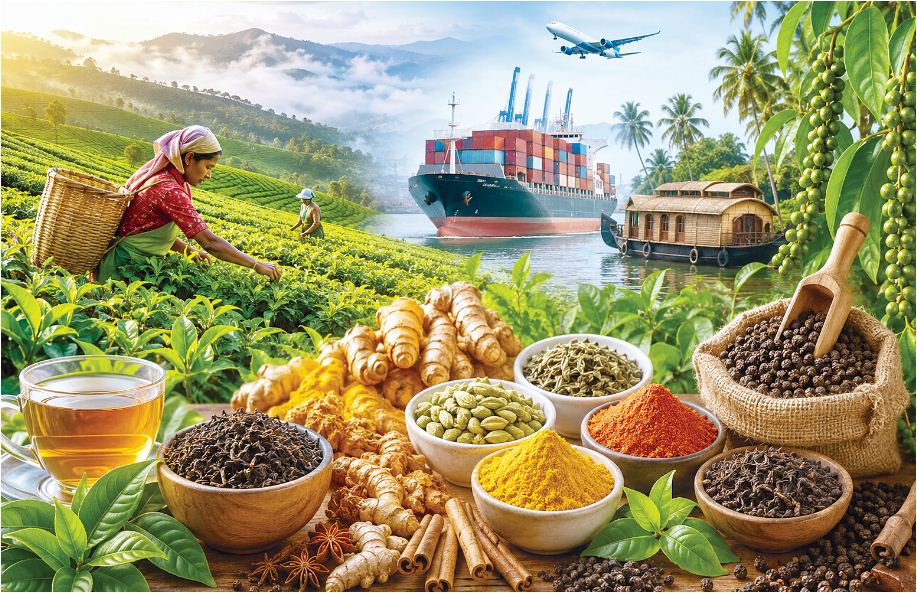
Jaipur | Charu Bhatia | India’s spice and tea industry is witnessing renewed global demand as international consumers increasingly seek authentic flavours, wellness products and premium agricultural exports. Industry experts believe the sector is emerging as a major contributor to India’s export economy, driven by rising demand for organic products, specialty blends and value-added food items.
India has long been recognised as one of the world’s largest producers of spices and tea. From Assam and Darjeeling tea to Kerala’s cardamom and black pepper, Indian products continue to enjoy strong recognition in international markets. However, the industry is now evolving beyond traditional bulk exports towards premium branding and processed products with higher profit margins.
According to trade analysts, global consumers are showing growing interest in natural ingredients, herbal beverages and immunity-boosting products, trends that have significantly benefited Indian exporters. Turmeric, ginger, cumin, black pepper and masala blends are seeing strong demand in markets such as the United States, Europe, the Middle East and Southeast Asia.
Similarly, India’s tea industry is finding new opportunities through specialty categories such as organic tea, green tea, artisanal blends and wellness infusions. Younger consumers worldwide are increasingly viewing tea not just as a beverage but also as a lifestyle and health product.
Export-focused businesses are now investing heavily in packaging, branding and digital marketing to position Indian products as premium global offerings rather than low-cost commodities. E-commerce and direct-to-consumer export models are also allowing smaller businesses and regional producers to access international buyers more easily.
Industry observers say value-added products are becoming especially important for growth. Instead of exporting raw spices alone, companies are focusing on ready-to-cook mixes, flavoured teas, instant chai blends and wellness products designed for modern consumers.
Government initiatives and trade agreements are also supporting export growth. Schemes promoting agricultural exports, food processing and Geographical Indication (GI)-tagged products are helping Indian brands strengthen their presence abroad. Darjeeling tea, for example, continues to hold strong international appeal because of its unique identity and premium positioning.
At the same time, challenges remain. Climate change, fluctuating crop yields, rising logistics costs and increasing competition from countries like Sri Lanka, Vietnam and Indonesia continue to impact the sector. Maintaining consistent quality standards and meeting international food safety regulations are also becoming increasingly important for exporters.
Despite these challenges, business experts believe India’s spice and tea industries hold significant long-term potential, particularly as global consumers move towards healthier and more sustainable food choices.
The growing popularity of Indian cuisine worldwide is further boosting demand for authentic spices and tea blends. Restaurants, wellness brands and gourmet food companies across international markets are increasingly sourcing directly from Indian producers.
With strong agricultural heritage, diverse regional products and rising global interest in natural ingredients, India’s spice and tea sector is steadily positioning itself as a powerful player in the global food and beverage trade.