
Charu Bhatia
Jaipur
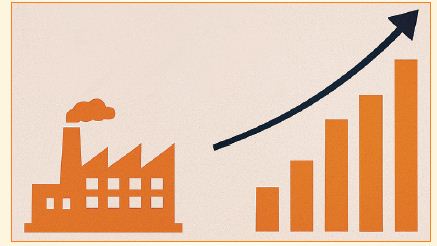
Business Remedies. As India accelerates towards fulfilling its economic ambitions, the current five-year plan has placed unprecedented focus on infrastructure investment and incentives for manufacturing. Parallelly, efforts to strengthen the connection between education and employment, coupled with a renewed emphasis on skill development, are reshaping the workforce. Such initiatives have led Bloomberg Economics to project that India could achieve a remarkable 9% growth rate by the end of the decade, while China’s growth is expected to slow to 3.5%. If realized, these projections position India to surpass China as the world’s primary growth engine as early as 2028.
A more measured outlook from the International Monetary Fund (IMF) suggests that even if India’s growth remains below 6.5% over the next five years, the country could still overtake China’s contribution by 2037. These contrasting forecasts have ignited discussions among India’s top economists. Experts like Arvind Subramanian, former Chief Economic Advisor, and Raghuram Rajan, former RBI Governor, agree that India’s demographic advantage, expanding consumer base, and structural reforms are promising. Yet, they caution that sustained investments in infrastructure, education, and technology will be crucial to maintaining momentum.
Challenges remain. Jobless growth, income inequality, rising protectionism, supply chain disruptions, and geopolitical tensions could potentially slow progress. However, recent policy initiatives designed to enhance the ease of doing business, boost growth, and invest in human capital indicate that India is firmly on the path to a prosperous and inclusive future.
Here’s a vision for transformative changes that could shape India by 2050, fostering innovation, economic growth, and improved quality of life for all citizens as the nation celebrates its centenary year:
1. Thriving Urban Centers
By 2050, India is expected to have numerous cities with populations exceeding one million. Currently, India has 45 such cities, compared to China’s 385. Expanded urbanization will create more opportunities for work, commerce, and development, becoming a key driver of economic growth.
2. Equal Value for Education
and Vocational Skills
The divide between traditional college degrees and vocational training will narrow. Mandatory 12-year schooling will ensure that all students acquire core competencies like literacy, numeracy, and critical thinking. Both academic and skill-based education pathways will be equally valued, preparing the workforce for a dynamic, skill-driven economy.
3. Revolutionized Higher Education
Higher education will prioritize practical, real-world skills over traditional academic degrees. Apprenticeships and experiential learning programs will become mainstream, providing young people with hands-on experience and directly employable skills.
4. Flexible Employment Models and Portable Benefits
Employment will evolve from rigid lifetime contracts to flexible models. Universal ID-linked benefits (such as Aadhaar) will allow workers to switch jobs freely while retaining health, pension, and insurance benefits, enabling a more dynamic and mobile workforce.
5. Streamlined Business Regulations
By 2050, regulatory processes will be simplified. Companies will be assigned a single operational number, reducing administrative burden and promoting entrepreneurship.
6. Formalization of Indian Enterprises
Most of India’s 60 million enterprises will be formalized by 2050. Today, only a small fraction is registered for taxes or employee benefits. Formalization will unlock growth, improve compliance, and provide better access to social benefits for workers.
7. Shift from Agriculture to Industry
Less than 10% of India’s workforce will be employed in agriculture by 2050, compared to 50% today. This structural shift will boost productivity, create opportunities in manufacturing and services, and accelerate economic growth.
8. Growth in Manufacturing
and Services
Manufacturing will employ around 20% of the workforce, up from 11% today. Combined with a growing services sector and rise of medium-sized businesses, domestic consumption will fuel millions of new jobs.
9. End of Working Poverty
Currently, 40% of India’s workforce earns just enough to survive. By 2050, every worker is expected to earn a living wage that ensures dignity, prosperity, and financial security.
10. Job Creation as a Growth Engine
Stable employment will remain central to India’s economic transformation. By 2050, job creation, particularly in the services sector and small businesses, will be a major driver of economic growth and poverty reduction.
Economists broadly agree that India has the potential to become the world’s leading engine of economic growth by the end of the decade. Achieving this, however, will require continued reforms, effective governance, and a focus on inclusive and sustainable development. While the timeline for surpassing China may vary depending on how India navigates challenges, the country is on track to deliver widespread prosperity. By 2050, as India celebrates the centenary of its Republic, a new India will rise, one that transforms dreams of mass prosperity into reality.
Source: India Employer Forum