
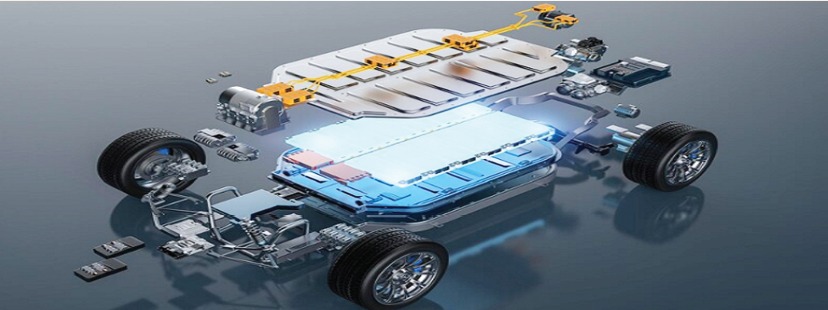
Business Remedies | Charu Bhatia | India’s push towards electric mobility is accelerating. Government incentives under schemes like FAME-II, state-level subsidies, and rising fuel costs have pushed electric vehicle (EV) sales to record levels. Automakers, both established and new, are scaling production capacity to meet projected demand. Yet, behind the optimism lies a fundamental bottleneck: securing critical raw materials, particularly rare earth elements and battery minerals, that underpin the EV ecosystem.
Rare Earth Dependence
Electric motors used in many EVs rely on rare earth magnets containing neodymium, praseodymium, and dysprosium. These materials are primarily mined and processed in a handful of countries, with China dominating global supply chains, accounting for more than 80% of refined rare earth output. India’s own reserves are limited and underdeveloped, making manufacturers vulnerable to geopolitical shifts, export restrictions, and price volatility.
The Battery Mineral Crunch
Lithium-ion batteries, central to EV adoption, require lithium, cobalt, nickel, and manganese. Demand forecasts suggest a sharp surge in global consumption of these minerals over the next decade. India currently imports almost all of its lithium and cobalt, with major sources located in politically sensitive regions like the Democratic Republic of Congo (cobalt) and South America’s Lithium Triangle (Argentina, Bolivia, Chile).
Strategic Risks for Manufacturers
For Indian automakers and battery manufacturers, heavy import dependence introduces multiple risks:
8 Supply Disruptions: Trade restrictions, resource nationalism, and conflicts can halt shipments.
8 Cost Instability: Prices of lithium carbonate, for example, have seen swings of more than 300% in recent years.
8 Technology Lock-In: Limited access to minerals can slow R&D and hinder domestic innovation.
Policy and Industry Responses
India has begun addressing these vulnerabilities. The government established Khanij Bidesh India Limited (KABIL) to secure overseas mineral assets and is negotiating bilateral agreements to gain access to mines abroad. Domestically, efforts are underway to explore reserves in Karnataka and Rajasthan, though commercial production will take time. On the private side, automakers are diversifying motor designs to reduce rare earth dependency and are investing in battery recycling technologies to recover lithium, cobalt, and nickel from end-of-life cells. Startups are also exploring sodium-ion batteries and solid-state alternatives that rely less on scarce materials.
The Road Ahead
India’s EV growth ambitions, aiming for 30% penetration by 2030, cannot be achieved without a resilient and diversified raw material supply chain. Building strategic reserves, fostering global partnerships, and scaling recycling infrastructure will be as critical as rolling out charging networks or subsidies. For businesses, securing mineral access is no longer just an operational issue, it is a long-term competitive advantage.
 Written & Edited By:
Charu Bhatia