

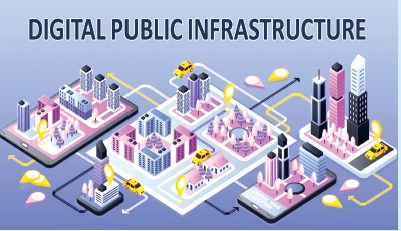
Business Remedies | Charu Bhatia | August 08,2025 | In global diplomatic circles, discussions around power have long revolved around military strength and economic prowess. But India is now making a case for something more subtle, yet increasingly potent, Digital Public Infrastructure (DPI). What began as a tool to drive inclusion and efficiency at home is now positioning itself as India’s soft power tool on the global stage.
At its core, DPI refers to the foundational digital systems that enable governments and citizens to interact more efficiently. Think Aadhaar for identity, UPI for payments, and DigiLocker for document access. Together, these interoperable platforms have transformed the way Indians access financial services, subsidies, healthcare, and governance.
The India Stack: A Homegrown Revolution
India’s DPI ecosystem, popularly referred to as the India Stack, is a first-of-its-kind, population-scale model of open-source digital infrastructure. It is built not just for the elite but for 1.4 billion people, and it’s designed to be inclusive, low-cost, and scalable.
Aadhaar: Over 1.3 billion Indians enrolled, used for authentication across services.
UPI: Over 10 billion transactions per month, democratising digital payments.
DigiLocker: Secure access to official documents without paperwork.
ONDC (Open Network for Digital Commerce): Aims to unbundle e-commerce dominance and empower small sellers.
The beauty of DPI lies in its interoperability and openness, governments and private players can build on top of it. And now, many countries are knocking on India’s digital doors to learn how.
DPI as Diplomacy: Exporting a Digital Model
India’s DPI model is increasingly being seen as a diplomatic asset. At the G20 and SCO platforms, Prime Minister Narendra Modi has pitched DPI as India’s “gift to the world.” The country has already helped nations like Sri Lanka, Mauritius, and the Philippines in deploying identity and payment systems inspired by the India Stack.
In 2023, India launched the Modular Open Source Identity Platform (MOSIP), a globally adaptable version of Aadhaar, which has now been adopted by countries in Africa and Asia. This opens doors not just for policy collaboration but also for technology exports, consulting, and fintech partnerships.
Economic and Strategic Advantages
The internationalisation of DPI brings more than just goodwill:
New markets for Indian tech firms (e.g., Infosys, TCS, iSPIRT) working on DPI solutions.
Standard-setting power, allowing India to shape global digital rules.
Financial inclusion diplomacy, positioning India as a leader in “tech for good.”
Data sovereignty advocacy, as India promotes digital independence from Big Tech dominance.
Challenges Ahead
While DPI is being celebrated, it also comes with risks:
Privacy and surveillance concerns, especially with biometric and financial data.
Digital divide within India, which may get glossed over in global narratives.
Scaling abroad is not plug-and-play, DPI must adapt to local governance, tech readiness, and political will.
Moreover, India’s ability to influence global DPI adoption hinges on how well it balances open standards with secure and ethical deployment.
The Road Ahead: DPI as a Business Opportunity
Expect DPI to become a key theme in India’s foreign policy and startup economy. From fintech collaborations to cross-border payment systems, DPI can drive both soft power and hard value.
 Written & Ediited By:
Charu Bhatia