
Charu Bhatia | Business Remedies | By 2026, the Indian consumer is evolving faster than ever, reshaping markets, brands, and business strategies. Post-pandemic recovery, digital adoption, rising incomes, and a growing emphasis on experiences over possessions are redefining how Indians spend, making the consumer landscape more dynamic and nuanced than traditional models suggest.
From Necessities to Experiences
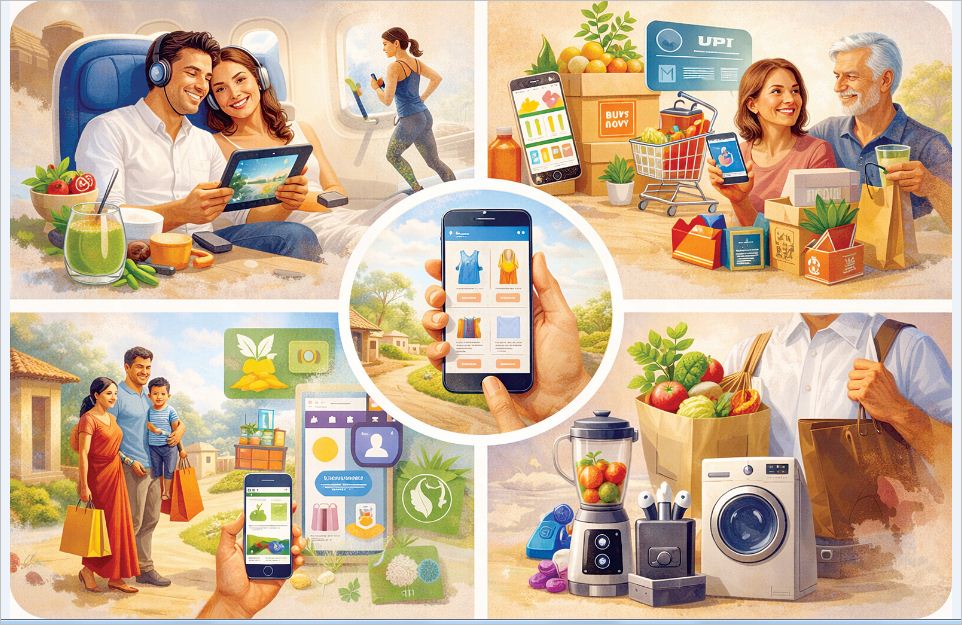
While essential goods still dominate household budgets, discretionary spending is shifting towards experiences, health, and self-improvement. Travel, wellness, fitness, online learning, and entertainment subscriptions are seeing rapid uptake. Consumers are increasingly prioritising services and experiences that offer convenience, personal growth, or emotional value rather than just material accumulation. This trend is particularly visible among urban millennials and Gen Z, who are spending more on curated experiences and lifestyle products than on traditional luxury items.
Digital-First and Online Shopping Boom
E-commerce continues to transform consumption. In 2026, Indians are not just buying online out of convenience; they are influenced by data-driven recommendations, social commerce, and digital communities. Mobile wallets, UPI payments, and Buy Now, Pay Later schemes have made premium products more accessible, blurring the line between necessity and indulgence. Brands that leverage personalization, AI-driven suggestions, and loyalty programs are seeing a significant uptick in customer engagement.
Value-Conscious Yet Aspirational
Despite rising disposable incomes, Indian consumers remain value-conscious. The “smart spend” mentality dominates, where affordability, durability, and utility are weighed alongside brand value. At the same time, aspirational purchases, ranging from premium appliances to fitness gadgets, reflect a desire for lifestyle elevation. This duality is forcing brands to rethink pricing strategies, bundling offers, and marketing messages to balance aspiration with pragmatism.
Health, Sustainability, and Conscious Choices
Health and sustainability have emerged as major drivers of consumption. Organic foods, plant-based alternatives, eco-friendly products, and wellness-focused services are increasingly influencing purchasing decisions. Consumers are scrutinising labels, sourcing, and environmental impact more than ever before, signaling a shift from passive consumption to conscious spending.
Rural Consumption Rising
Rural India is no longer a passive market. Rising internet penetration, financial inclusion, and regional e-commerce platforms have unlocked new consumption patterns. Rural consumers are now more informed, experimenting with packaged goods, lifestyle products, and digital services, creating fresh growth avenues for brands that tailor offerings to local needs.
Implications for Businesses
Changing consumption patterns are compelling companies to pivot strategies. Hyper-personalization, subscription models, and a mix of offline and online presence are becoming crucial. Businesses that understand the emotional and experiential drivers of modern Indian spending, while balancing value and aspiration, are likely to capture the next wave of growth.
In 2026, the Indian consumer is not just buying products, they are buying experiences, values, and lifestyle upgrades. For businesses, adapting to these nuanced patterns is no longer optional; it’s essential for staying relevant in a rapidly transforming market.