


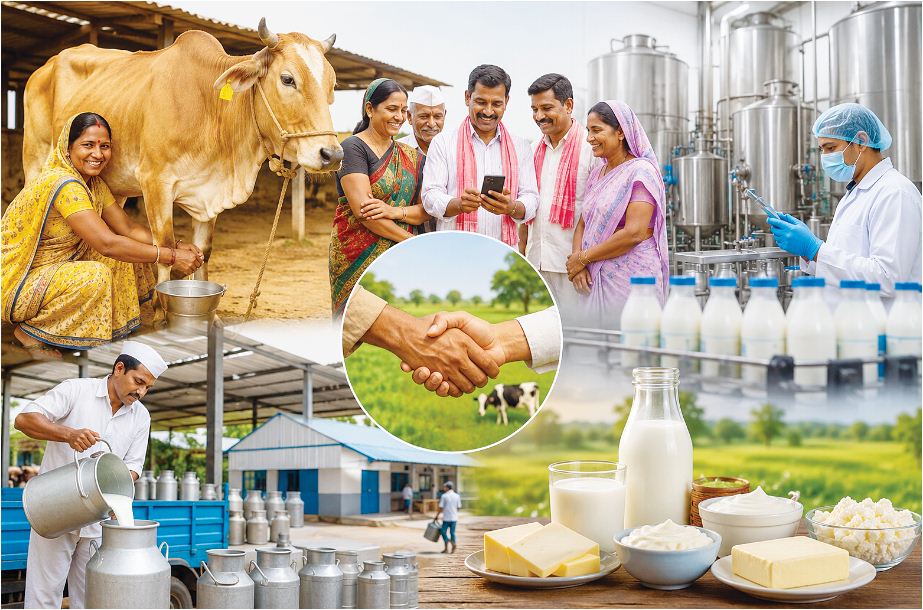
Jaipur | Charu Bhatia | India’s dairy sector has emerged as one of the most successful segments of the agricultural economy, contributing significantly to rural livelihoods, food security, and economic development. At the heart of this success story lies the cooperative model, which has transformed millions of small dairy farmers into active participants in a thriving value chain. As the country seeks to strengthen agricultural growth and rural prosperity, dairy cooperatives continue to play a crucial role.
The cooperative movement gained momentum with the success of Operation Flood, often referred to as the White Revolution, which helped India become the world’s largest milk producer. Organizations such as Amul demonstrated how farmer-owned cooperatives could eliminate intermediaries, ensure fair pricing, and provide reliable market access to milk producers. Today, this model remains a cornerstone of the dairy industry.
One of the biggest contributions of dairy cooperatives is their ability to generate stable income for rural households. Unlike seasonal crop cultivation, dairy farming provides farmers with a regular source of earnings throughout the year. This consistent cash flow helps reduce financial uncertainty and strengthens rural economies. Small and marginal farmers, who often own only a few cattle, particularly benefit from cooperative networks that guarantee milk procurement and timely payments.
Dairy cooperatives have also played an important role in promoting inclusive growth. Women form a significant part of the dairy workforce, and cooperative membership has enabled many of them to gain financial independence and participate more actively in household decision-making. In several states, women-led dairy cooperatives are becoming powerful examples of rural entrepreneurship.
Technology adoption is further enhancing the impact of cooperatives. Digital payment systems, automated milk collection centres, quality testing equipment, and data-driven supply chain management are improving efficiency and transparency. These innovations are helping farmers receive better prices while ensuring consistent quality for consumers.
Beyond milk procurement, cooperatives are increasingly focusing on value-added products such as cheese, butter, yogurt, flavoured milk, and dairy-based beverages. This diversification is creating new revenue streams and helping the sector capture higher margins in both domestic and international markets.
The dairy cooperative model also supports broader agricultural development by encouraging better animal health practices, access to veterinary services, cattle feed management, and breed improvement programmes. These initiatives contribute to higher productivity and improved farm sustainability. As India aims to double farmer incomes and strengthen rural economies, dairy cooperatives remain a proven and scalable solution. By combining collective ownership, technology, market access, and value addition, they continue to drive agricultural growth while empowering millions of farming families across the country. In the years ahead, their role is expected to become even more significant in shaping a resilient and inclusive rural economy.