
Jaipur | Charu Bhatia | The textile industry is undergoing a significant transformation as smart fabrics and functional textiles move from niche applications to mainstream commercial markets. Driven by technological innovation, changing consumer preferences and increasing demand for performance-based products, these advanced materials are creating new growth opportunities across industries ranging from healthcare and sportswear to defence and automotive manufacturing.
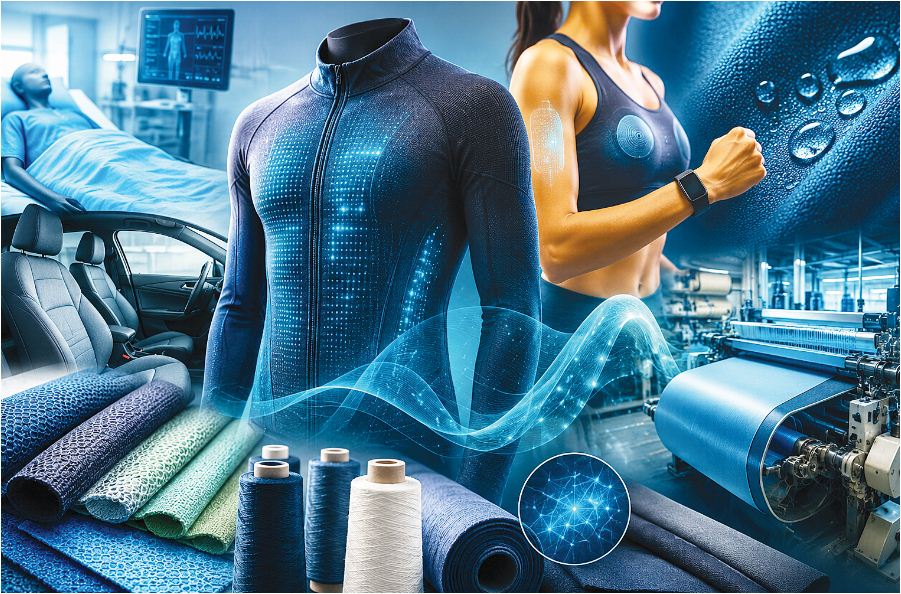
Unlike conventional textiles, smart fabrics are designed to interact with the environment or the wearer. They can monitor body temperature, track physical activity, regulate heat, repel water, provide UV protection or even detect health conditions. Functional textiles, meanwhile, offer enhanced properties such as antimicrobial protection, moisture management, flame resistance and durability, making them suitable for specialized applications. The growing popularity of wearable technology has played a major role in accelerating demand for smart textiles. Fitness enthusiasts, athletes and health-conscious consumers are increasingly seeking apparel that delivers more than comfort and style. Manufacturers are responding by integrating sensors, conductive fibres and advanced materials into clothing, creating products that offer real-time performance monitoring and enhanced user experiences.
Healthcare is emerging as one of the most promising markets for smart fabrics. Hospitals and medical technology companies are exploring textiles capable of monitoring vital signs, detecting patient movement and supporting remote healthcare services. Such innovations could improve patient care while reducing the burden on healthcare systems.
India’s textile sector is also beginning to embrace this shift. With government support for technical textiles and increasing investments in research and development, domestic manufacturers are expanding into high-value segments. The National Technical Textiles Mission has further strengthened efforts to promote innovation and encourage the production of advanced textile products for both domestic consumption and export markets.
The automotive industry is another key driver of growth. Functional textiles are increasingly being used in vehicle interiors, seat covers, airbags and insulation materials. Similarly, defence and aerospace sectors are investing in high-performance fabrics that offer protection, durability and enhanced operational efficiency. Sustainability is further boosting the appeal of advanced textiles. Many manufacturers are combining smart technologies with eco-friendly materials, creating products that meet both performance and environmental expectations. Recyclable fibres, energy-efficient production methods and biodegradable materials are becoming important differentiators in the market.
As consumer demand shifts towards innovation-driven products, smart fabrics and functional textiles are rapidly gaining commercial traction. What was once considered futuristic technology is now becoming an integral part of everyday life. With expanding applications, growing investments and supportive policy initiatives, advanced textiles are poised to become one of the most dynamic segments within the global manufacturing and textile industry over the coming decade.