
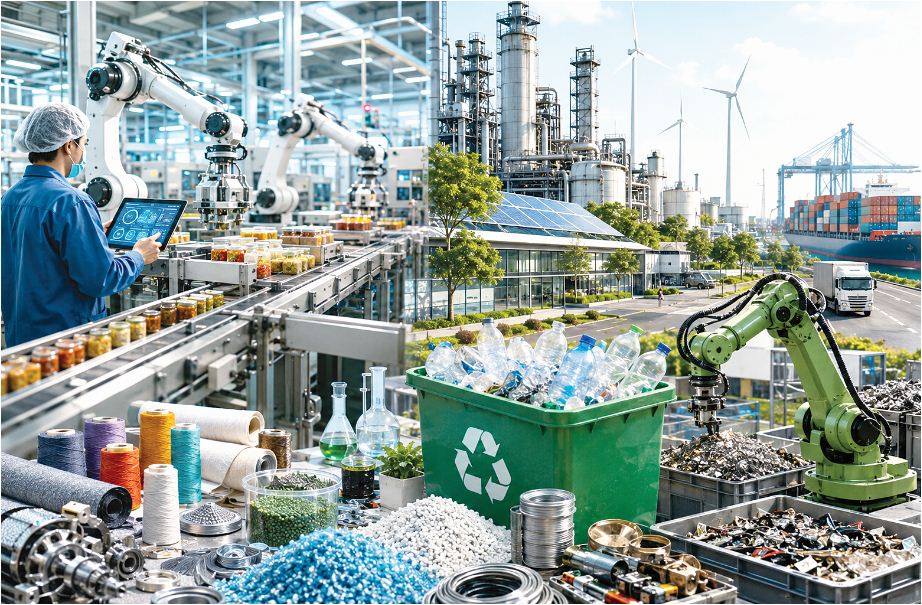
Jaipur | Charu Bhatia | India’s processing industries are entering a transformative phase. From food and textiles to chemicals, metals and recycling, the sector is evolving from a low-value manufacturing base into a technology-driven ecosystem focused on efficiency, sustainability and exports. By 2035, a combination of automation, changing consumer demand and policy support is expected to redefine how processing businesses operate and compete globally.
One of the biggest trends shaping the sector is value addition. Rather than exporting raw materials, companies are increasingly investing in processing capabilities that convert agricultural produce, minerals and industrial inputs into premium products. In food processing, for instance, ready-to-eat meals, functional foods and packaged nutrition products are witnessing strong demand, creating higher margins than traditional commodities. Automation and artificial intelligence (AI) are also expected to play a central role. Smart factories equipped with robotics, sensors and predictive maintenance systems are helping companies improve productivity while reducing waste and downtime. AI-powered quality control, automated packaging and real-time monitoring are becoming essential tools for businesses looking to stay competitive in a global market.
Sustainability is emerging as another major growth driver. With environmental regulations tightening worldwide, processing industries are under pressure to reduce emissions, energy consumption and waste generation. As a result, investments in green technologies, water recycling systems and renewable energy-powered facilities are expected to rise sharply over the next decade. The growth of the circular economy will create new opportunities across industries. Recycling and reprocessing businesses, particularly in plastics, batteries, electronic waste and metals, are likely to become major investment destinations. As manufacturers seek secure and sustainable sources of raw materials, recycled inputs will increasingly become part of mainstream supply chains.
Another key trend is the rise of specialty manufacturing. In sectors such as chemicals, textiles and engineering, demand is shifting towards customised, high-performance products rather than mass-produced commodities. This transition offers Indian manufacturers an opportunity to move up the value chain and strengthen their position in global markets.
Government initiatives such as Production Linked Incentive (PLI) schemes, industrial corridors and logistics infrastructure upgrades are expected to further accelerate investment. Improved connectivity, modern warehousing and integrated industrial parks will help reduce costs and improve operational efficiency.
Export-oriented growth will also remain a priority. As global companies diversify supply chains beyond traditional manufacturing hubs, India has an opportunity to emerge as a preferred destination for processed goods across multiple sectors. By 2035, processing industries are likely to be defined not merely by production volumes but by innovation, sustainability and value creation. Companies that embrace technology, invest in green practices and focus on high-value products will be best positioned to lead the next chapter of industrial growth.