


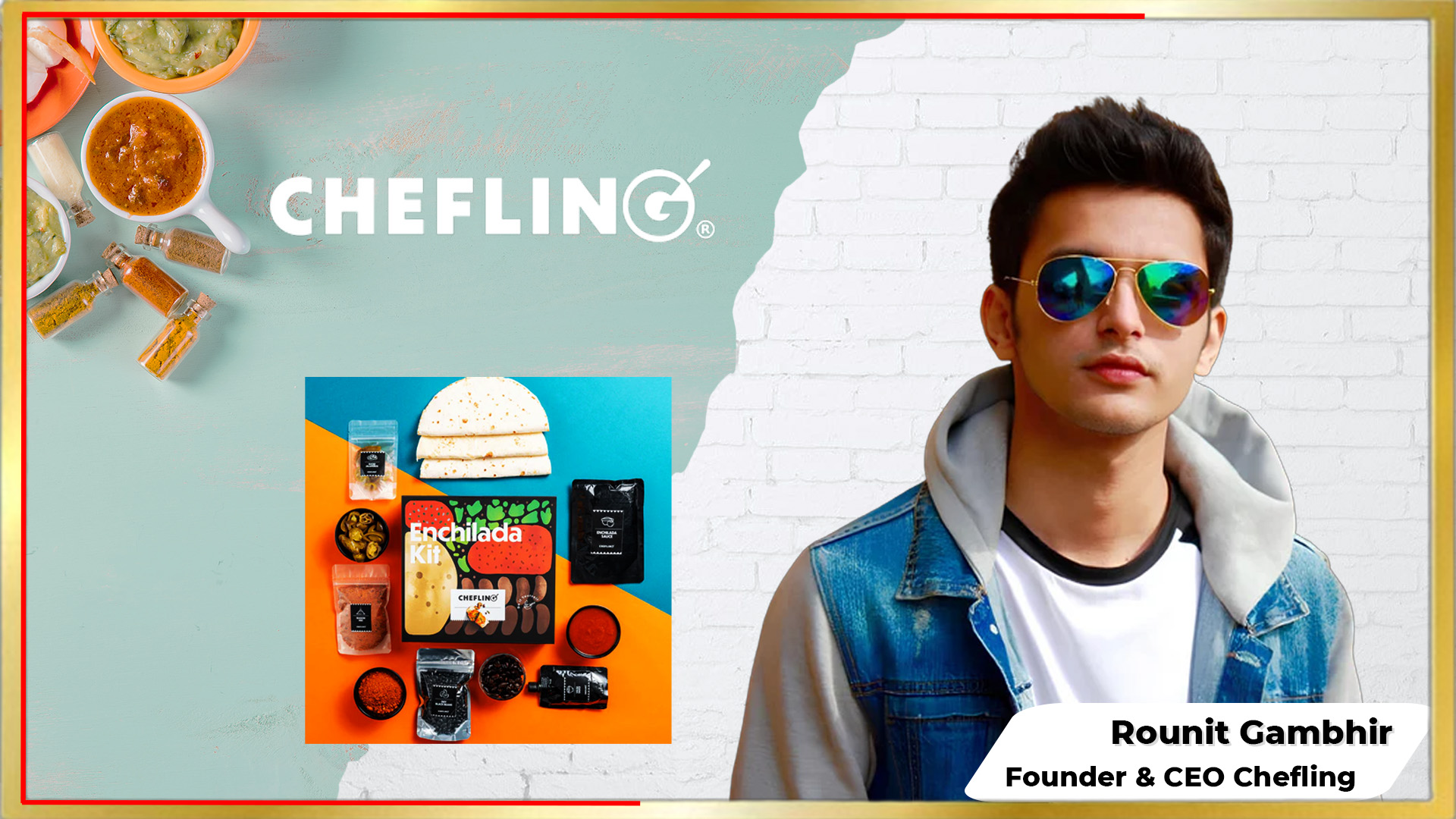
Rajshree Upadhyaya | Business Remedies | In August 2020, when Indian households were spending more time in their kitchens than ever before, Rounit Kashyap Gambhir founded Chefling in Mumbai with a sharply defined purpose. Still in his mid-twenties, Gambhir was navigating personal and financial uncertainty after his family’s textile business went through a difficult phase. Cooking became both a refuge and a creative outlet, and over time, it revealed a deeper insight. Many people loved eating global cuisine but felt overwhelmed by the complexity of cooking it at home. Chefling was born from this gap, shaped as a brand that would simplify international cooking without diluting the joy of making food from scratch.
From the outset, Chefling was not positioned as a convenience food company. Instead, Gambhir chose to build a participatory experience. The brand introduced DIY cooking kits that combined pre-measured ingredients with clear, step-by-step instructions, allowing customers to cook dishes themselves rather than merely heat and serve. This approach resonated with home cooks who wanted involvement, learning, and consistency without the stress of sourcing specialty ingredients or mastering unfamiliar techniques.
As the product line evolved, Chefling expanded into multiple cuisines and formats, each designed to reduce friction while preserving authenticity. The range includes Sushi Kits, Ramen Kits, Mexican and Italian DIY Kits, and thoughtfully curated Jain-friendly kits that reflect the dietary realities of Indian households. To accommodate different skill levels and use cases, the brand developed variations such as Chef Kits for beginners who need everything included and Mini Kits for experienced cooks who already stock basic ingredients. This layered product strategy allowed Chefling to appeal to both curious first-timers and seasoned food explorers.
Chefling’s turning point came when Rounit Gambhir appeared on Shark Tank India Season 3. Entering the tank with his collection of DIY international meal kits, he pitched the business as an experience-led consumer brand rather than just a food product. His presentation stood out for its honesty, from sharing his personal setbacks to demonstrating how the kits worked in real time. The Sharks responded positively to the clarity of the offering and the growing appetite for at-home culinary experiences, ultimately resulting in a deal of Rs. 40 lakh for 16 percent equity from four Sharks – Namita Thapar, Peyush Bansal, Amit Jain, and Azhar Iqubal.
The Shark Tank appearance significantly amplified Chefling’s visibility and placed the brand into mainstream consumer conversations. What distinguished Chefling from many post-show narratives was its focus on reinforcing its core identity rather than chasing rapid diversification. The kits continued to be positioned as tools for learning and enjoyment, encouraging families and friends to cook together while exploring unfamiliar cuisines in a structured, approachable way.
At its core, Chefling has always been about empowerment in the kitchen. By breaking down complex recipes into manageable steps and packaging them into DIY meal kits, the brand reframed cooking as an achievable creative process rather than a daunting task. Gambhir’s emphasis on clarity, portion control, and cultural adaptability helped Chefling carve a space in a category that was still finding its footing in India.
Chefling’s story reflects a broader shift in how Indian consumers relate to food, moving beyond passive consumption towards experience-driven engagement. What began as a personal experiment during a period of uncertainty grew into a nationally recognised brand built on participation, curiosity, and confidence. Through Chefling, Rounit Gambhir transformed the simple act of cooking into a guided journey, proving that global flavours can feel accessible when complexity is replaced with thoughtful design and intention.
 Written & Edited By:
Rajshree Upadhyaya