
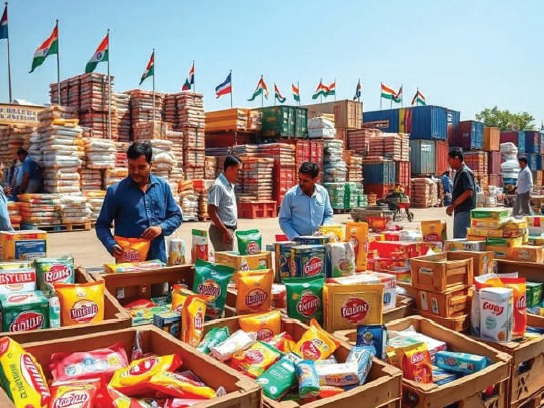
Business Remedies | Charu Bhatia | As global shelves grow more diverse and palates more adventurous, India’s regional packaged food sector is poised for a breakout moment. Long overshadowed by mass-produced snacks and multinational brands, homegrown culinary staples like bhujia, murukku, chutneys, pickles, and millet-based mixes are now capturing international interest, not just among the diaspora, but with global consumers seeking authenticity, traceability, and bold flavour profiles.
With demand for “clean label,” artisanal, and ethnic foods rising across North America, Europe, and Southeast Asia, India’s rich and hyperlocal food culture has become a strategic export opportunity. What was once gifted in suitcases or hand-carried through customs is now being professionally branded, vacuum-sealed, and certified for global sale.
A Shift in Packaging and Positioning
At the forefront of this movement are new-age FMCG startups and legacy brands alike, rethinking how traditional Indian foods are presented. Companies like Haldiram’s, iD Fresh, Tata Soulfull, The South Indian Snacks Co., and Go Desi are blending tradition with modern design, focusing on international quality standards, and targeting global retail chains and online platforms like Amazon, Whole Foods, and ethnic grocers abroad.
It’s not just the NRIs picking up these products anymore. The global wellness wave has made superfoods like ragi, millets, turmeric, amla, and jaggery household names across health-conscious markets, giving Indian regional staples a functional food tag. Items like jackfruit chips, gond laddoos, banana halwa, and spiced chutneys are being rebranded not just as snacks but as nutritionally rich, plant-based options.
Digital Marketplaces and Logistics Advantage
India’s digital-first D2C model is also helping regional food brands test, scale, and ship globally with lower friction. With platforms like ONDC opening up digital access, and newer B2B logistics enablers streamlining international cold chains and shelf-stable exports, even small regional producers can now dream of international markets.
Moreover, FTAs (Free Trade Agreements) with markets like the UAE, Australia, and the UK are reducing barriers for
export-led food businesses. Government-backed schemes like PMFME (Pradhan Mantri Formalisation of Micro food processing Enterprises) and APEDA’s (Agricultural and Processed Food Products Export Development Authority) focus on GI-tagged products are nudging the sector in the right direction.
Challenges and the Road Ahead
Yet, challenges remain. Scaling traditional recipes without compromising flavour, ensuring clean-label compliance for international regulations, and building consistent supply chains are key concerns. There’s also a need for stronger storytelling around provenance, why this murabba is different, where that masala comes from, and what cultural context it carries.
However, if addressed well, India’s regional packaged foods could be the next big story in food exports, combining local legacy with global opportunity. For a country as diverse in taste as in language, the future might just be sealed, spiced, and shipped.
 Written & Edited By:
Charu Bhatia