

BR Team | Jaipur | Business Remedies | The increasing adoption of electric vehicles poses a financial risk to India’s leading automotive firms unless they can adapt to the change. The findings of a new report from London’s Imperial College Business School focuses on how India’s automotive and industrial sectors need to prepare for the impact of EVs (essentially battery electric vehicles or BEVs).
Even if sales of electric vehicles rise to 25 percent of all vehicles sold in India, there could be a financial risk to automotive companies who still rely on traditional car manufacturing for making profits. Also, if electric vehicles account for 25 per cent of all vehicles on the road in India, electricity usage in the country could rise by almost 60 per cent and would require significant upgrades to the electricity grid.
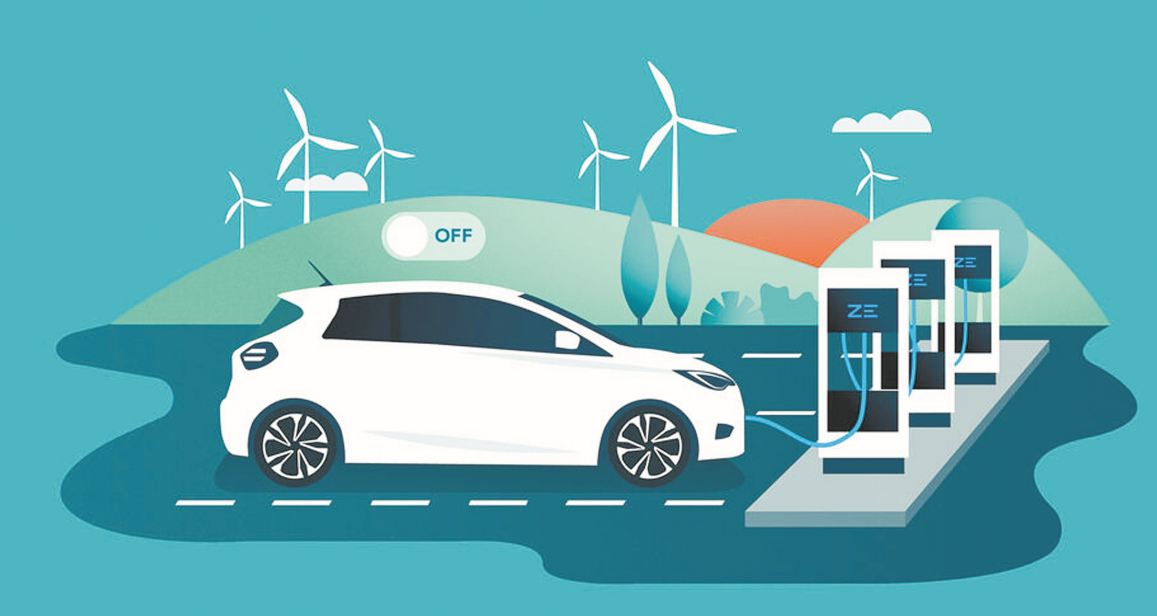
Meeting this target through coal power capacity risks cancelling out some of the climate benefits, so, India’s electricity utilities would need to develop decarbonisation investment plans in advance, while meeting some of the increased demand through renewable sources. The cross-sector impact also includes soaring energy demand, according to the report, causing electricity demand in the transportation sector to increase by 59 per cent in 2030 from current levels. In addition, the researchers predict that as many as 6.7 million new charging points may be needed by 2030 to meet the demand for electric cars, which would require significant government and private sector investments. To help avoid overloading the grid, policy changes such as time-of-use tariffs may be required to incentivise charging at low-demand times.
Automotive impact
Alongside changes to the electricity grid, the researchers examined the impact of a rise in electric vehicle production on India’s car manufacturers. They found this would be different for each of the country’s three largest producers: Maruti-Suzuki India, Mahindra and Mahindra (M&M) and Tata Motors. Tata motors control 70 per cent of the electric vehicle market while M&M has a 10 per cent share. India’s biggest carmaker Maruti Suzuki said in February that it is aiming to be the biggest producer, exporter and seller of EVs in the country, despite a delayed pivot to the BEV segment where it is yet to commence any sales. As market leader, Tata would benefit from a rise in electric vehicle production, while M&M stands to be less significantly impacted, and Maruti-Suzuki faces significant cash flow risk unless it is able to boost its market share, the report said.
Issues with India’s EV pushThe problem with an overt subsidisation of EVs, especially in the context of developing nations like India, is that much of the subsidy, especially the one offered as tax breaks for cars, ends up in the hands of the middle or upper middle classes, who are typically the buyers of battery electric four-wheelers.
There are other factors in the EV transition in India, including the charging network that needs to be put up.
In India, the number of EVs had crossed 1 million by mid-2022, and is projected to grow to 45-50 million by 2030. But only about 2,000 public charging stations are currently operational across the country.
There is also the question of electricity source. In several countries that have pushed EVs, much of the electricity is generated from renewables. In India, the grid is still fed largely by coal-fired thermal plants. Unless the generation mix changes significantly, India would be using fossil fuel generation to power EVs.