


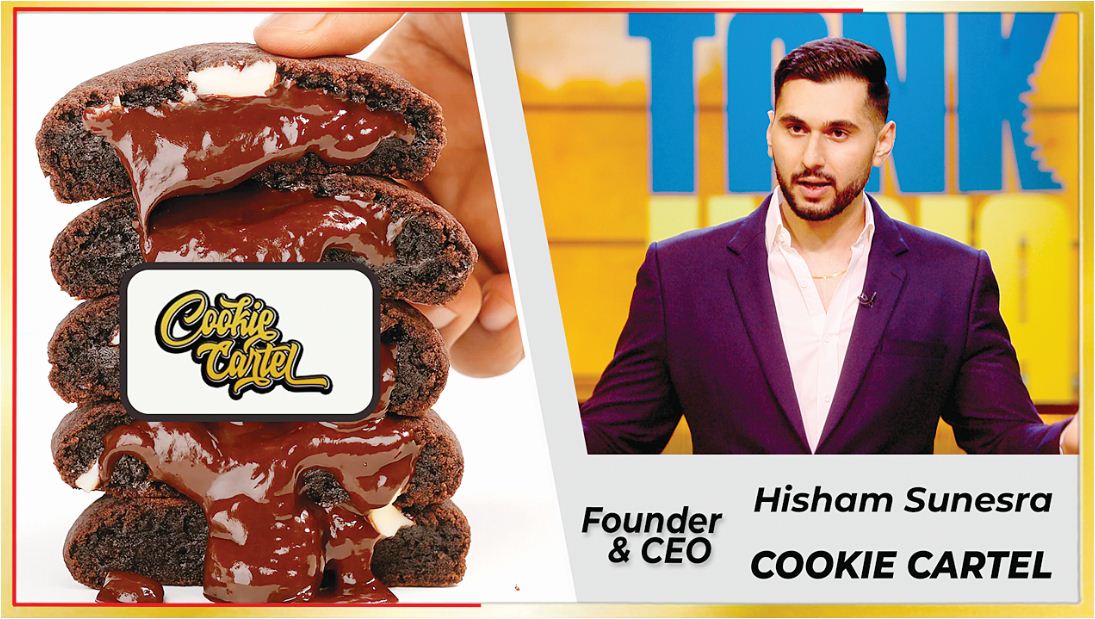
Jaipur | Rajshree Upadhyaya | Hisham Sunesra has built a strong identity in India’s premium dessert market through Cookie Cartel, a brand he launched in 2020 during the COVID-19 pandemic. What began as a small baking experiment during the lockdown gradually evolved into a fast-growing direct-to-consumer brand that later captured nationwide attention on Shark Tank India. Built around the idea of delivering indulgent and delicious treats, Cookie Cartel carved a niche for itself by introducing New York-style chunky stuffed cookies to Indian consumers. These cookies stood apart from traditional bakery offerings and quickly gained popularity among dessert lovers. Hisham launched the company with a focus on quality and innovation, targeting customers looking for premium desserts that could be enjoyed at home or gifted on special occasions.
Over time, the brand expanded its portfolio to include gourmet cookies, limited-edition flavors, and gift hampers. It operated through cloud kitchens, its own website, and online delivery platforms. Known for their large size and gooey centers, the cookies became particularly popular among urban consumers willing to spend on unique culinary experiences.
By the time Cookie Cartel appeared on Shark Tank India Season 5, the company had already built a loyal customer base and a strong online presence. Hisham sought Rs. 75 lakh for 5 percent equity, valuing the company at Rs. 15 crore. He presented Cookie Cartel not merely as a bakery business but as a modern dessert brand with the potential to create a new category in India. The sharks appreciated the founder’s passion and the brand’s strong identity, although concerns were raised regarding pricing, scalability, and profitability.
National Television Boosted Brand Awareness
After extensive negotiations, Cookie Cartel secured a deal with Anupam Mittal, Kanika Tekriwal, and Vineeta Singh. The company received an investment of Rs. 80 lakh for 12 percent equity, valuing the business at approximately Rs. 6.67 crore. Beyond capital, the deal provided access to mentorship from entrepreneurs who had successfully built consumer-focused businesses.
Appearing on national television significantly increased awareness of Cookie Cartel and introduced the brand to a much larger audience. Financially, the company demonstrated encouraging growth despite operating in a highly competitive market. Cookie Cartel reported revenue of around Rs. 30 lakh in FY24, which grew to approximately Rs. 1 crore in FY25.
At the time of its Shark Tank pitch, the company had already crossed Rs. 1.5 crore in revenue during FY26 and was targeting gross sales of Rs. 3.5 crore by the end of the financial year. Like many emerging consumer startups, Cookie Cartel continued to invest heavily in marketing and expansion, prioritizing growth and brand building over immediate profitability.
Transforming an Idea into a Recognized Dessert Brand
The premium pricing of Cookie Cartel’s products has generated mixed reactions among customers. While some consumers consider the cookies expensive, many others praise their rich taste, generous portions, and overall experience. In many ways, this debate has reinforced the brand’s positioning as a luxury indulgence rather than a mass-market bakery.
The company has remained committed to its premium image and continues to focus on offering distinctive desserts that stand out in a crowded market. As of 2026, Cookie Cartel remains operational and serves customers across India through its online channels and delivery partners. Within just a few years, Hisham Sunesra transformed a lockdown-born idea into a nationally recognized dessert brand. The journey of Cookie Cartel demonstrates how a focused vision, a differentiated product, and the courage to think beyond traditional categories can turn a simple passion for baking into a compelling business success story.
 Written & Edited By:
Rajshree Upadhyaya


