


Charu Bhatia, Senior News Editor, Business Remedies in conversation with Dr. Arvind Jaga, a Renowned Physiotherapist in Jaipur
From a modest rural upbringing to establishing one of Jaipur’s most trusted neuro rehabilitation and physiotherapy centres, Dr. Arvind Jaga’s journey reflects determination, compassion, and scientific rigour. A specialist in neurological and spine rehabilitation, Dr. Jaga has spent over a decade treating complex conditions such as stroke, Parkinson’s disease, spinal injuries, and chronic musculoskeletal disorders. In this interview, he shares his professional journey, the evolution of physiotherapy in India, persistent myths surrounding spine health, and his broader vision of making advanced rehabilitation accessible, affordable, and impactful for patients in India and abroad.
Question: You have established a Neuro Rehabilitation and Physiotherapy centre in Jaipur. Please tell us about your journey so far. Why did you choose this field as your career?
Answer: I come from a rural background, where aspiring to become a doctor was considered a distant dream. My father always wished for me to enter the medical profession, and I chose to honour that aspiration. During my school years, I was deeply involved in sports, which naturally inclined me towards understanding the human body, movement, and recovery. This is how physiotherapy gradually became my calling.
 I completed my Bachelor’s degree in Physiotherapy in 2009 and went on to pursue a Master’s degree in Neurology. To gain hands-on experience, I worked at Apex Hospital for a period, which helped shape my clinical approach. Over the years, I also pursued advanced international training, including a fellowship in Neurodynamic Solutions from Australia, a fellowship from Italy, and another in Neuro Rehabilitation from the United States. At present, I am pursuing my PhD to further strengthen my academic and research foundation.
In recognition of my work, I was honoured by the then Health Minister, Shri Parsadi Lal Meena, in 2023, and later by Dr. Prem Chand Bairwa in 2024. However, beyond awards, the true motivation for me lies in the ability to help patients regain independence, restore confidence, and bring smiles back to their lives.
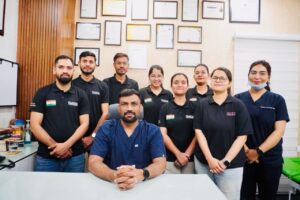
Our hospital was established in 2014 with a very small team of just four to five physiotherapists. Today, we have grown into a team of over 30 skilled physiotherapists. We treat patients not only from Rajasthan and other parts of India but also from countries such as Estonia, the Netherlands, and the United Kingdom. This growth has been possible due to our consistent focus on quality care, ethical practice, and the use of state-of-the-art facilities offering advanced treatments for conditions ranging from chronic pain to complex neurological and musculoskeletal injuries.


Question: How is your physiotherapy and neuro rehabilitation centre different from others? What makes it unique?
Answer: What truly sets our centre apart is our willingness to take on complex and challenging cases. Many of the patients who come to us have either been misdiagnosed or left untreated elsewhere. We specialise in treating conditions such as stroke, Parkinson’s disease, multiple sclerosis, traumatic head injuries, spinal cord injuries, slip disc issues, lumbar spine disorders, and various orthopaedic complications.
We strongly believe that no patient should be given up on. Our centre embraces difficult cases and follows a multidisciplinary approach, where a dedicated team of experienced medical practitioners and physiotherapists jointly evaluates each patient. Treatment plans are customised, keeping in mind the individual’s physical condition, endurance, and long-term recovery goals.
Over the years, we have prevented surgical intervention in more than one lakh spine and slip disc cases by focusing on precise diagnosis, customised rehabilitation, and long-term functional recovery. The emphasis has been on evidence-based treatment, personalised care, and long-term rehabilitation rather than short-term symptomatic relief.
Question: What are your plans and vision for the short term as well as the long term?
Answer: In the short term, we are actively working towards strengthening medical tourism. Our aim is to offer high-quality healthcare at cost-effective rates while providing access to advanced and specialised treatments that may not be available in certain regions. We have also enhanced our digital and social media presence to reach a wider audience and educate people about rehabilitation options.
 In the long term, our vision extends beyond clinical practice. We want to work extensively for physically challenged individuals and underprivileged patients who require medical care but lack financial resources. We plan to organise donation camps, rehabilitation outreach programmes, and awareness drives.
Women empowerment and education are also close to our hearts. Additionally, we intend to conduct workshops and training sessions to increase awareness about spine and orthopaedic health among both medical professionals and the general public. I regularly attend national and international seminars and conferences to stay updated with the latest research, technological advancements, and evolving treatment protocols. Giving back to society remains one of our core values.
Question: Kindly shed light on some of the myths prevailing about spine and orthopaedic problems and share the realities with readers.
Answer: One of the most common myths is that a slip disc requires complete bed rest. This is incorrect. Prolonged rest can actually weaken muscles and cause stiffness, worsening the condition. Controlled movement through physiotherapy is essential for recovery and muscle activation.
Another widespread belief is that individuals suffering from head or spine injuries can never fully recover. This is also untrue. Advances in neuroplasticity have shown that the brain has the ability to rewire itself. With modern neurology, advanced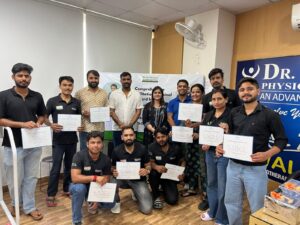 laboratories, robotic rehabilitation, and specialised equipment, recovery today is far more effective and faster than in the past.
Virtual rehabilitation has also emerged as a breakthrough. It uses immersive and gamified virtual environments to help patients regain motor, cognitive, and emotional functions. This approach improves motivation, provides real-time feedback, and allows safe practice of real-life skills, particularly beneficial for patients with stroke or Parkinson’s disease.
Another crucial point is the concept of the “golden period.” Any head or spine injury should ideally be treated within three to six months for optimal recovery. Delayed treatment significantly slows down progress. Oil massage for spine injuries is also strongly discouraged, as it can stiffen muscles and aggravate the condition.
Every individual’s body responds differently to treatment. Therefore, therapies must be personalised, considering stamina, muscle strength, and endurance levels.
Question: What do you think are the reasons behind increasing health problems in today’s modern lifestyle?
Answer: The most significant factor is a sedentary lifestyle, especially among the youth. Lack of physical activity has contributed to a sharp rise in heart-related conditions, including cardiac arrests at a very young age. Increasing pollution levels, deteriorating air quality, unhealthy dietary habits dominated by junk food, and lifestyle choices such as smoking and alcohol consumption further compound these issues.
Question: How has the field of physiotherapy evolved in recent times?
Answer: Physiotherapy has gained much-needed recognition in recent years. The government has established a dedicated physiotherapy council, acknowledging its importance in mainstream medicine. As a highly practical and patient-centric field, physiotherapy is now attracting a growing number of young medical aspirants. Increased competition has also led to improved standards of care and better outcomes for patients.
Question: Lastly, what advice would you give to young medical aspirants who wish to join this field?
Answer: Physiotherapy demands dedication, patience, and hard work. It is a noble profession where the greatest reward lies in restoring mobility and independence to patients. Beyond fame or financial success, the true satisfaction comes from giving people pain-free and dignified lives. The joy of seeing a patient walk again or regain confidence is unmatched.