


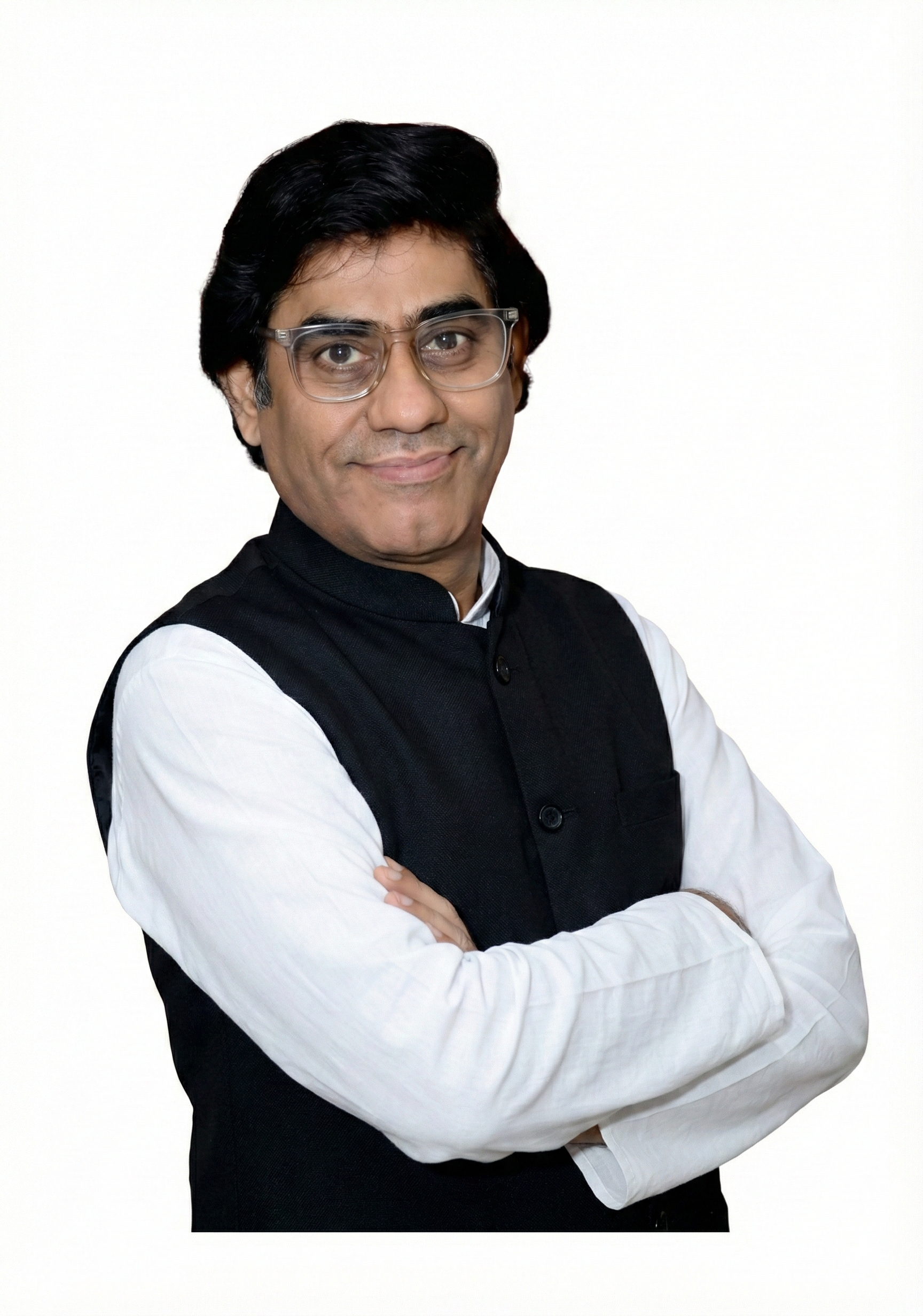
Charu Bhatia, Senior News Editor, Business Remedies, in conversation with Vaidya Ashok of Sai Sahara Hospital and Research Centre, Jaipur
 Ayurveda, India’s ancient system of holistic healthcare, emphasises the importance of balance between the body, mind and overall well-being. At a time when lifestyle-related ailments and stress are increasingly becoming a part of modern life, traditional healing practices are witnessing renewed interest. Taking this philosophy forward through a distinctive approach is Vaidya Ashok of Sai Sahara Hospital and Research Centre, Jaipur, who brings together the principles of Ayurveda with complementary techniques such as Su Jok and colour therapy.
With decades of experience in Ayurvedic practice, Vaidya Ashok has developed an approach that draws upon traditional knowledge while exploring alternative therapeutic practices. His journey reflects a deep commitment to holistic well-being, preventive healthcare and the importance of understanding individual health needs.
In this exclusive conversation with Business Remedies, he discusses his professional journey, the inspiration behind his distinctive practice, the relevance of Ayurveda in contemporary healthcare, the growing challenges facing traditional medicine and the importance of returning to a balanced and disciplined lifestyle.
You are a renowned Ayurveda specialist, known for your distinctive approach to treatment at Sai Sahara Ayurvedic Hospital and Research Centre. Could you take us through your professional journey and tell us what inspired you to pursue this field?
Answer: My journey in the field of Ayurveda began in 1987, when I joined the National Institute of Ayurveda, Jaipur. I completed my schooling at Kendriya Vidyalaya, Jaipur, and it was during my academic and professional journey that my interest in holistic healing continued to grow.
In 1996, I was introduced to a unique Korean healing technique called Su Jok. The term literally translates to ‘hand’ and ‘foot’. It is based on the principle that specific points on the hands and feet correspond to different organs and parts of the human body. Using a specialised electronic instrument, these points are examined to identify possible imbalances and determine the need for therapy.
Another important component of my practice is colour therapy, in which specific colours are applied to corresponding points with the aim of promoting balance and well-being.
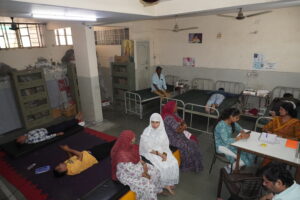 Over the years, I have integrated Ayurveda, Su Jok and colour therapy into my approach to holistic healthcare. I have been practising Ayurveda for nearly 30 years, including 23 years of association with Sahara. It is particularly gratifying to see patients coming to us not just from different parts of Rajasthan and India, including remote regions such as Barmer, Jaisalmer, Bharatpur and Sri Ganganagar, but also from other countries.
My greatest inspiration has always been the desire to help people overcome their health challenges and improve their quality of life. The trust that patients place in me and the recommendations they make to others are my biggest achievements and the strongest motivation to continue this journey.
Could you elaborate on Su Jok therapy and colour therapy? How do these techniques make your approach to treatment distinctive?
Answer: Su Jok is a Korean therapeutic technique developed by Professor Park Jae Woo of South Korea. ‘Su’ means hand and ‘Jok’ means foot. The technique is based on the concept that the hands and feet contain corresponding points representing different organs and systems of the human body.
Practitioners use a specialised diagnostic probe connected to an electronic microcurrent meter to examine these points. Changes in the readings are interpreted within the Su Jok system to identify areas that may require attention.
Colour therapy, also known as chromotherapy, is another complementary approach that uses different colours and their associated wavelengths. In my practice, specific colours are used at particular points, depending on the concern being addressed. The objective is to promote relaxation, relieve discomfort and support overall well-being.
What makes my approach distinctive is the integration of these techniques with the traditional principles of Ayurveda, allowing me to adopt a holistic perspective towards healthcare.
What is the fundamental philosophy of Ayurveda, and how does it define good health?
Answer: The fundamental philosophy of Ayurveda revolves around maintaining balance in the body and mind. It emphasises that good health is not merely the absence of disease but a state of physical, mental and emotional well-being. Inner happiness and harmony are equally important.
According to classical Ayurvedic texts such as the Sushruta Samhita, a healthy individual is one whose three doshas—Vata, Pitta and Kapha—are balanced, whose digestive fire (Agni) is functioning properly, and whose tissues and waste-elimination processes are in harmony, along with a state of mental and spiritual well-being.
Ayurveda also has two fundamental responsibilities: Swasthasya Swasthya Rakshanam (preserving the health of a healthy individual) and Aturasya Vikara Prashamanam (alleviating the ailments of a diseased individual). In essence, Ayurveda focuses both on prevention and treatment.
Lifestyle-related diseases are becoming increasingly common. What, according to you, are the major reasons behind this?
Answer: I believe one of the biggest reasons is that people have stopped making time for themselves. Our lives have become increasingly hectic, and we have lost the patience and peace of mind that are essential for good health.
People are so occupied with their professional and personal commitments that they often neglect their physical and mental well-being. Excessive mobile phone usage and prolonged screen exposure have further contributed to sedentary habits, disturbed sleep and mental stress.
Another concerning trend is the growing tendency to self-diagnose health conditions through information available on the internet and social media. While awareness is important, incomplete or misleading information can sometimes do more harm than good. Every individual is different, and the same symptoms or treatment may not apply to everyone.
We must understand that healthcare requires proper consultation, individual assessment and informed decisions rather than relying on half-knowledge.
How important are diet, sleep and a disciplined daily routine in maintaining good health?
Answer: Diet, sleep and daily routine are the three essential pillars of a healthy lifestyle. Sleep is particularly important because it allows the body and mind to rest, recover and restore their natural balance.
Diet, too, plays a crucial role. Our food habits are often influenced by our culture, traditions and social celebrations. However, we must remember that food is not merely about taste or enjoyment; it is one of the most important determinants of our health.
It is essential to consume a balanced and nutritious diet that provides the body with adequate vitamins, minerals and other essential nutrients. Equally important is maintaining discipline in our daily routine. Eating at appropriate times, getting sufficient sleep and following healthy lifestyle habits can go a long way in preventing health complications.
How do you view the relationship between Ayurveda and modern medicine? Can the two systems complement each other?
Answer: Absolutely. I strongly believe that Ayurveda and modern medicine should complement each other rather than be viewed as competing systems. Greater coordination between the two can contribute significantly to better healthcare outcomes.
Modern medicine is indispensable in emergencies, acute conditions and situations requiring immediate intervention or pain relief. Ayurveda, on the other hand, places considerable emphasis on preventive healthcare, lifestyle modification and holistic well-being.
Both systems have their respective strengths, and their appropriate integration, guided by qualified medical professionals and scientific evidence, can benefit patients.
I also believe that simple lifestyle practices play a significant role in maintaining health. Adequate hydration, nutritious food and a positive outlook towards life are essential. We must learn to listen to our bodies and treat them with care and respect.
What, according to you, are some of the limitations of Ayurveda in contemporary healthcare?
Answer: I believe Ayurveda has certain limitations when it comes to emergency medical situations, where immediate intervention is required. Such cases must be managed through appropriate modern medical facilities. However, Ayurveda has an important role in preventive healthcare and the management of several chronic and lifestyle-related conditions.
Another concern is the changing availability of traditional medicinal substances. Some herbs and formulations mentioned in classical Ayurvedic texts are becoming increasingly difficult to source in their original form. This has led to the development of substitutes, making it important to ensure their quality, authenticity, safety and efficacy through proper research.
Ritucharya is an important concept in Ayurveda. Could you explain its significance in our everyday lives?
Answer: Ritucharya is one of the important principles of Ayurveda. It refers to adapting our diet (Ahara) and lifestyle (Vihara) according to seasonal changes throughout the year.
Our bodies respond differently to changes in temperature, humidity and environmental conditions. Ritucharya helps us make appropriate adjustments to our food habits and daily activities to maintain the balance of Vata, Pitta and Kapha doshas.
For instance, Ayurveda recommends certain dietary practices during winter that may not be suitable during summer. Traditional dietary choices are often guided by the seasonal characteristics of different foods.
Do you think awareness about Ayurveda has increased among people in recent years?
Answer: Yes, awareness about Ayurveda has certainly increased over the years. Social media and digital platforms have played a significant role in making people more familiar with traditional healthcare practices, medicinal herbs, dietary principles and Ayurvedic formulations.
Today, people are increasingly interested in understanding what they consume and how different lifestyle choices affect their health.
However, the easy availability of information has also resulted in the circulation of misinformation. It is important to distinguish between authentic Ayurvedic knowledge and unverified claims.
The government’s initiatives to promote Ayurveda and traditional systems of medicine have also contributed to its growing visibility and acceptance. What is encouraging is that more people are now showing an interest in preventive healthcare and holistic living.
What are the major challenges faced by Ayurvedic practitioners in today’s healthcare landscape?
Answer: One of the most significant challenges is the need for greater scientific validation and evidence-based research. While Ayurveda has a rich repository of traditional knowledge, certain medicines, formulations and therapeutic practices require more extensive scientific investigation to establish their safety, efficacy and appropriate applications. Ayurveda has immense potential, but its growth and wider acceptance depend on combining its traditional wisdom with scientific rigour, innovation and credible research.
Rajasthan has a rich tradition of indigenous medicinal knowledge. Do you think this traditional wisdom is still being preserved?
Answer: Yes, I believe Rajasthan has done a remarkable job of preserving its traditional medicinal knowledge, particularly in rural communities.
If we visit villages across Rajasthan, we often find families who possess extensive knowledge about local plants, herbs and their traditional applications. They understand the properties of different plants and know how certain natural ingredients have been used for generations.
This knowledge is an invaluable part of our cultural heritage. However, there is a need to document, preserve and scientifically study this traditional wisdom so that it can be passed on to future generations.
Finally, what message would you like to share with our readers about Ayurveda and holistic health?
Answer: My message to everyone is that good health requires patience, consistency and a disciplined lifestyle.
Ayurveda follows a different approach to healthcare, and its principles and treatment methods should be understood in their own context rather than directly compared with modern medicine. The time required for treatment varies depending on the individual and the health condition.