

Business Remedies | Charu Bhatia | May 28,2025 | The entry of international fashion brands into India has transformed the country’s retail landscape over the past few decades. Among these global names, Levi’s stands out as a pioneering brand that successfully tapped into the burgeoning Indian market. The journey of Levi’s and similar brands in India reveals important insights into market strategies, consumer behavior, and localization efforts.
The Early Days: Levi’s Arrival in India
Levi’s made its debut in India in the mid-1990s, a period marked by significant economic liberalization. The government’s reforms opened the gates for foreign direct investment (FDI) and encouraged international companies to explore opportunities in India’s vast consumer base. Levi’s recognized the potential of the young, aspirational Indian demographic eager to embrace Western fashion and lifestyle.
Understanding the Indian Consumer
Levi’s success in India was rooted in its ability to understand and adapt to local tastes. Indian consumers, particularly the youth, valued the brand’s global reputation for quality denim and timeless style. However, the brand also realized the need to offer products suited to the Indian climate and price sensitivities. This led to the introduction of lighter denim fabrics, varied fits, and a range of price points to attract a broader customer base.
Localization and Market Adaptation
To cement its position, Levi’s invested heavily in localization strategies:
8 Manufacturing in India: Set-ting up local manufacturing units helped reduce costs and allowed Levi’s to price products competitively.
8 Distribution Network: Esta-blishing an extensive distribution network across urban and semi-urban centers ensured wide availability.
8 Marketing Campaigns: Le-vi’s tailored its marketing efforts to resonate with Indian culture while maintaining its global brand image. Celebrity endorsements and youth-focused campaigns helped build a strong emotional connect.
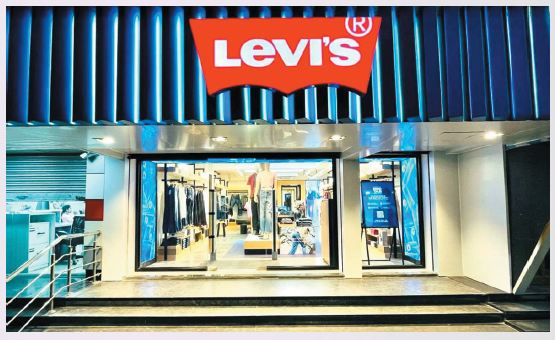
8 Retail Presence: Alongside department stores and multi-brand outlets, Levi’s launched exclusive brand stores to offer customers a complete brand experience.
Navigating Challenges
Despite its global strength, Levi’s faced challenges in India, including competition from local brands, counterfeit products, and fluctuating consumer purchasing power. However, continuous innovation, expansion into new cities, and embracing e-commerce platforms helped Levi’s maintain its relevance.
The Bigger Picture: Other Global Brands Follow Suit
Levi’s entry paved the way for many other international brands like Nike, Adidas, Zara, and H&M to enter India. These brands leveraged similar strategies, local production, understanding regional preferences, multi, channel retailing, and digital marketing, to grow their footprint.
Levi’s journey into the Indian market is a textbook example of how global brands can successfully navigate emerging markets by blending international appeal with local insights. The brand’s adaptability, combined with India’s growing consumerism and youthful population, has made Levi’s a household name. As the Indian fashion market continues to evolve, Levi’s and other global players are poised to innovate and expand further, driving the country’s retail revolution.
 Written & Edited By:
Charu Bhatia



1 comment
Excellent