
Jaipur | Charu Bhatia | The hospitality industry is undergoing a profound transformation as evolving consumer expectations, technological advancements, and sustainability goals reshape how hotels, resorts, and travel businesses operate. By 2030, the sector is expected to look significantly different, with innovation and personalization emerging as key drivers of growth.
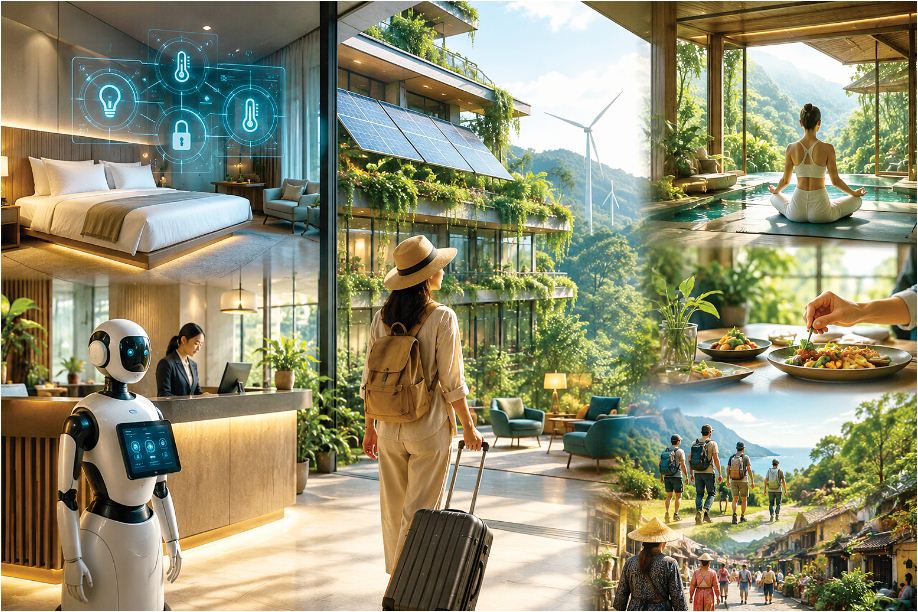
One of the most influential trends will be the widespread adoption of artificial intelligence (AI) and automation. Hotels are increasingly using AI-powered tools for reservations, customer service, dynamic pricing, and personalized recommendations. Smart rooms that adjust lighting, temperature, and entertainment preferences based on guest profiles are expected to become commonplace. Automation will also streamline back-end operations, helping hospitality businesses improve efficiency while managing labor costs.
Personalized guest experiences will become a major competitive differentiator. Travelers are no longer satisfied with standardized services; they seek tailored experiences that reflect their preferences and lifestyles. Data analytics will enable hospitality brands to offer customized room settings, curated local experiences, wellness programs, and dining options designed around individual needs.
Sustainability will play a central role in shaping the industry’s future. Environmental concerns and changing consumer attitudes are encouraging hospitality companies to adopt greener practices. Energy-efficient buildings, renewable energy sources, water conservation measures, waste reduction initiatives, and sustainable sourcing are likely to become standard industry practices. Properties that successfully integrate sustainability into their operations may gain a competitive advantage among environmentally conscious travelers.
The rise of wellness tourism is expected to further influence hospitality strategies. Hotels and resorts are increasingly expanding beyond traditional accommodation services to offer wellness-focused experiences, including fitness programs, spa therapies, mental well-being initiatives, and holistic retreats. As health-conscious travel continues to grow, wellness is likely to become an essential component of hospitality offerings.
Another significant trend is the growing demand for experiential travel. Modern travelers increasingly prioritize meaningful experiences over conventional sightseeing. Hospitality businesses are responding by offering cultural immersion programs, culinary experiences, adventure activities, and community-based tourism initiatives that allow guests to connect more deeply with destinations.The expansion of hospitality markets beyond major metropolitan areas will also shape the industry’s future. Improved infrastructure, rising domestic tourism, and increasing disposable incomes are driving investment into secondary and emerging destinations. This trend is creating opportunities for hotel operators, investors, and local tourism ecosystems alike.
Technology, sustainability, wellness, and experience-driven travel are expected to define hospitality’s next chapter. As the industry moves towards 2030, businesses that successfully adapt to changing traveler expectations while embracing innovation are likely to emerge as leaders in an increasingly competitive global market. The future of hospitality will not simply be about providing a place to stay. It will be about delivering personalized, sustainable, and memorable experiences that meet the evolving needs of a new generation of travelers.