

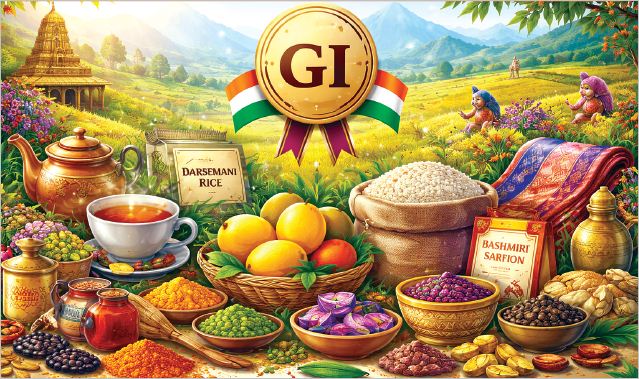
Charu Bhatia | Business Remedies | Geographical Indication (GI) tagged products are fast emerging as powerful business assets for India’s agricultural and artisanal economy. From Darjeeling tea and Basmati rice to Alphonso mangoes and Kashmir saffron, GI tags certify that a product originates from a specific region and possesses qualities linked to that geography. Beyond cultural pride, the GI movement is now evolving into a serious commercial opportunity, helping farmers, exporters and brands monetise regional identity in global markets.
The business case for GI products lies in premiumisation. In an era where consumers increasingly value authenticity, traceability and sustainability, GI labels offer a built-in story. International buyers are willing to pay higher prices for products with verified origins, similar to how Champagne or Parmigiano Reggiano command premium pricing globally. For Indian farmers and producers, this creates a pathway to shift from commodity selling to brand-led value creation.
Exports are a key growth driver. India currently has hundreds of registered GI products, yet only a fraction have achieved global recognition. Government initiatives and export promotion councils are working to bridge this gap by linking GI producers with international buyers, improving packaging standards and building global branding campaigns. The push aligns with India’s broader ambition to position itself as a reliable global supplier of high-quality agricultural products.
However, monetising GI tags is not without challenges. Many producers lack awareness, marketing expertise and access to global supply chains. Fragmented production, inconsistent quality and limited processing infrastructure can dilute the premium promise of GI products. Without strong branding and enforcement, counterfeit products also pose a major risk, undermining trust and price realisation.
To unlock the full potential of GI products, the focus is shifting towards collective branding and Farmer Producer Organisations (FPOs). By aggregating supply and standardising quality, FPOs can negotiate better prices and invest in packaging, certification and export readiness. Digital marketplaces and traceability tools are also playing a role, allowing consumers to verify origin and learn the story behind the product.
Private brands are increasingly partnering with GI producers to launch premium retail lines, bringing regional specialties to urban and global consumers. This collaboration between traditional producers and modern supply chains is helping transform GI tags from legal identifiers into marketable brands.
As global consumers move towards ethical and authentic consumption, GI products offer India a unique opportunity to turn its agricultural diversity into a high-value export engine. With the right investments in branding, infrastructure and supply chains, GI tags could redefine how Indian farm produce competes, and wins, on the world stage.