

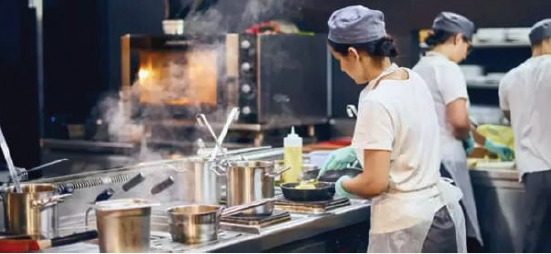
Business Remedies | Charu Bhatia | Once hailed as the future of food delivery, cloud kitchens, also known as ghost kitchens or dark kitchens, exploded in popularity during the pandemic. With dine-in shut down and digital ordering booming, the model promised low overheads, high efficiency, and unlimited scalability. But five years later, as the world settles into hybrid lifestyles and consumer expectations evolve, a key question remains: Is the cloud kitchen model still a sustainable business in 2025?
The Pandemic Boom and the Post-Pandemic Reality
The early 2020s saw massive investments in cloud kitchen infrastructure. Companies like Rebel Foods, Kitchens@, and Zomato-backed initiatives expanded aggressively across metros and Tier 2 cities. The appeal was obvious, no need to pay for prime real estate, hire servers, or worry about customer-facing decor. All a brand needed was a kitchen, a chef, a tablet, and a delivery partner.
But in 2024, signs of market saturation and operational burnout began to appear. High customer acquisition costs, growing competition, and delivery platform dependency ate into margins. Many players began consolidating or shifting focus to hybrid models with limited dine-in or takeaway counters.
2025: A Pivot Towards Profit-First Models
In 2025, viability depends on adaptability. The one-size-fits-all cloud kitchen model has given way to leaner, location-optimized kitchens, often operating under multiple brand names, also known as multi-brand virtual restaurant chains. According to RedSeer’s Q2 2025 report, cloud kitchens that focus on hyperlocal cuisine, data-driven menu optimization, and tech-backed inventory management are outperforming legacy players.
“Earlier, everyone wanted to be the next Uber Eats of kitchens. Now, the focus has shifted to unit economics and operational discipline,” says Ritu Dalmia, an F&B investor and chef-entrepreneur. “The winners are those who build strong local brands with loyal, repeat customers – not just discounts and delivery hacks.”
Key Shifts Keeping Cloud Kitchens Afloat
Brand Aggregation and Licensing: Companies now host multiple food brands from a single kitchen, often licensing menus from popular chefs or influencers. This boosts revenue per square foot. AI and Predictive Ordering: Cloud kitchens are integrating AI to anticipate demand by time, location, and season, helping reduce waste and optimize prep time.
Direct-to-Consumer Channels: Some brands are bypassing Swiggy and Zomato by developing their own apps, cutting down commissions and gaining control over the customer experience.
Co-Kitchen Models: Smaller players are renting shared kitchen spaces with flexible terms, reducing CAPEX and allowing test runs before scaling.
Sustainability as a USP: From eco-friendly packaging to low-waste menus, cloud kitchens are leveraging green practices to win over younger consumers.
Is the Cloud Kitchen Dream Still Alive?
Yes, but not in its original form. The golden age of mass-scale, investor-fuelled kitchen sprawl is over. In its place is a more grounded model that values customer loyalty over volume, profitability over valuation, and operational efficiency over expansion. Cloud kitchens today must act more like tech-enabled food startups and less like food factories.
As India’s food delivery sector is expected to touch Rs. 1.5 lakh crore by 2027, there’s still room for growth. But survival will depend on how well brands can adapt to evolving consumer behaviour, rising delivery costs, and increasing competition, not just from other cloud kitchens, but also from traditional restaurants making a digital comeback.