

Jaipur | Charu Bhatia
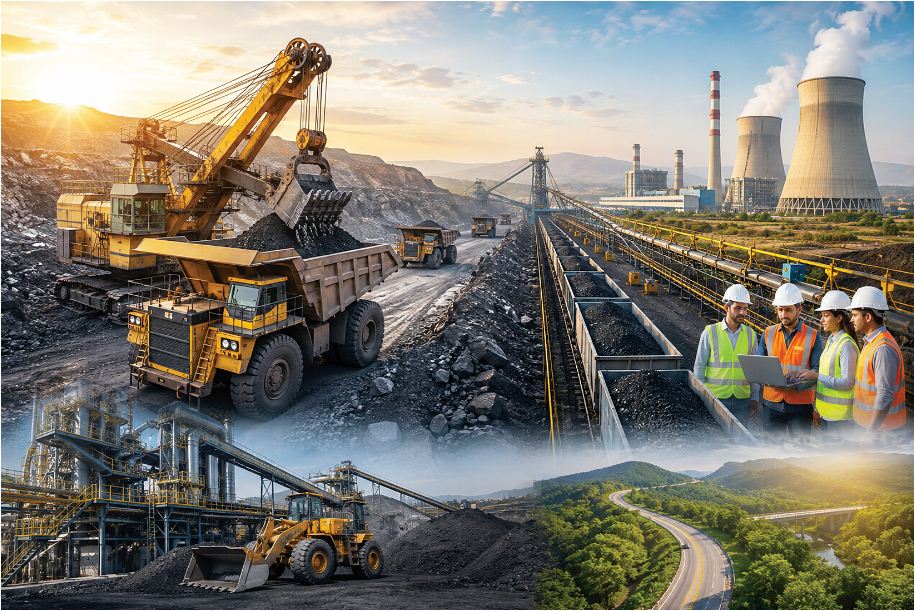
India’s commercial coal mining sector is undergoing a significant transformation, evolving from a government-dominated industry into a more competitive and investment-driven ecosystem. Since the introduction of commercial coal mining reforms, private participation has expanded, opening new opportunities for businesses, infrastructure developers and equipment manufacturers. While coal continues to be the backbone of India’s power generation, its economic impact now extends far beyond electricity production.
One of the biggest outcomes of commercial coal mining has been increased private investment. By allowing companies to mine and sell coal on the open market, the government has encouraged competition and accelerated the development of untapped coal blocks. This has attracted investments in mining infrastructure, heavy machinery, logistics and allied industries, creating a multiplier effect across the economy.
The sector has also emerged as an important source of employment. New mining projects generate direct jobs in excavation, engineering and operations while creating indirect employment in transportation, equipment manufacturing, maintenance, construction and local services. As mining activities expand, districts rich in coal reserves often witness improvements in roads, rail connectivity and industrial infrastructure, strengthening regional economic development.
Commercial coal mining is also helping reduce India’s dependence on imported coal. Although the country has abundant coal reserves, imports have traditionally been used to meet rising industrial demand. Increasing domestic production can help lower import bills, strengthen energy security and reduce exposure to global price volatility. For industries such as power, steel and cement, greater availability of domestic coal can contribute to more stable input costs and improved competitiveness.
Another notable trend is the growing adoption of technology across mining operations. Companies are investing in automated equipment, digital monitoring systems, drone-based surveys and data analytics to improve productivity, enhance worker safety and optimise resource extraction. These innovations are making mining operations more efficient while reducing operational risks.
However, the industry’s expansion also brings challenges. Environmental sustainability, land acquisition, rehabilitation of displaced communities and compliance with stricter environmental regulations remain critical priorities. Mining companies are increasingly investing in land reclamation, water conservation, renewable energy integration and carbon management initiatives as environmental, social and governance (ESG) standards become central to business strategy.
Looking ahead, commercial coal mining is expected to remain an important pillar of India’s industrial growth even as the country accelerates its clean energy transition. Coal will continue to support sectors that are difficult to decarbonise in the near term, while policy reforms and technological advancements improve efficiency and sustainability.
For businesses, the story of commercial coal mining is no longer limited to energy production. It represents a broader economic shift, one that is generating investment, strengthening domestic supply chains, creating employment and reinforcing India’s ambition to build a more self-reliant and resilient industrial economy.


