


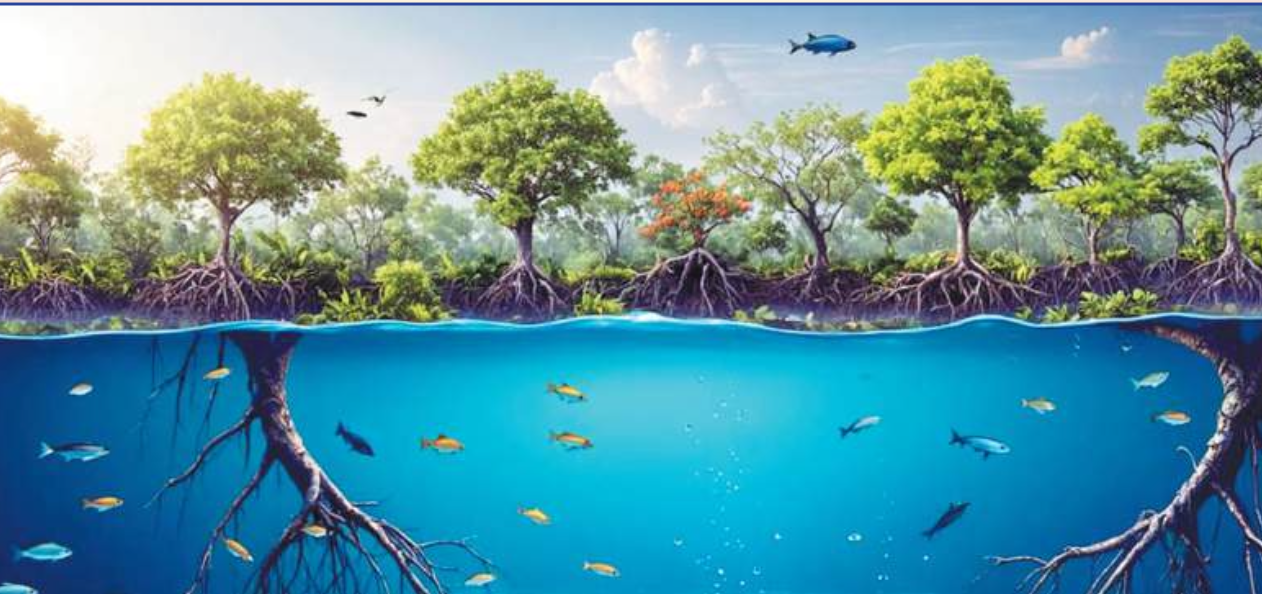
Charu Bhatia | Jaipur | Business Remedies | As climate finance accelerates globally, a new opportunity is emerging along coastlines: blue carbon markets. At the centre of this trend are mangroves, once seen primarily as natural buffers against storms and erosion, but now gaining attention as high-value carbon assets capable of generating revenue.
Blue carbon refers to carbon captured and stored by coastal ecosystems such as mangroves, salt marshes and seagrass beds. Among these, mangroves stand out for their exceptional carbon-sequestration ability. Studies show they can store up to four times more carbon per hectare than tropical forests, locking it in both vegetation and deep coastal soils for centuries.
This natural capability is attracting investors, governments and carbon credit developers who see mangrove conservation as both a climate solution and an economic opportunity.
Why Mangroves Are Becoming Valuable Assets
Mangroves deliver multiple economic benefits beyond carbon storage. They protect coastlines from storm surges, support fisheries, enhance biodiversity and sustain livelihoods in coastal communities. Yet globally, mangrove forests have declined sharply due to urbanisation, aquaculture and infrastructure projects.
Carbon markets are now reframing mangroves as income-generating assets. By restoring or protecting these ecosystems, project developers can generate verified carbon credits, which companies purchase to offset emissions as part of their net-zero commitments.
As corporate climate pledges expand, demand for nature-based carbon credits is rising rapidly, creating a potential revenue stream for coastal economies.
The Business Case for Blue Carbon
For coastal states and developing nations, blue carbon projects offer a compelling financial model. Instead of converting mangrove land for short-term gains, governments and communities can earn recurring income through carbon credit sales, conservation funding and eco-tourism.
Private investors are also entering the space, funding restoration projects in exchange for a share of future carbon credit revenues. Multilateral institutions and climate funds are supporting early projects, helping establish methodologies and verification standards.
India, Indonesia and several African nations are exploring national blue carbon strategies, recognising the role of mangroves in both climate resilience and economic diversification.
Challenges in Scaling the Market
Despite its promise, the blue carbon economy is still in its early stages. Measuring and verifying carbon storage in coastal ecosystems is complex and requires long-term monitoring. Regulatory frameworks and ownership rights over coastal land can also slow project development.
There are social considerations as well. Ensuring local communities benefit from carbon revenue is essential for long-term success and ethical implementation.
A Growing Opportunity
As carbon markets mature and climate risks intensify, mangroves are shifting from overlooked ecosystems to strategic assets. For businesses, investors and policymakers, blue carbon represents a rare convergence of environmental protection and economic opportunity. If scaled responsibly, mangrove conservation could transform coastlines into climate-positive revenue streams, proving that nature itself may be one of the most valuable investments of the decade.