

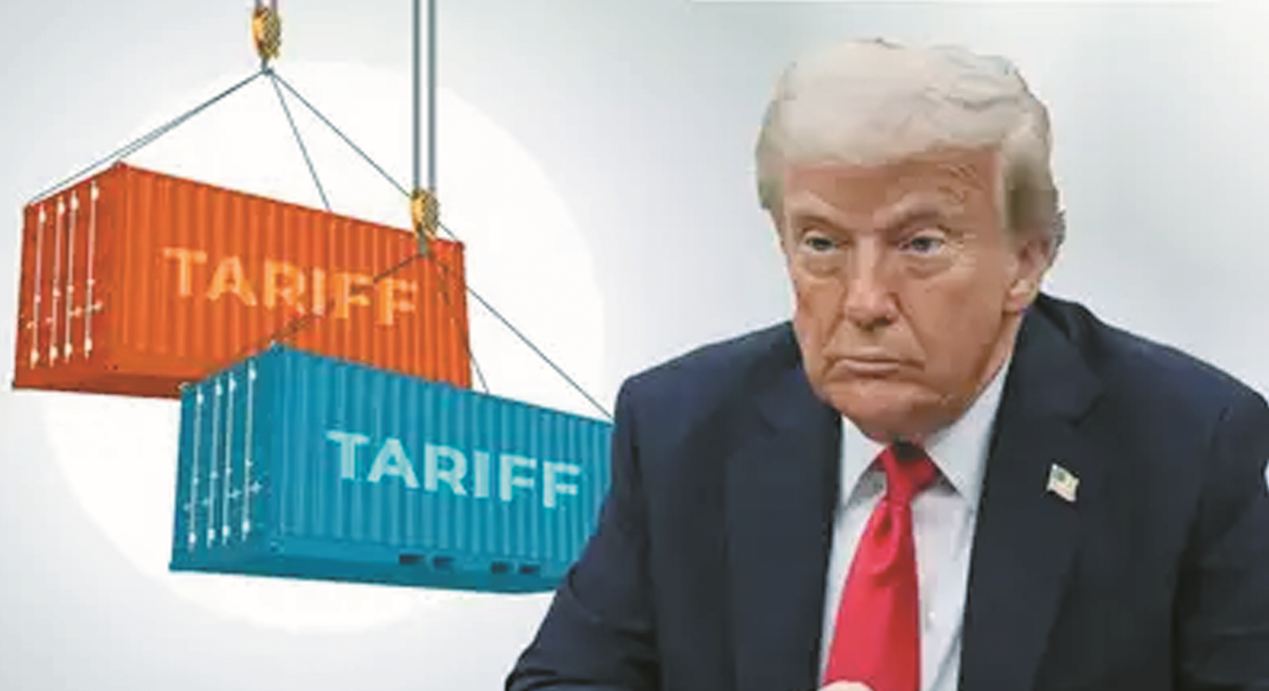
Shruti Kothari | Jaipur | Business Remedies | April 04,2025 | U.S. President Donald Trump has announced a 27% “discounted reciprocal tariff” on Indian imports, citing a need to address trade imbalances between the two nations. The tariff, set to take effect on April 9, 2025, comes as part of a broader initiative imposing varying rates on key trade partners, including China (34%), Taiwan (32%), Vietnam (46%), the European Union (20%), and Japan (24%). Additionally, a baseline 10% tariff on all U.S. imports will be implemented from April 5, 2025.
President Trump justified the 27% tariff on India by highlighting the disparity in tariffs between the two countries. According to him, India imposes a 52% tariff on American goods, and the U.S. is responding with exactly half that rate in an effort to create more “fair and reciprocal” trade conditions. He also described India as “very, very tough” in its trade practices, reinforcing his administration’s focus on reducing trade deficits and pressuring countries to renegotiate terms. The Indian government is analyzing the potential impact of these tariffs. An official from India’s commerce ministry called the situation a “mixed bag” rather than a setback.
Officials have confirmed that discussions for a broader bilateral trade agreement between the U.S. and India are ongoing, with negotiations expected to conclude by fall 2025. Following the tariff announcement, the Indian rupee weakened in the non-deliverable forward market, signaling potential pressure on the currency when onshore markets open. Analysts predict that the move could lead to short-term volatility in India’s financial markets, particularly for export-driven sectors.


