

Charu Bhatia, Senior News Editor, Business Remedies, in conversation with Neeraj Periwal, Co-founder and CEO of Auric Mills
With roots dating back to 1935, Auric Mills is bringing a renewed focus to India’s traditional grains through slow milling, hygienic processing and innovative food products. Co-founder and CEO Neeraj Periwal believes that nutrition begins with everyday staples such as flour, and that consumers deserve greater transparency about the food they eat. From sourcing indigenous grain varieties directly from farmers to introducing a sattu vending machine and millet-based beverages, Auric Mills is combining traditional food wisdom with modern technology. In this conversation, Periwal discusses the brand’s legacy, evolving consumer preferences, farmer partnerships, product innovation and his vision for the future of India’s traditional food industry.
Q: Auric Mills has a fascinating journey, with roots dating back to the pre-Independence era. Could you tell us more about its evolution?
Answer: Auric Mills traces its origins to 1935, and our journey has been closely connected with the grain trading business. While we have now been involved in several other businesses, including real estate and catering, we also realised about a year ago that it was time to create a dedicated brand addressing an important gap in the food market. Traditional flour mills have increasingly prioritised speed and volume, often leaving questions about nutritional quality unanswered. Industrialisation has also transformed agricultural practices, soil quality and food processing. We wanted to create a system that places quality and hygiene at the centre of flour production.
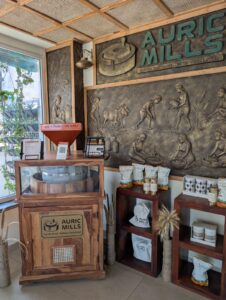
Our machines operate at approximately 45 RPM, allowing us to mill grains slowly. Although our output is lower, we believe this approach helps us focus on the quality of the flour. Our mill has hygienic, dedicated sections for different grains, including wheat, ragi, jowar and rajgira. We also maintain separate areas for seed germination, drying, milling and packaging. Our sourcing process is equally important. We work directly with farmers from the regions where particular grains are grown, building relationships that often become like family bonds. We source traditional varieties such as Sona Moti, an ancient Indian heirloom wheat, grown in Punjab and Rajasthan, and Khapali wheat, which is cultivated in Maharashtra and Northern Karnataka and is valued for its fibre and protein content. Ultimately, we believe that everyone deserves access to good nutrition, beginning with something as basic as the flour consumed every day.
Q: What specific gaps in the food market inspired you to establish Auric Mills as a consumer brand?
Answer: We felt that the quality and nutritional value of the grains people consume had become a significant concern. India’s agricultural and food systems underwent considerable changes during periods of food scarcity and the subsequent expansion of agricultural production. While these developments helped address food availability, the way crops were grown and processed also evolved. Large-scale milling prioritises efficiency and high output. We wanted to explore an alternative that gives greater attention to the grain, its sourcing and the milling process. Auric Mills was established with the vision of offering clean, hygienically processed products while bringing traditional grains back into everyday diets. For us, it is not simply about selling flour. It is about helping consumers understand what they eat, where it comes from and how it is processed.
Q: How has consumer awareness of food quality and nutrition changed in India?
Answer: Consumer awareness has changed significantly. People increasingly ask questions about ingredients, sourcing, manufacturing processes and nutritional value. They want transparency rather than simply accepting what is written on a packet. At Auric Mills, we use QR codes on our packaging to provide consumers with information about our products and their manufacturing processes. We also conduct live sessions showcasing production, allowing people to understand how their food is made.
We offer customised flour blends for different dietary preferences and needs, including gut-friendly options, weight-management blends and products designed for people seeking diabetic-friendly or protein-rich diets. Our approach emphasises clean labels and avoiding unnecessary fortification. We also focus on traditional processing methods. For certain millets, we use soaking to activate the grains before processing, an approach intended to support nutrient availability and digestibility. Our flour blends may include ingredients such as almonds, flaxseeds and oats to enhance their nutritional profile. We believe that the future of food lies in informed consumers who understand the value of ingredients and the importance of responsible processing.
Q: Auric Mills has recently introduced what you describe as India’s first sattu vending machine. What inspired this innovation?
 Answer: One of our objectives has been to revive India’s traditional foods by combining their nutritional value with modern technology and convenience. Sattu, particularly popular in states such as Bihar and Uttar Pradesh, is a traditional food made from roasted gram and is valued as a source of plant-based protein. We wanted to make it easier for people to consume sattu without having to prepare it themselves. After researching the idea, we developed a dispensing machine offering three flavours: classic, spicy and tangy.
The machine prepares a chilled sattu drink within seconds by mixing a premix with water. The formulations include ingredients such as roasted chana, almonds, cumin, mint powder and pink salt, depending on the flavour. We installed 100 machines across locations such as hospitals, universities and corporate offices in 15 days since its launch. The system can prepare around 45 drinks in a minute, making it suitable for places with high footfall. The idea is to make a traditional, nutritious drink accessible to people who may otherwise choose less nutritious convenience beverages.
Q: Quality appears to be central to your business philosophy. What challenges did you face while establishing Auric Mills?
Answer: Our biggest challenge has been maintaining quality while building a commercially viable business. Conventional flour mills can produce approximately one tonne of flour an hour, whereas our production speed is around five kilograms an hour. This difference reflects our emphasis on a slower, more controlled process. Lower production volumes mean that we must carefully manage our operations and communicate the value of our products to consumers. However, we believe that customers are willing to pay a premium when they understand the quality and care behind what they purchase.
Another challenge has been preserving a legacy that dates back almost a century while preparing the business for the future. It has been encouraging to see the younger generation actively involved. Our children contribute ideas on innovation, technology and new ways of reaching consumers. Our motto is ‘Slow. Mindful. Rooted.’ Slow represents our production philosophy, mindful reflects the care taken in selecting ingredients, and rooted signifies our connection with traditional food practices. We want to offer consistent quality rather than follow a purely volume-driven approach to manufacturing.
Q: Could you tell us more about some of Auric Mills’ distinctive products beyond traditional flour?
Answer: Our product range reflects our effort to make traditional ingredients relevant to contemporary lifestyles. The sattu vending machine is one example. Another is our ragi latte, which combines ragi with ingredients such as cardamom and jaggery to create a convenient beverage. Millets offer an important source of plant-based nutrition, and we want to introduce them in formats that appeal to modern consumers. We are also developing products aimed at improving children’s nutritional intake.
Getting children to eat vegetables can be difficult, but incorporating suitable ingredients into familiar foods, that is in the atta, like paranthas can make them more appealing. We look at ways to make nutritious ingredients easier to incorporate into everyday meals without compromising on convenience. Our broader objective is to demonstrate that traditional grains and plant-based ingredients can be used in innovative products rather than being restricted to conventional recipes.
Q: How are you marketing Auric Mills’ products across India and international markets?
Answer: Digital platforms have become an important part of our distribution strategy. Consumers can order our products online through platforms such as Blinkit, Flipkart and Amazon. Freshness is a priority for us. We maintain some inventory for immediate fulfilment, while other products are prepared against orders. In the National Capital Region, stock is also available through the dark stores of quick-commerce platforms, helping customers receive products conveniently.
Internationally, we are building awareness through participation in major exhibitions and trade fairs. Recognition at international platforms and engagement with established grain-trading networks have also helped us explore opportunities beyond India. We see considerable potential for traditional Indian grains in international markets, particularly as consumers increasingly explore alternative grains and plant-based food options. Our focus is on building credibility, maintaining quality and establishing the right distribution relationships.
Q: How can the revival of traditional foods create new economic opportunities for farmers and agricultural businesses?
Answer: The revival of traditional foods can create meaningful opportunities for farmers. When consumer demand for millets, jowar, bajra and traditional wheat varieties increases, farmers have greater incentives to cultivate these crops. For a long time, some traditional grains received less attention as agricultural production and consumption patterns changed. Businesses that source these grains responsibly can help reconnect farmers with markets and encourage the cultivation of indigenous varieties. The relationship is driven by demand and supply. When consumers seek particular grains and companies create products around them, a new market develops. Farmers can benefit from more diversified sources of demand, while consumers gain access to a wider variety of foods. This can also help preserve agricultural traditions and encourage greater appreciation of regional crops. The opportunity is not limited to farmers; it can extend to processors, food manufacturers, distributors and entrepreneurs building businesses around traditional ingredients.
Q: Where do you see Auric Mills over the next decade?
Answer: I see Auric Mills growing significantly over the next ten years. We intend to introduce new products, explore innovative processing techniques and adopt technologies that can help us improve our operations without losing sight of our quality standards. We are researching several areas, including seeds, grains and processing methods. There is considerable scope to learn more about traditional varieties and find ways to make them accessible to contemporary consumers. Our ambition is to expand the business while remaining committed to our core philosophy. Growth should not come at the cost of the principles on which the brand has been built.
Q: Finally, what advice would you offer young entrepreneurs looking to build their own businesses?
Answer: I believe that a great deal is possible when you have a clear idea and identify a genuine market need. Passion is important, but patience is equally essential. Building a business takes time, and entrepreneurs must be prepared to learn, adapt and overcome challenges. Understanding the market is crucial. An idea may be exciting, but entrepreneurs must establish whether customers need the product and are willing to pay for it. Learning about the right technology is also important because it can help businesses improve quality, efficiency and scalability. My advice would be to remain committed to your vision, keep learning and avoid expecting immediate results. A business built around a meaningful need, with patience and the right approach, has the potential to create lasting value.