


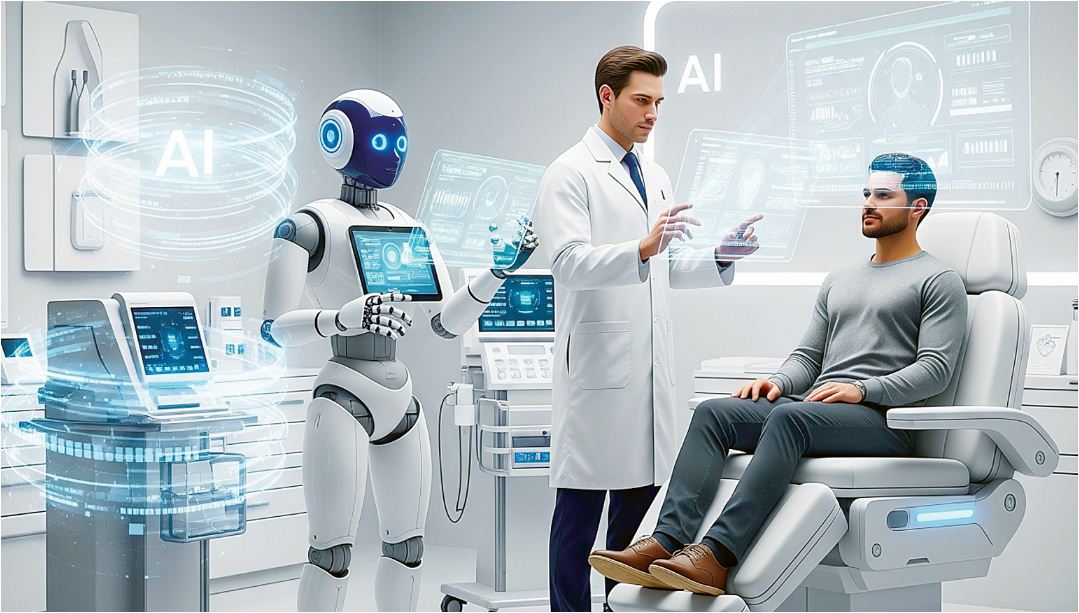
Jaipur | Charu Bhatia | Artificial intelligence is rapidly transforming healthcare from a traditionally reactive industry into a data-driven, technology-enabled ecosystem. What was once limited to hospitals and clinics is now expanding into digital platforms, AI-powered diagnostics, virtual consultations and remote patient monitoring. As healthcare systems worldwide face growing patient loads, workforce shortages and rising costs, technology is emerging as a key solution, and creating a significant business opportunity in the process.
India, with its large population and uneven distribution of healthcare resources, is particularly well-positioned to benefit from this shift. Healthcare technology startups, hospital chains and diagnostic companies are increasingly investing in AI-driven solutions designed to improve accessibility, efficiency and clinical outcomes.
The Rise of Smart Healthcare Solutions
One of the most visible trends is the growing adoption of AI-powered diagnostics. Advanced algorithms are now capable of analysing medical images, pathology reports and patient data with remarkable speed and accuracy. In areas such as radiology, ophthalmology and cancer screening, AI tools are helping doctors identify abnormalities earlier, enabling faster diagnosis and treatment.
These technologies are not intended to replace physicians but to enhance their capabilities. By automating routine analysis and reducing diagnostic errors, AI allows healthcare professionals to focus on complex decision-making and patient care. Virtual healthcare is also witnessing unprecedented growth. Telemedicine platforms, once considered a convenience, have become an integral part of healthcare delivery. Patients can now consult specialists, receive prescriptions and access follow-up care without visiting a hospital. This model is particularly valuable for rural and underserved regions where access to healthcare remains limited.
Meanwhile, wearable devices and remote monitoring systems are generating real-time health data, allowing healthcare providers to track chronic conditions such as diabetes, hypertension and heart disease from a distance. This shift from episodic treatment to continuous monitoring is creating new business models centred on preventive care and long-term patient engagement. The economic implications are significant. Investors are increasingly backing health-tech startups focused on AI diagnostics, digital therapeutics, remote care and predictive analytics. Hospitals are adopting technology to improve operational efficiency, while insurance companies are leveraging data-driven insights to personalise services and manage risks more effectively.
As healthcare evolves into a digitally connected ecosystem, the industry is moving beyond traditional treatment models towards predictive, preventive and personalised care. For businesses, this represents one of the most promising growth opportunities in the coming decade. AI doctors, smart diagnostics and virtual care are no longer futuristic concepts, they are becoming the foundation of the new healthcare economy, transforming how healthcare is delivered, accessed and experienced.