

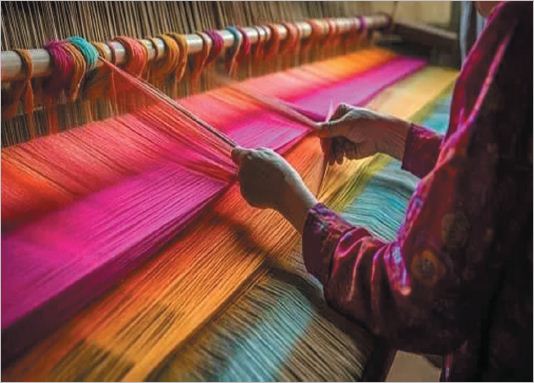
Charu Bhatia | Jaipur | Business Remedies | India’s handloom and heritage textile industry, rooted in centuries-old traditions, is increasingly emerging as a promising business opportunity in the global fashion landscape. Known for its intricate craftsmanship, unique weaving techniques, and cultural significance, the sector is not only preserving traditional art forms but also attracting growing commercial interest from domestic and international markets. The handloom industry is one of the largest sources of livelihood in India after agriculture, supporting millions of weavers and artisans across states such as West Bengal, Gujarat, Rajasthan, Tamil Nadu, and Assam. Iconic textiles like Banarasi silk, Kanchipuram sarees, Chanderi, Pashmina, and Ikat represent regional heritage while offering distinctive designs that appeal to global consumers seeking authenticity and craftsmanship.
In recent years, demand for handcrafted and sustainable fashion has increased significantly worldwide. As consumers become more conscious about ethical production and environmental impact, handloom textiles, often produced using natural fibres and low-energy processes, are gaining popularity. This shift in consumer preference has opened new avenues for Indian handloom products in international markets, especially in Europe, North America, and parts of Asia.
Government initiatives have also played an important role in supporting the sector. Schemes promoting handloom clusters, artisan training, and digital marketing platforms are helping traditional weavers connect with modern supply chains and wider audiences. Programmes such as “Vocal for Local” and various export promotion policies have further strengthened the visibility of Indian heritage textiles.
E-commerce and digital platforms have become powerful tools for expanding the reach of handloom products. Online marketplaces allow small artisans and independent brands to showcase their creations directly to consumers, reducing dependence on intermediaries. As a result, many startups and fashion labels are collaborating with rural weaving communities to create contemporary designs using traditional techniques.
Another key factor driving business potential is the growing integration of handloom textiles into modern fashion. Designers are increasingly incorporating traditional fabrics into contemporary garments, accessories, and home décor. This fusion of heritage and modern aesthetics has helped attract younger consumers and global fashion enthusiasts.
However, the sector still faces several challenges, including competition from cheaper power-loom fabrics, inconsistent production capacity, and limited access to global markets for small artisans. Addressing these issues through improved infrastructure, skill development, and stronger branding could significantly enhance the industry’s growth potential.
Despite these challenges, India’s handloom and heritage textile sector holds immense promise. By combining tradition with innovation and expanding its global reach, the industry has the potential to become a major contributor to both cultural preservation and economic growth in the coming years.