


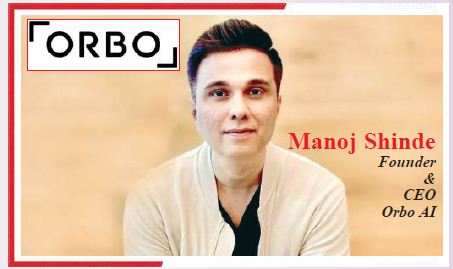
Rajshree Upadhyaya | Business Remedies | Orbo AI was established in 2019 with the vision of transforming how consumers discover and choose beauty and personal care products using artificial intelligence. Founded by Manoj Shinde along with Danish Jamil and Abhit Sinha, the company grew out of years of work in computer vision, facial imaging, and machine learning. The founders recognized a fundamental gap in the beauty industry, where customers were expected to make highly personal choices online without the reassurance of physical trials, often leading to hesitation, mismatched purchases, and high return rates.
From the outset, Orbo AI positioned itself as a technology-first brand rather than a cosmetic overlay or filter company. The team focused on building accurate facial mapping and real-time rendering systems that could adapt to different lighting conditions, skin tones, and facial structures. This philosophy shaped its early product direction and led to the creation of Virtual Makeup Try On, a solution that allows users to preview makeup products on their own face with realistic results instead of exaggerated effects. The experience was designed to mirror real-world application as closely as possible, helping users visualize outcomes before making a purchase.
As Orbo expanded its capabilities, it introduced Virtual Hair Color, addressing another high-risk decision area for consumers. Hair color changes are often associated with uncertainty, and Orbo’s technology aimed to reduce that anxiety by simulating shades accurately on live images. Building on this momentum, the company moved deeper into personalization and diagnostics with tools like Foundation Shade Finder and Smart Skin Analysis, which analyze facial data to recommend suitable shades and skincare products. These offerings shifted Orbo’s role from being a visual enhancer to an intelligent advisor within the beauty buying journey.
The company also extended its technology beyond screens by developing the Smart Beauty Mirror, a physical retail solution that blends hardware with AI-driven software. This allowed brands and retailers to bring interactive and personalized consultations into offline stores, creating a bridge between digital intelligence and in-store experiences. To strengthen engagement and guidance, Orbo integrated BeautyGPT, a generative AI layer designed to deliver conversational beauty advice, personalized recommendations, and assisted product discovery, making the platform feel more intuitive and human.
Orbo AI gained widespread recognition when it appeared on Shark Tank India Season 3. During the pitch, the founders showcased their AI-powered beauty ecosystem and explained how immersive try-ons and intelligent recommendations could improve consumer confidence and brand performance. Seeking investment at a premium valuation, the pitch sparked strong reactions from the sharks, who acknowledged both the technological depth and the commercial potential of the platform. After negotiations, Orbo closed a deal with Vineeta Singh, co-founder and CEO of Sugar Cosmetics, who invested Rs. 1 crore for 1 percent equity. The partnership resonated with audiences because it aligned Orbo’s technology-driven approach with Vineeta Singh’s experience in building a successful beauty brand.
Beyond its Shark Tank appearance, Orbo’s journey reflects a broader evolution of its core technology. While beauty and personal care remained central to its identity, the company’s expertise in imaging and automation demonstrated versatility across domains. This was evident when Orbo divested its document scanning and imaging automation product SuperScan to a fintech company, allowing the team to sharpen its focus on immersive consumer experiences while monetizing its underlying technological strengths.
Orbo AI’s story is rooted in the belief that beauty commerce should be guided by confidence rather than guesswork. By combining computer vision, artificial intelligence, and thoughtful product design, the brand carved out a distinctive position at the intersection of technology and personal care. Its journey illustrates how deep tech, when applied to a clear consumer problem, can evolve into a platform that reshapes how people explore, evaluate, and connect with products that are deeply personal in nature.
 Written & Edited By:
Rajshree Upadhyaya