
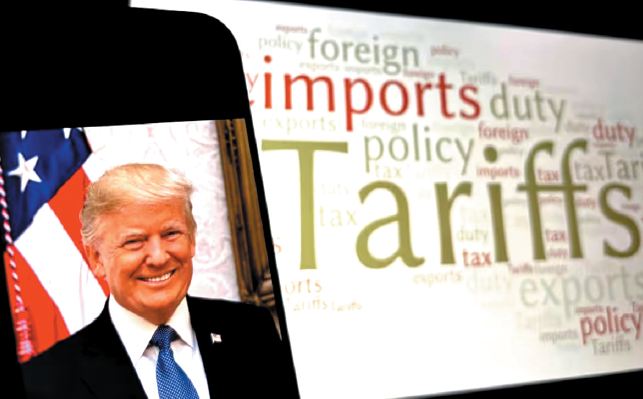
Busienss Remedies | Charu Bhatia | May 19,2025 | The recent imposition of reciprocal tariffs by former U.S. President Donald Trump has sparked concerns globally, but Indian government officials remain cautiously optimistic about the impact on the country’s economy. Despite growing tensions in international trade and disruptions caused by the new tariffs, officials believe India’s economic growth will remain largely resilient.
Projected Growth Amid Global Uncertainty
According to government sources, India is expected to achieve a growth rate of 6.3% to 6.8% for the fiscal year 2025-26, assuming oil prices remain below $70 per barrel. This positive outlook comes even as several private economists have revised their forecasts downward. Notably, Goldman Sachs and others have trimmed India’s growth estimates by 20 to 40 basis points, lowering their projections to around 6.1%, citing the ripple effects of U.S. tariffs.
Trade Tensions and Market Reactions
The U.S. administration’s 26% tariff on Indian imports, alongside increased duties on other countries like China, has intensified trade frictions worldwide. These developments triggered sharp declines across Asian stock markets, with Indian equities tumbling over 4% in a single day. The sudden market volatility has prompted closer scrutiny of how specific sectors will be impacted.
Sectoral Impact: Diamonds and Labor-Intensive Industries
One of the hardest-hit industries is the Indian diamond sector, which exports more than a third of its production to the United States. The tariffs threaten to disrupt a critical supply chain and jeopardize thousands of jobs dependent on this sector. In response, government officials are actively engaging with ministries and export associations to assess the damage and formulate mitigation strategies.
Other workforce-intensive sectors, such as textiles, footwear, and agriculture, are also under watch due to their vulnerability to tariff hikes. These industries form a substantial part of India’s export base and employ millions of people, intensifying the urgency for effective policy responses.
Government Measures and Support Initiatives
The Indian government has already taken steps to cushion exporters from the tariff impact. The commerce ministry has proposed several measures to the finance ministry aimed at bolstering export competitiveness. These proposals include:
= Extending interest subsidy pro- grams for exporters.
= Providing financial assistance to help diversify export markets.
= Enhancing the availability of bank credit to export-oriented businesses.
Officials emphasize that these initiatives are part of a broader export promotion strategy embedded in the national budget, designed to support affected sectors within the available fiscal framework.
Non-Retaliatory Approach and Diplomatic Engagement
Despite the challenges posed by U.S. tariffs, India has adopted a non-retaliatory stance, favouring diplomatic dialogue over trade confrontation. Government representatives have underscored their commitment to seeking constructive solutions through ongoing negotiations with the U.S. and other international partners. A finance ministry spokesperson reassured that while the tariffs have caused disruption, their impact on India’s primary fiscal indicators is expected to be minimal for the upcoming fiscal year. The government has also made provisions in the budget for duty remission schemes and is prepared to introduce further support measures if necessary. While Donald Trump’s reciprocal tariffs have introduced new uncertainties and pressures on India’s export sectors, the government remains confident in its ability to navigate these challenges. Through a combination of fiscal support, strategic market diversification, and diplomatic engagement, India aims to maintain steady economic growth and safeguard its export-driven industries amid a complex global trade environment.
 Written & Edited By:
Charu Bhatia