
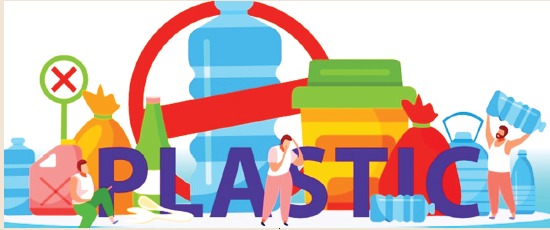
Business Remedies. | Charu Bhatia | July 03,2025 | Plastic bans are sweeping the globe, reshaping not only environmental policies but entire industries. From single-use straws and bags to polystyrene containers, governments are cracking down on plastic pollution to combat climate change and protect ecosystems. While established businesses scramble to adapt, an unexpected winner is emerging: green startups. Plastic bans aren’t merely an environmental imperative, they’re fueling a new wave of economic opportunity.
As of 2025, over 80 countries have enacted partial or full bans on single-use plastics, with regions like the European Union, parts of Africa, India, and several U.S. states leading the charge. The market for sustainable alternatives, such as biodegradable packaging, reusable goods, and innovative materials, is booming. According to a report from Grand View Research, the global biodegradable plastics market alone is projected to reach $17.2 billion by 2030, growing at a robust pace of nearly 10 percent annually.
For traditional manufacturers and retailers, plastic bans pose significant logistical and financial challenges. Sourcing alternative materials often comes at a higher cost and demands a more complex supply chain. Companies must also invest in product redesigns to comply with new laws and regulations. Furthermore, sustainable alternatives can drive up costs for consumers, creating potential resistance in price-sensitive markets. Yet these challenges create gaps in the market that agile startups are eager to fill.
Green startups are seizing this moment, using innovation and sustainability as competitive advantages. Many young companies are developing bioplastics and new materials to replace conventional plastics. For example, French startup Lactips produces water-soluble plastic alternatives derived from milk proteins, while UK-based Notpla uses seaweed to manufacture biodegradable films for packaging. Other startups focus on reusable solutions, such as Returnity, which designs reusable shipping packaging for e-commerce, or CupClub, which offers reusable cup-sharing systems to replace disposable coffee cups. There’s also a growing sector of companies turning waste into valuable products, transforming plastic waste into fuels, construction materials, or textiles, thus contributing to a circular economy.
Beyond the environmental benefits, plastic bans are driving economic opportunities in multiple ways. The shift towards sustainable alternatives is creating new jobs in manufacturing and green tech sectors.
Many green startups emphasize local sourcing and production, which helps strengthen regional supply chains and reduces transportation emissions. Cities that enforce plastic bans are becoming hubs for sustainable innovation, attracting entrepreneurs and fostering networks of like-minded businesses. Moreover, investors focused on environmental, social, and governance (ESG) criteria are increasingly channeling funds towards green tech startups, recognizing both the ethical imperative and the long-term financial potential.
However, despite this momentum, green startups face real hurdles. Scaling production remains a significant challenge, as many sustainable materials are still costly to produce in small quantities. Shifting consumer habits away from the convenience of single-use plastics requires substantial education and incentives. Policy uncertainty is another factor; regulations vary widely between regions, making it complex for startups to plan market expansions or standardize products.
Still, the road ahead appears promising. Plastic bans signal a long-term shift rather than a passing regulatory fad. For green startups, this is more than a compliance issue, it’s a generational opportunity to redefine how products are designed, produced, and consumed. Investors, entrepreneurs, and policymakers who collaborate today to build sustainable solutions could become leaders in tomorrow’s green economy.
 Written & Edited By:
Charu Bhatia