

Charu Bhatia | Jaipur | Business Remedies | Rising geopolitical tensions in the Middle East are reshaping global energy strategies, pushing countries to diversify supply and reduce dependence on traditional oil routes. As uncertainty grows around key shipping corridors such as the Strait of Hormuz and the Red Sea, liquefied natural gas (LNG) is emerging as a critical bridge fuel for energy security. Governments and corporations alike are accelerating LNG procurement, infrastructure expansion, and long-term contracts to protect their economies from potential supply disruptions.
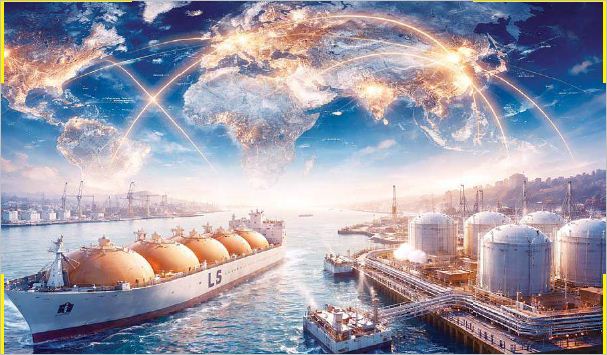
For decades, crude oil shipments from the Middle East have been the backbone of global energy supply. However, escalating regional tensions have highlighted the vulnerability of these routes. Any disruption to tanker movement could quickly tighten supply, trigger price spikes, and disrupt industrial production. In response, countries across Europe and Asia are turning to LNG as a flexible alternative that can be transported from multiple regions, including the United States, Australia, and Africa.
One of LNG’s biggest advantages is its mobility. Unlike pipeline gas, LNG can be shipped to markets across the globe, allowing buyers to diversify suppliers and reduce geopolitical risk. This flexibility has made LNG an increasingly attractive option for energy-importing nations seeking to build resilience in their supply chains.
Europe’s shift away from Russian gas in recent years has already laid the groundwork for this transition. Now, renewed tensions in the Middle East are accelerating investments in LNG terminals, floating storage and regasification units (FSRUs), and long-term supply agreements. Countries such as Germany, Italy, and the Netherlands are expanding LNG infrastructure at record speed, while Asian economies like India, Japan, and South Korea are signing new contracts to secure future supply.
The surge in demand is also reshaping the global energy investment landscape. LNG exporters, particularly the United States and Qatar, are ramping up production capacity to meet rising demand. New liquefaction projects are being fast-tracked, and long-term contracts, once considered risky, are making a strong comeback as buyers prioritise stability over short-term price advantages.
However, the LNG boom comes with challenges. Increased competition for cargoes could push up prices, particularly during peak winter months. Infrastructure bottlenecks, shipping capacity constraints, and environmental concerns also remain key hurdles. Critics argue that heavy LNG investments could lock countries into fossil fuel dependency, potentially complicating climate goals.
Despite these concerns, LNG is increasingly viewed as a transitional fuel that can balance energy security and sustainability. As the world navigates an era of geopolitical uncertainty, the growing demand for LNG underscores a broader shift: energy security is no longer just about supply, it is about flexibility, diversification, and resilience.


