

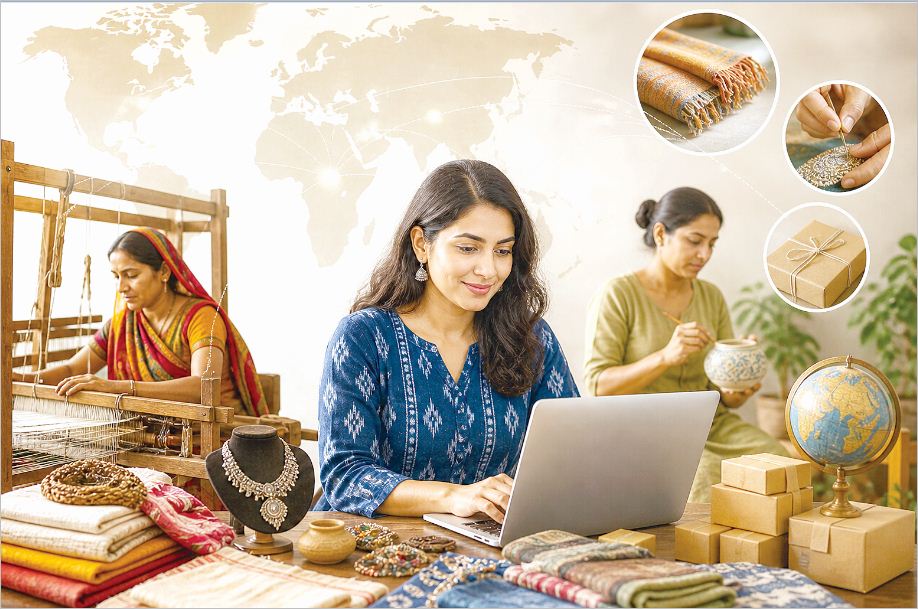
Jaipur | Charu Bhatia | India’s craft and handloom sector has long been a symbol of cultural heritage, but in recent years, it has also become a powerful business story. A new generation of women entrepreneurs is transforming traditional crafts into modern global brands, using digital tools, storytelling and sustainable business models to connect local artisans with international consumers.
Reviving Heritage Through Entrepreneurship
For decades, India’s artisan communities faced declining demand, limited market access and shrinking incomes. Women founders are now helping reverse this trend by building brands that celebrate craftsmanship while making products relevant to modern lifestyles. From handwoven textiles and artisanal jewellery to home décor and sustainable fashion, these businesses are blending heritage with contemporary design.
By working directly with artisan clusters, women entrepreneurs are creating transparent supply chains that ensure fair wages and long-term livelihood opportunities. This approach not only preserves traditional skills but also positions craft as a premium, ethical alternative in global markets.
Digital Platforms Open Global Doors
E-commerce and social media have played a major role in the international growth of craft-led brands. Online marketplaces, direct-to-consumer websites and social commerce platforms allow women founders to reach customers worldwide without the need for physical retail expansion.
Instagram, in particular, has become a powerful storytelling platform. Through behind-the-scenes content, artisan stories and process videos, brands are able to build emotional connections with buyers who value authenticity and sustainability. This shift from product-led marketing to story-led branding has helped handmade goods compete in international markets.
Sustainability as a Competitive Advantage
Global consumers are increasingly prioritising sustainability, ethical sourcing and slow fashion, areas where craft-based brands naturally excel. Handloom textiles, natural dyes and small-batch production align closely with the growing demand for environmentally responsible products.
Women entrepreneurs are positioning these values at the heart of their brand identity. By highlighting low-waste production, eco-friendly materials and community impact, they are tapping into a global movement that values conscious consumption over fast fashion.
Building Scalable Craft Businesses
One of the biggest shifts in recent years is the move from small craft collectives to scalable businesses. Women founders are introducing modern supply chain management, quality control, branding and packaging to make traditional products suitable for export markets. Collaborations with designers, international retailers and global exhibitions have further accelerated growth.
Government initiatives and startup incubators are also supporting this transformation through funding, mentorship and export assistance.
Challenges on the Global Path
Despite the momentum, challenges remain. Logistics, pricing competitiveness and maintaining consistent quality across handmade products can be difficult. However, continued investment in training, technology and infrastructure is helping craft businesses overcome these barriers.
A New Era for Handmade Brands
Women-led craft businesses are proving that tradition and modern entrepreneurship can thrive together. By connecting artisans to global audiences, these founders are not only building successful brands but also creating sustainable livelihoods and preserving cultural heritage. As international demand for ethical and handmade products continues to grow, women entrepreneurs are poised to play a defining role in taking local crafts from village workshops to global storefronts.