
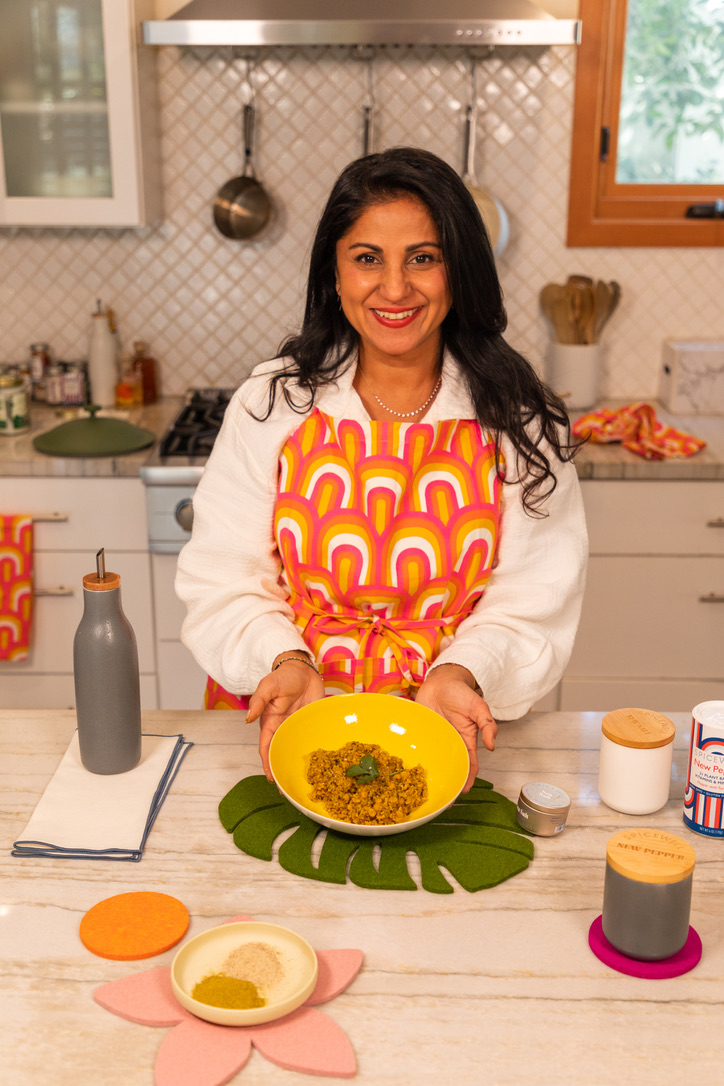
Charu Bhatia, Senior News Editor, Business Remedies, in conversation with Raina Kumra, Founder and CEO of Spicewell
Raina Kumra, founder and CEO of Spicewell, is bringing a fresh perspective to the food and wellness industry by combining traditional Ayurvedic principles with modern nutritional innovation. Born in Silicon Valley to an Indian-American family, Kumra launched Spicewell in 2021, drawing inspiration from the Ayurvedic traditions passed down by her mother and grandmother. The seasoning company focuses on adding vitamins and minerals derived from organic fruits and vegetables to everyday essentials such as salt and pepper. Before embarking on her entrepreneurial journey, Kumra built a diverse career spanning filmmaking, advertising, venture investing and public service in the US government under the Obama administration. She has also advised Google X, Alphabet’s innovation lab. Through Spicewell, Kumra aims to make nutrition more accessible by integrating the wisdom of traditional food practices into modern kitchens.
Charu: It is wonderful to speak with someone who has achieved so much professionally while remaining deeply connected to her roots. Tell us about your journey and Spicewell’s story so far. What inspired you to build this initiative?
Raina Kumra: I am delighted to keep my connection to India alive. My journey towards becoming a curious learner of Ayurveda began during the pandemic. At that time, my husband needed knee surgery, and my daughter broke her collarbone around the same period. It was a challenging phase for our family, and I found myself turning to the Ayurvedic practices my grandmother had taught me.
I began incorporating ingredients such as turmeric, ginger, kale and spinach into our everyday meals. This experience encouraged me to explore the relationship between food, nutrition and well-being more deeply. I also realised that getting people to eat certain vegetables regularly can be difficult. Sometimes, the answer lies in incorporating nutritious ingredients into food in ways that make them easier to consume without compromising their nutritional value.
Before launching Spicewell, I had an extensive professional journey. I studied film production at Boston University, attended New York University’s Interactive Telecommunications Program, and studied at the Harvard Graduate School of Design. I spent more than a decade working in digital advertising for global brands and also held leadership roles in digital strategy and innovation.
I served as Co-Director of Innovation at the Broadcasting Board of Governors during the Obama administration and worked in diplomatic innovation at the US Department of State. Later, I was part of the Biden-Harris transition team, focusing on technology strategy for US Global Media. I also co-founded Mavin, a mobile startup focused on affordable internet access, advised X, Alphabet’s moonshot factory, and pursued formal studies in plant medicine through a Cornell University certificate programme.
For years, my professional life revolved around selling products and developing strategies. Eventually, I felt drawn towards something more meaningful. As an Indian-American with roots in Punjab, I wanted to reconnect with the wisdom I had grown up with. That journey ultimately led to Spicewell, where we have introduced two products, salt and pepper, that aim to bring additional nutritional value to everyday cooking.
Charu: What gaps did you identify in the food and wellness industry that led you to establish Spicewell?
Raina Kumra: As I began studying plant medicine more formally, I became increasingly interested in understanding where our medicines originated and how food contributes to our health. I started exploring the nutritional value of fruits and vegetables, the changing quality of agricultural soil, and the challenges associated with getting adequate nutrients through our everyday diets.
I realised that there was an opportunity to rethink how we approach nutrition. Even people who try to eat well may not always obtain all the nutrients their bodies require. I wanted to address this challenge on a larger scale rather than create a product that people would use only occasionally.
That is why we began with salt and pepper. These are familiar ingredients used in everyday cooking, particularly in the American market. Our objective was to create nutrient-dense alternatives with less sodium that could provide additional nutritional benefits without compromising flavour or forcing consumers to change their cooking habits.
Our formula is 1 serving of veggies in every 1/2 teaspoon of salt or pepper. We have blended 9 veggies including broccoli, kale, kelp, brussel sprouts and tomato to name a few. The larger idea is to make food more functional and help people incorporate additional nutrients into their everyday lives through familiar ingredients.
Charu: Indian consumers are increasingly looking beyond calorie counting and paying attention to protein, gut health, ingredients and overall wellness. Which changes do you think will have the greatest commercial impact over the next decade?
Raina Kumra: I believe this shift will be exciting to watch. Indian consumers are becoming more conscious of what they eat and are paying greater attention to the quality and nutritional value of their food. We are also exploring opportunities to build a strong network of retailers and distributors in India.
For me, this feels like a full-circle moment. Our grandparents and great-grandparents often relied on traditional knowledge, using natural ingredients and home-prepared remedies. Over time, modern lifestyles and changing consumption patterns altered our relationship with food. Today, we are seeing renewed interest in traditional ingredients and the concept of superfoods.
India has a rich culinary and medicinal heritage, and Ayurveda is an important part of that history. The opportunity now is to examine traditional practices carefully, understand their benefits through scientific research where evidence exists, and make relevant products accessible to contemporary consumers.
I believe businesses that combine convenience, credible nutritional information and high-quality ingredients will have considerable opportunities in the coming years.
 Charu: You have experienced food cultures in both India and the United States. What differences do you notice between the two countries’ food habits?
Raina Kumra: There are several differences, although eating habits vary considerably within both countries. American food culture often places a strong emphasis on convenience, consistency and standardised meals. Indian food, on the other hand, offers an enormous variety of herbs, spices, vegetables and regional cooking traditions.
Indian cuisine is particularly interesting because ingredients are not simply used to add flavour; many have also been associated with traditional wellness practices for generations. Turmeric, ginger and other spices are familiar examples.
I think one of the challenges in modern food systems is ensuring that convenience does not come at the expense of nutritional quality. Soil health, agricultural practices, processing and food distribution can all influence the nutrients available in the food we consume. These are important issues for both countries, and we need to pay greater attention to how our food is grown and produced.
Charu: Spicewell currently has two key products, salt and pepper. How are you reaching international customers, and what is your expansion strategy?
Raina Kumra: We are working on several fronts. We already export to Australia and are exploring opportunities to expand our international presence further. Building the right relationships and working with people who understand local markets are important parts of this process.
Digital platforms also play a major role in our strategy. We collaborate with storytellers, influencers and content creators who can communicate our products and our larger mission in a relatable way. We want consumers to understand not just what we sell, but why we created these products and what problem we hope to address.
We also value the guidance of experts, including doctors and specialists, who can help us understand the broader nutritional and wellness landscape. As we look towards India, building a reliable distribution network and communicating our product proposition clearly will be essential.
Charu: Artificial intelligence is transforming several industries. How do you see its role evolving in the food sector?
Raina Kumra: I believe AI has enormous potential to influence the food industry, from production and quality control to nutritional optimisation and distribution. It could help businesses analyse supply chains, identify inefficiencies, improve forecasting and understand consumer requirements more effectively.
In India, I see a particularly interesting opportunity to develop AI systems that draw on traditional knowledge, including Ayurveda, while being guided by qualified experts and scientific evidence. Such systems would need to be developed responsibly, with attention to the quality of the information they use.
India has a distinctive heritage of traditional medicine and food practices. If we combine that knowledge with modern technology and rigorous research, we could create solutions that are relevant not only to Indian consumers but also to international markets.
Charu: Sourcing ingredients is a major challenge for food businesses. What difficulties have you encountered, particularly when it comes to quality and packaging?
Raina Kumra: Finding reliable sources for ingredients requires considerable effort. You need suppliers who can consistently meet your quality standards, and you must have confidence in the authenticity and safety of what you purchase.
Adulteration is an important concern. For example, when sourcing turmeric, businesses need to ensure that the ingredient is genuine and free from harmful contaminants. Heavy metals such as lead can also pose risks in food supply chains, making appropriate testing and quality checks essential.
Packaging presents another challenge. We want to explore alternatives to conventional plastic and identify materials that are more environmentally responsible, including suitable biodegradable options. However, finding packaging that is sustainable, protects the product, meets food-safety requirements and remains commercially viable is not always easy.
For a food business, these decisions involve more than appearance or cost. Ingredient integrity, consumer safety, shelf life and environmental responsibility must all be considered together.
Charu: Ayurveda has gained visibility in beauty and wellness, but misconceptions remain. What are some of the most common misunderstandings you encounter?
Raina Kumra: One common misconception is that Ayurveda is inaccessible or cannot be relevant to modern lifestyles. In reality, many of its principles are already familiar to Indian households through traditional cooking practices and the use of herbs and spices.
Another issue is that Ayurveda is sometimes discussed alongside other traditional medical systems without recognising the distinct histories and approaches of each. Ayurveda has its own body of knowledge, and it deserves to be understood on its own terms.
I also feel that people are sometimes more comfortable embracing Ayurveda in beauty and personal care than in the food industry. Yet food has always been an important part of traditional Indian approaches to well-being.
Of course, it is important to distinguish traditional beliefs from benefits established through scientific research. We need more informed conversations that respect our heritage while encouraging evidence-based understanding. I believe consumers are beginning to rediscover the value of traditional ingredients, and this interest will continue to grow.
Charu: Vitamins and salt are central to your product philosophy. Could you explain their roles in the body and how they fit into Spicewell’s approach?
Raina Kumra: Vitamins play important roles in several bodily functions, including metabolism, immunity and the maintenance of healthy tissues. Different vitamins have different functions, and the body requires them in appropriate amounts.
Sodium, which is present in salt, is also an essential electrolyte. It helps regulate fluid balance and supports nerve signalling and muscle function. However, excessive sodium consumption can be harmful, so moderation is important.
At Spicewell, our broader philosophy is to rethink everyday ingredients and explore how they can contribute to a more thoughtful approach to nutrition. We want consumers to benefit from familiar products while remaining mindful of flavour, nutritional quality and responsible consumption.
Charu: Finally, what advice would you give young entrepreneurs who want to build businesses in the food and wellness industry?
Raina Kumra: I would encourage them to approach the industry with a mindset of abundance rather than fear. There is room for innovation, and consumers are continually looking for products that solve genuine problems or improve their everyday experiences.
Entrepreneurs should identify a meaningful need, research it thoroughly and develop creative ways to bring their solutions to market. Competition will always exist, but it should not discourage you from pursuing a differentiated idea.
For us, the journey is still evolving. We are working towards expanding Spicewell in India and strengthening our presence in other markets. We are also preparing to introduce another product inspired by Kerala, India.
Ultimately, I believe the food and wellness sector offers enormous opportunities for entrepreneurs who can combine traditional knowledge, thoughtful innovation and a strong understanding of consumer needs. The goal should be to create products that are not only commercially successful but also meaningful in people’s everyday lives.