

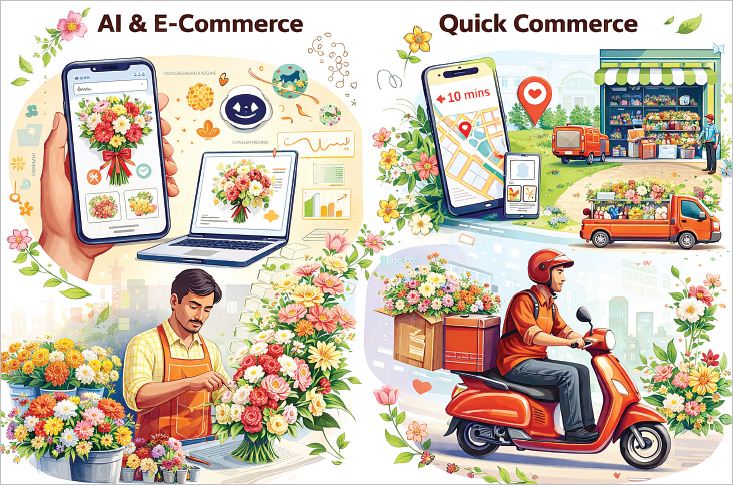
Charu Bhatia | Business Remedies | India’s flower retail market is undergoing a quiet but rapid transformation, driven by the convergence of artificial intelligence (AI), e-commerce platforms, and the rise of quick commerce. What was once a largely unorganised, hyperlocal business dependent on mandis and neighbourhood florists is now evolving into a tech-enabled, demand-driven ecosystem.
At the heart of this shift is e-commerce, which has expanded the reach of florists beyond physical stores. Online platforms now allow consumers to browse curated bouquets, compare prices, and schedule deliveries with ease. Occasions such as birthdays, anniversaries, and even corporate gifting have moved online, creating a steady, predictable demand cycle that traditional vendors often struggled to capture.
AI is further refining this ecosystem by enabling smarter inventory and demand forecasting. Flower retail is highly perishable, with a limited shelf life and fluctuating demand. AI tools help businesses predict buying patterns based on seasonality, weather, festivals, and even social media trends. This reduces wastage, a long-standing challenge in the floral supply chain, and improves profit margins for retailers.
Personalisation is another area where AI is making a visible impact. Platforms are increasingly using recommendation engines to suggest bouquets based on past purchases, location, and occasion. From customised arrangements to dynamic pricing, AI is helping brands move from a one-size-fits-all model to a more consumer-centric approach. Meanwhile, quick commerce is redefining delivery expectations. With 10-30 minute delivery windows becoming the norm in urban India, flowers have joined the list of impulse purchases alongside groceries and essentials. Startups and established players alike are partnering with dark stores and micro-warehouses to ensure freshness and speed. This has opened up new use cases, last-minute gifting, spontaneous celebrations, and even everyday indulgence.
However, this shift is not without its challenges. Traditional florists, who form the backbone of the industry, often lack access to digital tools and logistics networks, putting them at a disadvantage. Additionally, maintaining quality and freshness under tight delivery timelines requires robust cold chain infrastructure, which is still underdeveloped in many parts of the country. Despite these hurdles, the direction is clear. The integration of AI, e-commerce, and quick commerce is not just modernising flower retail, it is redefining it. As technology continues to streamline operations and enhance customer experience, the sector is likely to see greater formalisation, better price discovery, and new growth opportunities. In this new age, flowers are no longer just a product of tradition; they are becoming part of a fast, data-driven retail economy where convenience, speed, and personalisation take centre stage.