

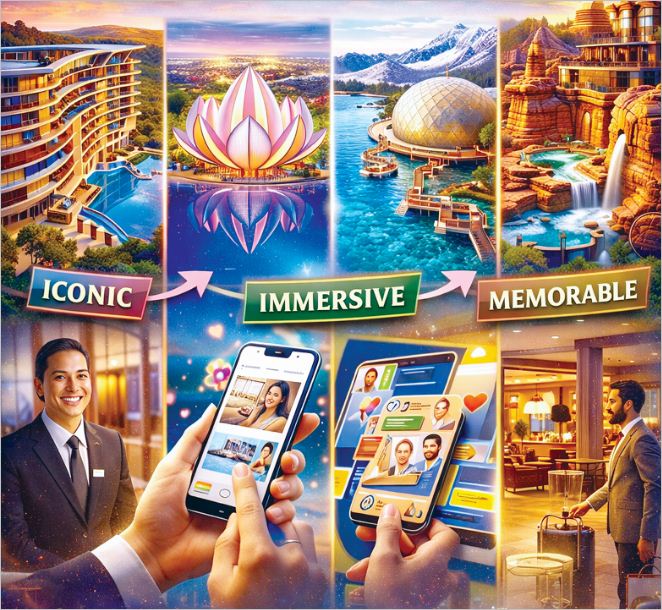
Charu Bhatia | Business Remedies | In the competitive world of hospitality, branding is no longer limited to logos, taglines or advertising campaigns. Increasingly, architecture itself is doing the talking. From boutique hotels in heritage havelis to futuristic glass-and-steel business hotels, design has emerged as a powerful marketing tool, one that shapes first impressions, drives social media visibility and builds long-term brand recall.
For modern travellers, especially millennials and Gen Z, where they stay is as important as how it looks. Hotels are responding by investing in architecture that tells a story. Distinctive facades, thoughtfully designed lobbies and Instagram-worthy interiors now act as silent brand ambassadors, often influencing booking decisions before price or location.
Design As Brand Identity
Architecture allows hotels to express their brand philosophy without words. Luxury chains often rely on grand, expansive spaces, premium materials and symmetry to communicate exclusivity and sophistication. In contrast, lifestyle and boutique brands use bold colours, local art and unconventional layouts to signal creativity and individuality. The building becomes an extension of the brand’s personality, instantly setting expectations for the guest experience.
Global hospitality brands entering India are also adapting their architectural language to local contexts. Incorporating regional materials, climate-sensitive design and cultural motifs helps brands appear authentic rather than generic, strengthening emotional connections with guests.
Social Media And Visual Recall
In the age of social media, design-driven hotels gain organic visibility. A striking staircase, an open-air courtyard or a uniquely designed room can turn guests into content creators. User-generated photos and videos often reach wider audiences than traditional marketing, making architecture a high-return branding investment.
This shift has encouraged hotels to think beyond interiors. Entranceways, rooftops, pools and even corridors are being designed with shareability in mind. For brands, this means their physical space continuously markets itself, long after a guest has checked out.
Function Meets Experience
While visual appeal matters, successful architectural branding also prioritises functionality. Smart layouts that enhance comfort, improve flow and integrate technology create memorable experiences. Open lobbies that double as co-working spaces or cafés reflect changing guest behaviour and reinforce a brand’s relevance in a hybrid work-travel era. Sustainability is another design-led branding tool. Energy-efficient buildings, natural lighting and eco-conscious materials signal responsibility and future readiness, values that increasingly influence consumer loyalty and investor interest.
A Long-Term Marketing Asset
Unlike short-term campaigns, architecture offers enduring brand value. A well-designed property can remain iconic for decades, strengthening brand recognition across markets. For hospitality businesses, investing in architecture is no longer just a construction decision, it is a strategic branding move.
As competition intensifies and travellers seek meaningful experiences, architecture will continue to shape how hospitality brands are seen, shared and remembered. In this landscape, buildings are no longer just places to stay; they are powerful marketing statements etched in concrete, glass and design.