


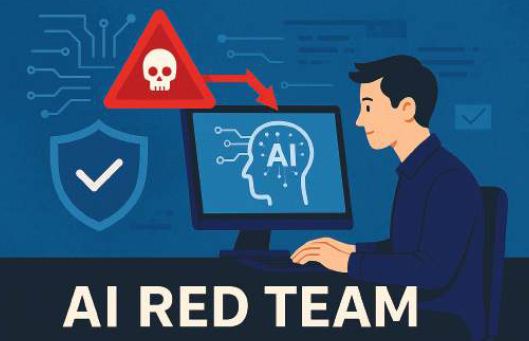
Charu Bhatia | Business Remedies | As cyberattacks grow more sophisticated and relentless, companies are realising that traditional security measures are no longer enough to protect sensitive data and mission-critical operations. The new frontier in corporate cybersecurity is AI-driven red teaming, a fast-emerging trend where businesses deploy artificial intelligence to simulate attacks on their own systems, networks and applications. The goal: to uncover vulnerabilities before real hackers do.
AI red teams function like digital adversaries, using advanced machine learning models to mimic the behaviours, decision patterns and escalation tactics of modern attackers. Unlike conventional red teams run by human ethical hackers, AI systems can probe networks continuously, scale across multiple environments and adapt their strategies in real time. This gives corporate security leaders a powerful new tool for stress-testing defences.
One of the biggest advantages of AI-led red teaming is its ability to identify subtle weaknesses in sprawling enterprise environments, issues such as misconfigured cloud buckets, shadow IT, weak internal access controls or overlooked API gateways. These gaps, often invisible to manual checks, can become entry points for devastating breaches. With the help of AI, companies are finding and fixing them far earlier in the security lifecycle.
Businesses are also using AI red teams to prepare for a new generation of AI-enabled threats. Cybercriminals are already experimenting with self-learning malware, automated phishing engines and deepfake-based impersonation attacks. By simulating such scenarios internally, organisations can test their resilience against tactics that cyber attackers may fully weaponise in the near future. This makes AI red teaming not just a security exercise but a strategic investment in future-proofing digital infrastructure.
The rise of cloud-native operations, remote work and interconnected digital ecosystems has further accelerated the need for automation in cybersecurity. Enterprises managing vast hybrid networks simply cannot rely on periodic audits or annual penetration tests. AI-powered attack simulations run continuously, providing real-time insights that help teams prioritise high-risk vulnerabilities and strengthen response protocols.
However, the adoption of AI red teams is not without challenges. These systems require large datasets, strong governance frameworks and high levels of expertise to ensure they do not disrupt business operations or inadvertently expose sensitive information. Companies must also balance automation with human oversight, as ethical hackers remain crucial for interpreting results and designing nuanced defence strategies.
Despite these concerns, AI red teaming is gaining momentum across sectors, from finance and healthcare to manufacturing, retail and critical infrastructure. As corporate risk landscapes evolve, more organisations are embracing the mindset that the best defence is a proactive offence. And for many, that means letting AI attack first.