

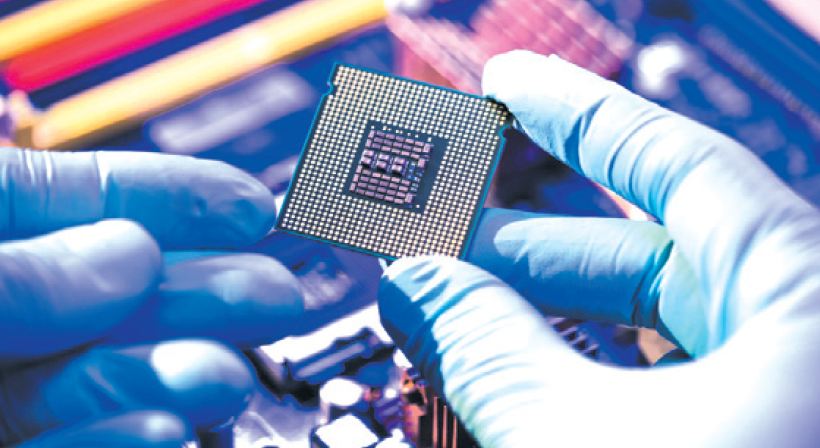
Charu Bhatia | Business Remedies | The future of India’s semiconductor industry looks exceptionally promising, poised to play a pivotal role in the country’s economic growth and technological advancement. With strong government initiatives and active participation from the private sector, India is steadily moving towards becoming a global hub for semiconductor design, manufacturing, and innovation. This transformation is not just about meeting domestic demand but also about establishing India as a critical player in the global semiconductor supply chain.
Government Initiatives and Strategic Investments
The Indian government has launched several ambitious initiatives to boost the semiconductor industry and attract both domestic and foreign investment. Among the most significant are:
Semicon India Program: Launched in 2021, this program allocates approximately Rs. 76,000 crore to promote semiconductor and display manufacturing in the country. It aims to create a robust ecosystem that encourages innovation, research, and large-scale production.
Production Linked Incentive (PLI) Scheme: This scheme incentivizes investment in semiconductor manufacturing and design, offering up to 50% of financial support to qualifying companies. By reducing financial barriers, it aims to accelerate domestic production capabilities.
India Semiconductor Mission (ISM): Established to drive the country’s semiconductor and display manufacturing ambitions, ISM focuses on positioning India as a key contributor to global supply chains while fostering cutting-edge technology development within the nation.
These initiatives collectively demonstrate the government’s commitment to creating a self-reliant semiconductor ecosystem that not only caters to domestic demand but also attracts international players seeking growth opportunities in India.
Market Potential and Growth Prospects
India’s semiconductor market presents immense growth opportunities and is poised to expand rapidly in the coming years:
Market Size and Growth Rate: In 2023, India’s semiconductor market was valued at approximately $27 billion. By 2026, it is expected to reach $64 billion, reflecting a compound annual growth rate (CAGR) of nearly 19%.
Global Contribution: India aims to contribute 8-10% to global semiconductor production by 2025, a clear indication of its ambition to integrate deeply into international supply chains.
Key Sectors Driving Demand: Semiconductor demand in India is rising across multiple sectors, including consumer electronics, automotive, telecommunications, and renewable energy. The rapid adoption of smart devices, electric vehicles, and 5G technology further accelerates market growth. The combination of a large domestic market, rising technological adoption, and government-backed incentives creates an attractive environment for both startups and established semiconductor companies to invest and scale operations in India.
Challenges and Opportunities
Despite the optimistic outlook, India’s semiconductor industry faces several challenges:
High Capital Requirements: Semiconductor manufacturing demands substantial initial investment in infrastructure, machinery, and technology.
Technological Gap: India still lags behind in advanced semiconductor fabrication and manufacturing techniques compared to global leaders.
Import Dependency: Currently, India imports over 90% of its semiconductor requirements, highlighting the need for rapid domestic production expansion.
However, these challenges also present unique opportunities. By leveraging government support, encouraging public-private partnerships, and investing in skill development, India can gradually bridge the technological gap, reduce import dependency, and position itself as a global semiconductor hub.
India’s semiconductor industry is at the dawn of a transformative era. Driven by robust government initiatives, increasing private sector participation, and growing domestic and international demand, the industry is on a trajectory of rapid growth. While challenges such as high investment requirements and technological gaps exist, the opportunities for India to emerge as a key player in the global semiconductor supply chain are immense. With strategic planning, focused innovation, and international collaboration, India is poised to not only meet domestic semiconductor demand but also assert its leadership in the global technology landscape.
 Written & Edited By:
Charu Bhatia