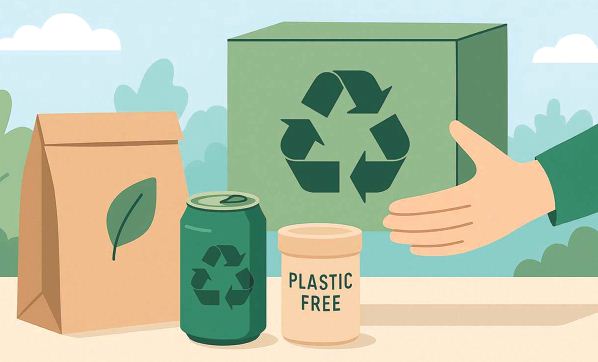
Business Remedies | Charu Bhatia | As consumers become more environmentally conscious, businesses are rethinking the role of packaging in sustainability. For vegan brands, plant-based packaging is emerging as a crucial differentiator, aligning products not just with ethical consumption but also with the growing demand for eco-friendly solutions.
Plant-based packaging typically uses renewable, biodegradable, or compostable materials derived from plants such as cornstarch, sugarcane, bamboo, or seaweed. Unlike traditional plastic packaging, which contributes heavily to landfill waste and ocean pollution, these materials break down naturally, reducing the ecological footprint of food and beverage products. For vegan brands, this creates a seamless alignment between the ethical values of their products, animal-friendly, cruelty-free, and environmentally responsible packaging.
The trend is gaining momentum as consumers increasingly look for brands that reflect their values. Studies show that 70% of global consumers are willing to pay a premium for sustainable products, making plant-based packaging not only an ethical choice but a strategic business move. Brands like JUST Egg, Miyoko’s Creamery, and Oatly are already leveraging biodegradable cartons and compostable wrappers to strengthen their sustainability credentials and appeal to eco-conscious buyers.
Beyond environmental benefits, plant-based packaging also offers marketing and branding advantages. Innovative, eco-friendly packaging designs communicate a brand’s commitment to sustainability, attracting attention on crowded retail shelves and digital marketplaces. Companies are experimenting with transparent, minimalist, and recyclable plant-based materials that enhance the premium feel of products while emphasizing their green credentials.
Challenges remain, including higher production costs and supply chain constraints, but advancements in technology are steadily bridging the gap. Bioplastics, edible films, and compostable laminates are becoming more scalable and commercially viable, making plant-based packaging a practical solution for a growing number of brands.
In an era where consumers are equally concerned about what they consume and how it is packaged, plant-based packaging represents a strategic alignment of ethical values, environmental responsibility, and business growth. For vegan brands, it’s not just packaging, it’s a statement of purpose, reflecting a commitment to the planet, people, and profits.
 Written & Edited By:
Charu Bhatia