
New Delhi,
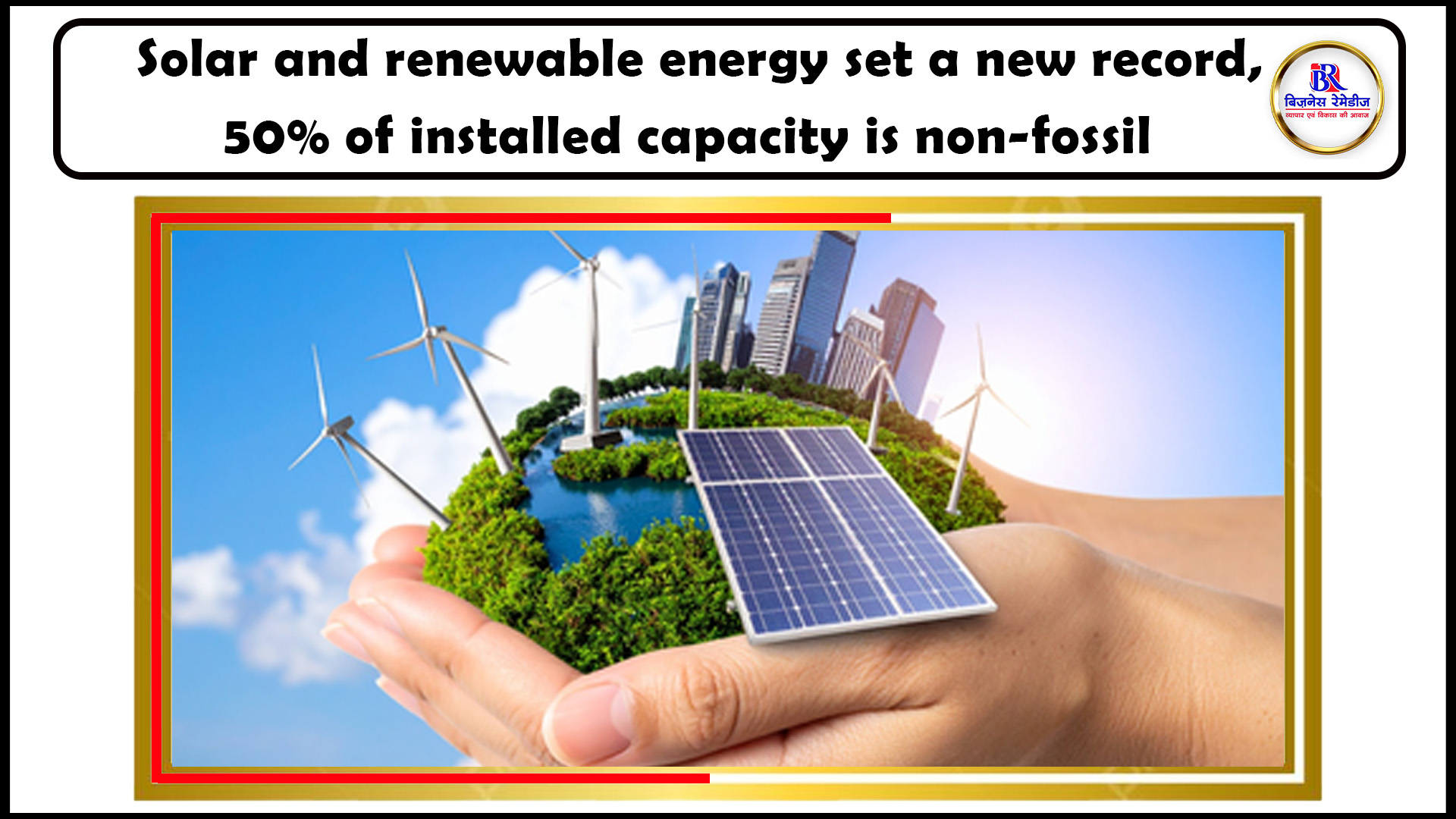
से रिपोर्ट के अनुसार, भारत की solar capacity अब 129 GW तक पहुँच गई है, जबकि non-fossil electricity capacity 259 GW पार कर चुकी है, जो देश की कुल installed power capacity का 50% से अधिक है। यह low-carbon energy की दिशा में एक historic milestone है ⚡.
📈 Solar Sector का Rapid Growth
-
2014 में solar capacity: 3 GW
-
अक्टूबर 2025 तक solar capacity: 129.92 GW
-
40+ गुना वृद्धि पिछले दशक में
अब solar, renewable energy portfolio का सबसे बड़ा contributor बन चुका है, surpass करते हुए wind, hydro और biomass capacities को।
🌱 Renewable Energy Expansion के Drivers
-
Market momentum
-
Robust policy और strategic framework
-
National targets और global climate commitments, जैसे Panchamrit Declaration @ COP26, Glasgow 2021
📝 Panchamrit Targets for 2030
-
500 GW non-fossil fuel-based electricity capacity
-
50% installed capacity from non-fossil sources
-
1 billion tonnes reduction in projected carbon emissions
-
45% reduction in carbon intensity of the economy
-
Net-zero emissions by 2070
🏠 Key Government Initiatives
-
PM Surya Ghar scheme
-
Launched: Feb 13, 2024
-
Total outlay: ₹75,021 crore
-
Objective: Rooftop solar for 1 crore households, up to 300 units free electricity/month
-
-
National Solar Mission (NSM)
-
Launched: Jan 2010
-
Objective: Promote large-scale solar deployment, achieve renewable targets
-
-
Production-Linked Incentive (PLI) for Solar PV
-
Total outlay: ₹24,000 crore
-
Objective: Boost domestic manufacturing of high-efficiency solar PV modules, reduce import dependence
-
🔮 Outlook
-
Solar growth अब renewable energy mix का backbone बन गया है
-
India की net-zero और low-carbon commitments तेजी से actionable हो रही हैं
-
Policy support, PLI incentives और rooftop solar initiatives से sustainable energy adoption और clean technology ecosystem मजबूत हो रहा है 🌏☀️
कुल मिलाकर, भारत ने non-fossil installed capacity का 50% milestone पार कर, renewable energy और climate goals की दिशा में मजबूत कदम उठाए हैं।