
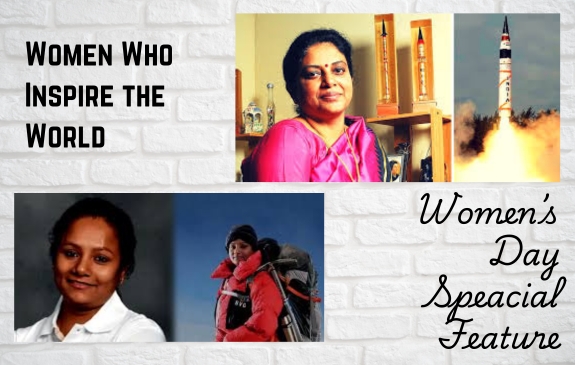
Women’s Day Special
Rajshree Upadhyaya | Business Remedies | March 8, 2025
Dr. Tessy Thomas: Defying Gravity and Shaping India’s Defense
Dr. Tessy Thomas, known as the “Missile Woman of India,” has left an indelible mark on India’s defense landscape with her groundbreaking work in missile technology. Born in April 1963 in Alappuzha, Kerala, she grew up in a close-knit Syrian Christian family, where she was named after Mother Teresa and affectionately called Tessy. Life took an unexpected turn when her father, an Indian Forest Service officer, suffered a stroke, leaving her mother, a teacher, to shoulder the responsibility of raising six children and ensuring they received a quality education. Despite these challenges, Tessy’s curiosity and determination remained unwavering.
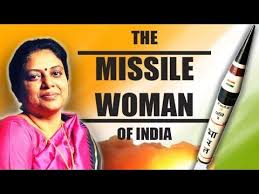
Living near the Thumba Rocket Launching Station, she was captivated by the wonders of rockets and space from an early age. This fascination found its roots in her schooling at St. Michael’s Higher Secondary School and St. Joseph’s Girl’s Higher Secondary School in Alappuzha, where she excelled in mathematics and physics. With a deep love for problem-solving and an analytical mind, she pursued engineering at the Government Engineering College in Thrissur. Financing her education was not easy, but she managed with a monthly loan from the State Bank of India and a merit-based scholarship, proving that financial constraints could not deter true ambition.
Her thirst for knowledge led her to pursue an M.Tech in Guided Missiles from the Institute of Armament Technology, Pune, now known as the Defence Institute of Advanced Technology. She later expanded her academic credentials with an MBA in Operations Management and a Ph.D. in missile guidance under the Defence Research and Development Organisation (DRDO). Her academic journey was a reflection of her relentless pursuit of excellence, always striving to push the boundaries of knowledge.
In 1988, she joined DRDO, where destiny put her in the path of the legendary Dr. A.P.J. Abdul Kalam, who handpicked her to contribute to the prestigious Agni missile project. Her expertise and dedication soon saw her rise through the ranks, becoming the associate project director for the Agni-III missile, which boasted a range of 3,000 km. Her leadership skills shone through when she took charge as the project director of Agni-IV, which was successfully tested in 2011, and later the Agni-V project, a missile with a striking range of 5,000 km that was successfully launched on April 19, 2012. Her career reached new heights in June 2018 when she was appointed as the Director-General of Aeronautical Systems at DRDO, a historic moment as she became the first woman to hold the position.
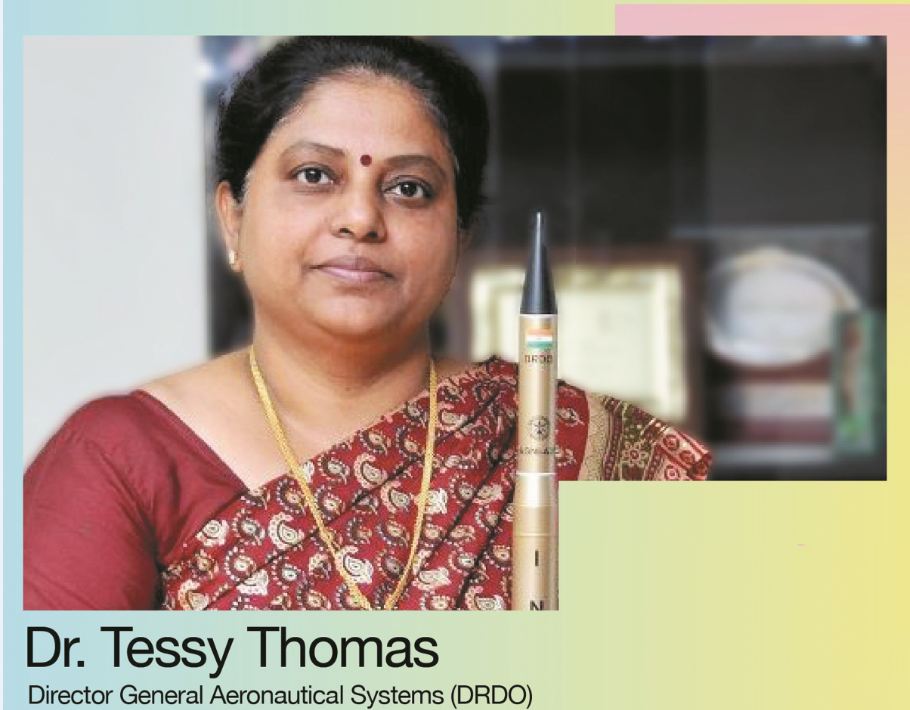 Until April 2023, she led crucial projects that fortified India’s defense capabilities, demonstrating that gender was no barrier to leadership in a highly technical and strategic field. Beyond her technical contributions, she remains an integral part of India’s scientific and engineering communities, holding membership in esteemed institutions such as the Indian National Academy of Engineering (INAE) and the Institution of Engineers-India (IEI). Her influence extends beyond laboratories and missile testing sites, as she continues to inspire countless young minds, particularly women, to pursue careers in STEM. Balancing her demanding profession with a fulfilling personal life, she shares her journey with her husband, Saroj Kumar, a commander in the Indian Navy. Together, they have a son named Tejas. Despite the high-stakes nature of her work, she has successfully navigated the delicate balance between her responsibilities as a scientist and her role as a mother and wife, proving that one can excel in both professional and personal spheres with unwavering dedication.
Her contributions have not gone unnoticed, earning her numerous accolades over the years. In 2012, she was honored with the Lal Bahadur Shastri National Award for her work in missile technology.
Her leadership was further recognized with the Dr. Thomas Cangan Leadership Award in 2018, the Lokmanya Tilak National Award in 2022, and the prestigious ‘Woman Pioneer of the Year’ award at the ETPrime Women Leadership Awards in 2023. These honors are a testament to her extraordinary impact on India’s defense sector and her role as a trailblazer for women in science and technology. Dr. Tessy Thomas’s journey, from a young girl mesmerized by rockets to a leading force in India’s missile program, is a story of perseverance, brilliance, and breaking barriers. She stands as a beacon of inspiration, proving that with passion, resilience, and an unyielding spirit, one can soar beyond the skies, quite literally shaping the future of a nation’s defense.
Arunima Sinha: Defying Limits, Conquering Peaks, and Inspiring a Generation
Arunima Sinha’s journey is a remarkable tale of resilience, determination, and the indomitable human spirit. Born on July 20, 1989, in Ambedkar Nagar, Uttar Pradesh, she grew up in a family with a military background. Her father served in the Indian Army, and after his passing, her mother, who worked as a health department supervisor, took on the responsibility of raising the family. Arunima had an elder sister and a younger brother, and from a young age, she displayed a deep passion for sports. Excelling in both football and volleyball, she eventually played volleyball at the national level. Her ambition was to join the paramilitary forces, and she had even received a call letter from the Central Industrial Security Force (CISF), but fate had different plans for her.
On April 11, 2011, while traveling to Delhi for the CISF examination, Arunima became the victim of a horrific crime that changed her life forever. Robbers attempted to snatch her gold chain aboard the Padmavati Express, and when she resisted, they threw her out of the moving train near Bareilly, Uttar Pradesh. She landed on the adjacent track, severely injured and unable to move. Before she could react, another train came rushing from the opposite direction, crushing her left leg below the knee and leaving her with multiple spinal fractures. The accident was devastating, but it was not the end of her story-it was the beginning of a new one.
She spent four months recovering at the All India Institute of Medical Sciences (AIIMS) in New Delhi, where she resolved to turn her tragedy into triumph. Instead of succumbing to despair, she decided to take on mountaineering, an extreme sport dominated by able-bodied individuals. Determined to prove that physical limitations were no barrier to success, she sought mentorship from Bachendri Pal, the first Indian woman to summit Mount Everest. Under Pal’s guidance, Arunima trained rigorously at the Tata Steel Adventure Foundation (TSAF) in Uttarkashi, where she developed the skills and mental fortitude necessary for the treacherous climbs ahead.
Her journey to the world’s highest peak began with smaller yet equally challenging summits. In 2012, she successfully climbed Island Peak (Imja Tse) and Chamser Kangri in Ladakh alongside her instructor, Susen Mahto.
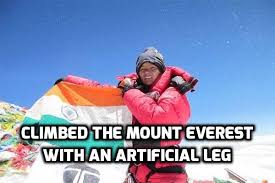
These expeditions tested her endurance and prepared her for the ultimate challenge-Mount Everest. On April 1, 2013, she embarked on her Everest expedition, facing extreme weather, harsh terrain, and physical exhaustion. After weeks of relentless climbing and acclimatization, she finally reached the summit on May 21, 2013, at 10:55 a.m., making history as the world’s first female amputee to conquer Everest. Her triumph was widely celebrated, with leaders like the Chief Minister of Uttar Pradesh, Akhilesh Yadav, and India’s Sports Minister, Jitendra Singh, commending her incredible feat.
Unwilling to stop at just one mountain, Arunima set herself an even greater goal-to scale the highest peaks on all seven continents. Over the years, she summited Mount Kilimanjaro in Africa (2014), Mount Elbrus in Europe (2014), Mount Aconcagua in South America (2015), Mount Kosciuszko in Australia (2017), Mount Denali in North America (2019), and finally, Mount Vinson in Antarctica on January 1, 2019, completing the prestigious Seven Summits challenge. Each climb was a testament to her grit, proving that no challenge was too great to overcome.
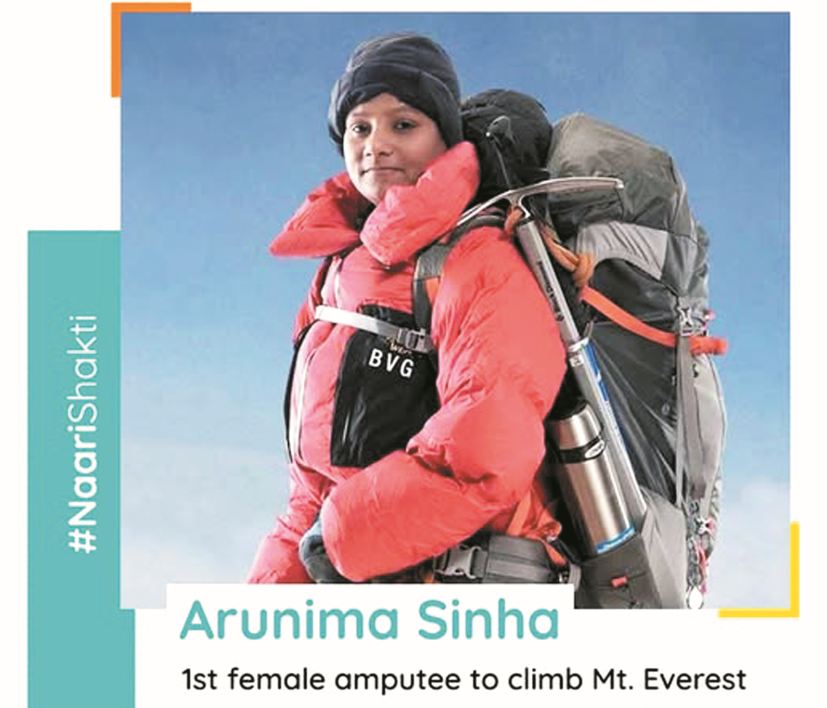 Her inspiring journey earned her numerous accolades, including the Padma Shri, India’s fourth-highest civilian award, in 2015. She was also honored with the Tenzing Norgay National Adventure Award for her exceptional contributions to mountaineering. Wanting to share her story with the world, she penned her autobiography, Born Again on the Mountain, which was launched by Prime Minister Narendra Modi in December 2014. The book details her struggles, setbacks, and victories, serving as an inspiration to those facing adversity.
Beyond her achievements in mountaineering, Arunima has dedicated her life to social causes. She actively works to empower differently-abled individuals and promote sports among women, encouraging them to pursue their dreams despite any obstacles. Her story is not just about reaching the summit of Everest; it is about conquering the mountains of doubt, fear, and physical limitations. Through her journey, she has become a beacon of hope, proving that the human spirit, when fueled by courage and perseverance, knows no bounds.