
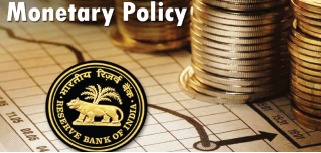
Business Remedies | Charu Bhatia | June 12,2025 | As India charts its path towards becoming a $5 trillion economy, monetary policy has emerged as a key instrument in maintaining macroeconomic stability and investor confidence. In an increasingly volatile global environment, marked by inflationary pressures, geopolitical disruptions, and fluctuating capital flows, the Reserve Bank of India (RBI)’s policy responses are critical in steering the economy through turbulence.
A Strategic Balancing Act
At the core of India’s monetary strategy is the inflation-targeting framework, with a mandate to keep inflation at 4% (+/-2%). This approach, adopted in 2016 and executed through the Monetary Policy Committee (MPC), has anchored expectations and guided decisions on interest rates.
8 In growth phases, the RBI maintains accommodative stances to encourage borrowing and consumption.
8 In inflationary periods, the central bank tightens liquidity to control overheating and maintain price stability.
This cyclical intervention helps protect consumer purchasing power while promoting long-term economic resilience.
Key Tools of the Trade
The RBI utilizes a range of monetary tools:
8 Repo & Reverse Repo Rates to influence short-term interest rates.
8 CRR & SLR to regulate banking liquidity.
8 Open Market Operations (OMO) to manage excess money supply.
8 Monetary stance (accommodative, neutral, or tightening) to signal future moves.
These instruments allow the RBI to respond dynamically to changing economic conditions.
Navigating Global Headwinds
From Fed rate hikes to crude oil volatility and currency fluctuations, global trends directly impact India’s financial ecosystem. In response, the RBI has adopted a measured, data-driven approach, raising rates moderately through 2022-2023 to tame inflation while preserving domestic credit flow.
Notably, the RBI’s actions have helped:
8 Maintain inflation within the tolerance band in 2024-25.
8 Stabilize the rupee amid foreign capital volatility.
8 Support financial inclusion and MSME lending.
Looking Ahead With inflation moderating and GDP growth staying robust, the RBI is expected to adopt a wait-and-watch strategy in the near term. The focus will likely shift to:
8 Ensuring core inflation rema-ins anchored.
8 Managing external shocks.
8 Supporting green finance and digital lending.
As structural reforms and capital investments gain momentum, monetary policy will remain the silent engine ensuring economic balance.
Business Trend Insight
For businesses and investors, India’s monetary policy is not just a macro lever, it’s a signal of stability, intent, and forward vision. As credit conditions ease and inflationary risks decline, sectors such as real estate, banking, FMCG, and infrastructure could witness stronger tailwinds.
Stability breeds opportunity, and India’s monetary strategy is laying the groundwork for both.
 Written & Edited By:
Charu Bhata