
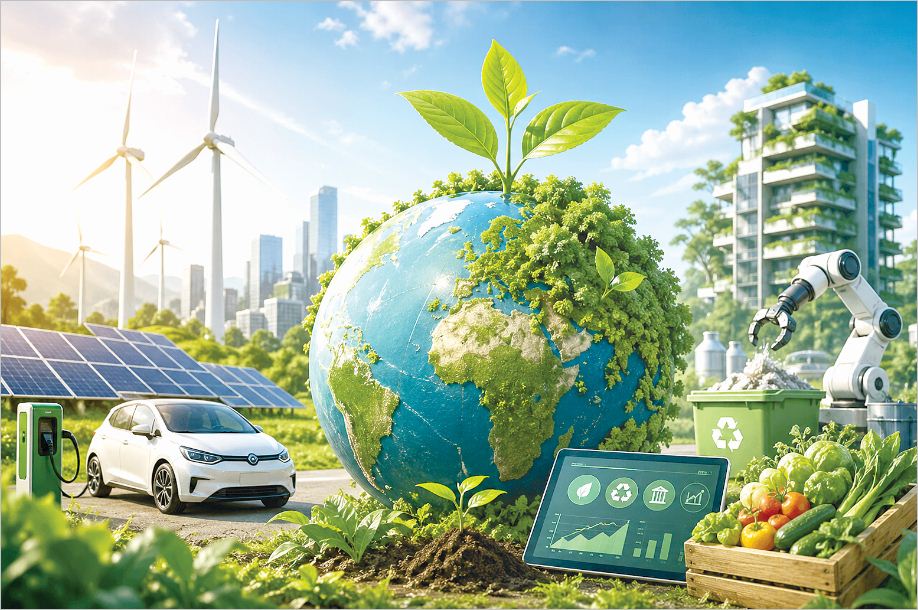
Jaipur | Charu Bhatia | Sustainability has evolved from a corporate responsibility initiative into a high-growth economic sector. Climate risks, regulatory pressure and changing consumer behaviour are accelerating the rise of green startups across energy, mobility, agriculture, finance and manufacturing. What was once considered a niche category is now a central pillar of global entrepreneurship and investment.
The Economics Behind The Green Transition
The global transition to a low-carbon economy is being driven by both risk and opportunity. Governments worldwide have committed to net-zero targets, triggering large-scale policy support, subsidies and carbon-reduction mandates. At the same time, investors are increasingly pricing climate risk into portfolios, leading to a surge in capital allocation towards climate and sustainability ventures.
Climate tech investment has expanded rapidly in recent years, with venture funding flowing into sectors that reduce emissions, improve energy efficiency and enable resource optimisation. Institutional investors are also integrating Environmental, Social and Governance (ESG) frameworks into decision-making, making sustainability a mainstream investment theme rather than a specialised category.
Key Sectors Leading The Green Startup Surge Climate and Clean Energy Technologies
Renewable energy, grid modernisation and energy storage remain among the most capital-intensive and innovative segments. Startups are developing next-generation battery systems, distributed solar platforms and carbon-capture solutions. Software platforms that measure and manage emissions are also gaining traction as corporations face stricter disclosure requirements.
Circular Economy And Resource Efficiency
The traditional “take-make-dispose” model is being replaced by circular systems focused on reuse, recycling and material recovery. Startups are creating marketplaces for refurbished products, building waste-to-resource technologies and designing packaging that minimises environmental impact. These models aim to decouple economic growth from resource consumption.
Sustainable Consumer And Industrial Products
Demand for environmentally responsible goods has reshaped sectors such as fashion, food and packaging. Plant-based protein companies, biodegradable materials innovators and low-impact textile startups are expanding rapidly as supply chains adapt to sustainability expectations.
AgriTech And Water Innovation
Agriculture accounts for a significant share of global emissions and water usage, making it a critical focus area. Startups are introducing precision farming tools, climate-resilient crops and water-efficiency technologies to address food security while reducing environmental impact.
Technology As A Force Multiplier
Advanced technologies are enabling scalability in sustainability. Artificial intelligence, IoT and data analytics allow businesses to track emissions, optimise energy consumption and improve supply chain transparency. Digital platforms are also helping companies meet regulatory reporting requirements and demonstrate measurable environmental impact.
Barriers And The Road Ahead
Despite strong momentum, green startups face structural challenges including high capital requirements, long development cycles and complex regulatory landscapes. However, public-private partnerships, climate financing instruments and government incentives are helping bridge these gaps.
The sustainability business boom reflects a structural shift in global markets. As climate risks intensify and policy frameworks strengthen, green startups are positioned to become a defining force in the next decade of entrepreneurship, proving that long-term profitability and environmental responsibility can increasingly move in the same direction.