
Charu Bhatia | Business Remedies | Rare earth elements may sound obscure, but they sit at the heart of the modern global economy. From smartphones, electric vehicles and wind turbines to defence systems and advanced electronics, these 17 minerals are indispensable. Over the past two decades, China has emerged as the undisputed leader in this strategically critical sector, a dominance that is now reshaping global supply chains and business strategies worldwide.
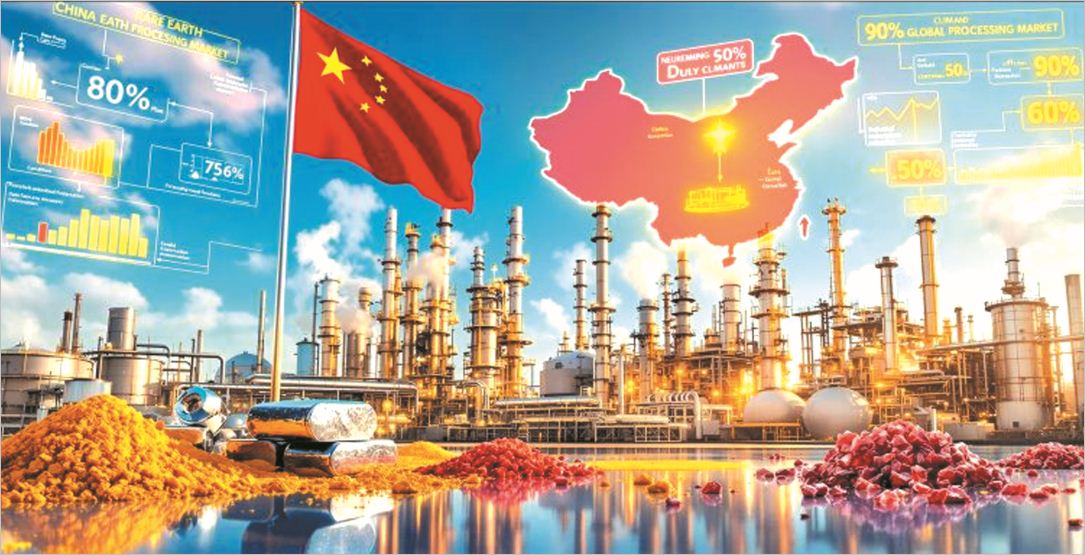
China controls roughly 60-70 per cent of global rare earth mining and nearly 90 per cent of processing and refining capacity. This concentration gives Beijing enormous leverage, not just over prices but over downstream manufacturing across industries. While rare earths are found in many countries, including India, Australia, the US and parts of Africa, extracting and processing them is capital-intensive, environmentally challenging and tightly regulated. China invested early, built scale and accepted environmental costs that many other nations avoided, allowing it to dominate the full value chain.
For global supply chains, this dominance has become a growing risk. Trade tensions, export restrictions and geopolitical uncertainties have highlighted how dependent advanced economies are on a single supplier. Past episodes, such as China’s temporary export curbs during diplomatic disputes, have served as a warning. For businesses, the fear is not just shortages but sudden price spikes and production disruptions that ripple across sectors like clean energy, automotive manufacturing and electronics.
The electric vehicle (EV) transition has intensified these concerns. Rare earth magnets are essential for EV motors and renewable energy infrastructure. As countries push aggressive net-zero targets, demand for rare earths is set to surge, further strengthening China’s strategic position. This has prompted governments and corporations to rethink sourcing strategies, moving rare earths from a procurement issue to a boardroom-level risk. In response, supply chain diversification has become a key business trend.
The US, EU, Japan and Australia are investing heavily in alternative mining projects, domestic processing facilities and recycling technologies. India, too, has begun focusing on rare earth exploration and public-private partnerships to reduce import dependence. However, building a competitive ecosystem takes time, often a decade or more, making short-term reliance on China unavoidable.
For companies, this shift means higher costs, longer lead times and the need for strategic stockpiling. Businesses are also exploring “friend-shoring,” sourcing minerals from geopolitically aligned countries, even if it comes at a premium. ESG considerations add another layer, as environmentally responsible mining often clashes with the speed and scale required to match Chinese output.
China’s rare earth dominance is no longer just a resource story, it is a supply chain reality shaping global business decisions. As industries race towards electrification and digitalisation, how quickly the world can build resilient, diversified rare earth supply chains will determine not just competitiveness, but economic security in the years ahead.